Fearing that altitude sickness in Bolivia might spoil your trip remains a major and legitimate concern for anyone wishing to explore the dizzying peaks of the Andes. To avoid this inconvenience, we detail here a progressive acclimatization strategy and concrete solutions that allow your body to adapt naturally and painlessly to the lack of oxygen. From smart itineraries to the traditional benefits of coca leaves, you will gain access to reliable methods to secure your health and transform this physical constraint into a simple step in your unforgettable Bolivian adventure.
- Progressive acclimatization, the only true golden rule
- Decoding the signals: recognizing the symptoms of soroche
- Daily habits that change everything at altitude
- Local remedies and pharmacy: fact vs. fiction
- In case of trouble: the only rule that saves
Progressive acclimatization, the only true golden rule
The success of your trip to Bolivia depends on one thing: altitude management. Forget miracle solutions, everything comes down to planning.
Planning Your Itinerary Backwards
The worst mistake is to land in La Paz or head straight to the Salar. The body doesn’t have time to adapt. Design your trip by gradually ascending in altitude to avoid altitude sickness in Bolivia.
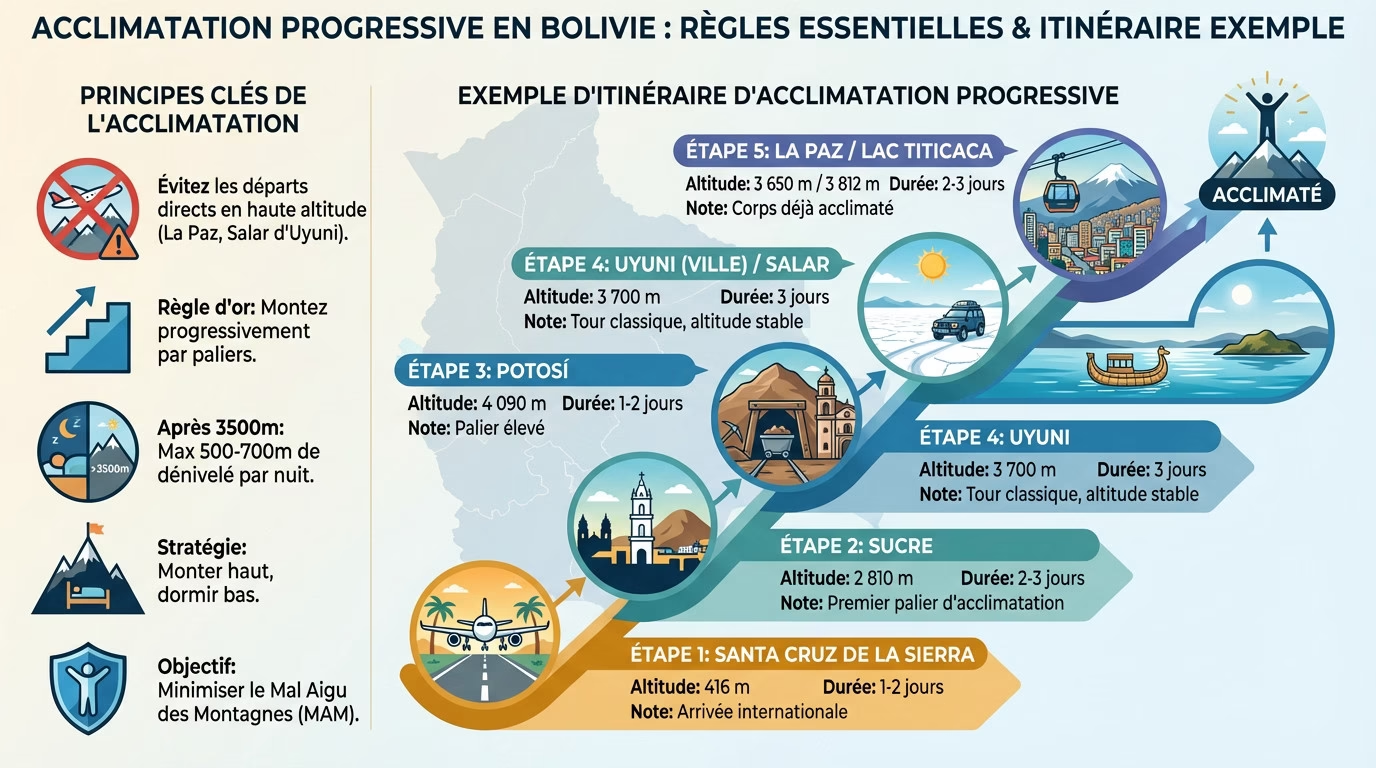
The logical itinerary starts with the lowlands, like Santa Cruz (500m). Then, aim for intermediate altitudes like Sucre (2800m) to get your body used to it.
Let your body get used to it in stages. It’s non-negotiable.
The Staging Rule: Numbers and Common Sense
Beyond 3500 meters, one rule applies. Never sleep at an altitude more than 500 to 700 meters higher than the previous night.
Going higher during the day is beneficial, but in the evening, descend to sleep lower. This is the principle of “climb high, sleep low“.
This trick forces the production of red blood cells. That’s acclimatization.
Typical Itinerary for Successful Acclimatization in Bolivia
Here’s what a smart route looks like for a concrete visualization. This table details an ideal progression to allow your metabolism time to adjust.
Example Acclimatization Itinerary in Bolivia
| Step | City / Region | Approximate Altitude | Recommended Stay Duration |
|---|---|---|---|
| Step 1 | Santa Cruz de la Sierra | 416 m | 1 to 2 days (international arrival) |
| Step 2 | Sucre | 2,810 m | 2 to 3 days (first acclimatization stage) |
| Step 3 | Potosí | 4,090 m | 1 to 2 days (high-altitude stage, after Sucre) |
| Step 4 | Uyuni (city) / Salar | 3,700 m | 3 days (classic tour, stable altitude) |
| Step 5 | La Paz / Lake Titicaca | 3,650 m / 3,812 m | 2 to 3 days (the body is already acclimatized) |
Note: This itinerary prioritizes a gradual ascent in altitude, which significantly reduces the risk of Acute Mountain Sickness (AMS).
Decoding the Signals: Recognizing the Symptoms of Soroche
The First Unmistakable Signs
Most often, it starts with a persistent headache. It’s not a splitting migraine, but a dull ache. A feeling of your head in a vice. It’s the number one symptom.
Then come abnormal fatigue, mild nausea, or loss of appetite. You just feel “flat”, with no apparent reason.
Don’t panic, it’s a normal reaction. Your body is just asking for oxygen.
When Symptoms Worsen
If the headache doesn’t go away with a simple painkiller, that’s an orange flag. If it’s accompanied by dizziness or sleep disturbances, you need to stop.
Shortness of breath at rest is also a sign not to ignore. Being out of breath climbing stairs is normal. Being out of breath while sitting is not. It’s time to stop ascending.
Absolute Warning Signs
Now, we’re not kidding around. Some symptoms indicate a medical emergency. You need to know them by heart.
Here are the critical manifestations that require an immediate descent:
- Extreme shortness of breath, even at complete rest.
- Dry, hacking cough, potentially producing pink frothy sputum (sign of pulmonary edema).
- Confusion, disorientation, difficulty speaking or walking straight (sign of cerebral edema).
- Intense and uncontrollable vomiting.
Daily Habits That Change Everything at Altitude
Knowing how to recognize symptoms is good, but adopting the right habits to avoid altitude sickness in Bolivia is even better. A few simple habits can radically change your experience.
Hydration, Your Best Ally
At altitude, the air is dry and you breathe faster. You dehydrate very quickly without even realizing it. The solution is simple:
The goal is to aim for 3 to 4 liters per day. It might seem like a lot, but it’s the price to pay to help blood circulate better and oxygenate the body.
Eat Light and Avoid Certain Traps
Digestion is an effort for the body. An effort that consumes oxygen. So, for the first few days, avoid overly rich and fatty meals.
Favor slow carbohydrates (pasta, rice, potatoes) that provide sustained energy. Eat light, especially in the evening, so as not to disturb sleep that is already fragile at altitude. It’s common sense.
And the absolute trap: alcohol. It dehydrates and depresses breathing. To be avoided for the first few days.
The “Andean” Rhythm: Move Without Exhausting Yourself
Observe the locals: they walk slowly, with measured steps. Do the same. Sprinting to catch a bus is a very bad idea.
For the first 24 to 48 hours at a new altitude, conserve your energy. No intense physical exertion. Let your body get used to it gently. Your trip will be all the more enjoyable afterward.
Local Remedies and Pharmacy: Fact vs. Fiction
Despite thorough preparation, headaches can strike without warning. This is where solutions come in, from ancestral coca leaves to modern medicines. Let’s sort through them to save your trip.
The Coca Leaf, More Than Just Folklore
It will be offered everywhere, and for good reason. To avoid altitude sickness in Bolivia, don’t refuse it. The coca leaf, chewed or as an infusion, has been the secret of the Andes for centuries. It calms fatigue and headaches.
It’s not a drug, but a mild stimulant and an excellent vasodilator. For many travelers, it’s a valuable aid and an integral part of the Bolivian experience.
Medications: Aspirin, Diamox, and Others
For a simple headache, aspirin is often more effective than paracetamol. It slightly thins the blood.
Then there’s the famous Diamox® (Acetazolamide). It’s a medication that forces the body to acclimatize faster. It’s usually taken as a preventative measure.
Here are the medication options in brief:
- Aspirin: effective for mild headaches.
- Paracetamol / Ibuprofen: possible alternative if you don’t tolerate aspirin.
- Diamox® (Acetazolamide): as a preventative, with medical advice, to accelerate acclimatization.
- Sleeping pills: to be absolutely avoided, as they can worsen oxygen deprivation during sleep.
The Downside: Side Effects of Diamox
Diamox® is not candy. Before taking it, you need to know its side effects, which are very common. They are not dangerous, but can be unpleasant.
Expect tingling in your hands and feet. And most importantly, it’s a powerful diuretic: you will urinate much more often. This isn’t always practical on a trek, believe me.
The decision to take it or not is personal. It should be made after discussion with a doctor.
In Case of Trouble: The Only Rule That Saves
What if, despite all precautions, symptoms worsen? There’s no room for ego at high altitude. Only one action matters.
The Vital Reflex: Descend, Descend, Descend
If AMS symptoms are severe or don’t improve after a day of rest, there’s only one thing to do. Descend immediately. It’s the only real remedy for altitude sickness in Bolivia.
No need to rush down the mountain. Losing 300 to 500 meters of altitude is often enough to produce a spectacular improvement within a few hours.
Don’t Play the Hero
Altitude sickness can impair judgment. It is therefore essential to be honest with yourself and with your travel companions or guide.
Hiding your symptoms so as not to “slow down the group” is the worst decision. It’s dangerous for you and irresponsible for others.
Who Should Avoid High Altitude?
For the vast majority of people, high altitude is safe. But there are clear contraindications.
Contraindications for a stay:
- People with chronic respiratory or cardiac insufficiency.
- History of pulmonary or cerebral edema.
- Certain unstable heart conditions or blood diseases (e.g., sickle cell anemia).
- Pregnant women and infants.
Note: In case of doubt, consultation with a mountain medicine center or your treating physician is essential.
Successfully completing your trip to Bolivia depends on good preparation. By respecting a gradual ascent and listening to your body’s signals, you will conquer the altitude without a hitch. Don’t forget

