
Are you looking for a destination that will challenge your perceptions while offering raw authenticity far from mass tourism? This article, dedicated to Bolivia’s iconic places, opens the doors to a unique South American territory, where the ancestral cultural richness of the Andes harmoniously blends with exceptional Amazonian biodiversity. Get ready to discover breathtaking panoramas and expert advice for exploring these ten must-see wonders, ensuring an unforgettable adventure amidst varied landscapes, from the infinite salt desert to history-rich colonial cities.
- The Altiplano: Surreal, Breathtaking Landscapes
- Iconic Cities: History, Culture, and Local Life
- Adventures Between the Andes and the Amazon
- Sacred Sites and Geological Wonders
- Unique Experiences and Bolivian Flavors
- Your Practical Guide for an Unforgettable Trip to Bolivia
The Altiplano: Surreal, Breathtaking Landscapes
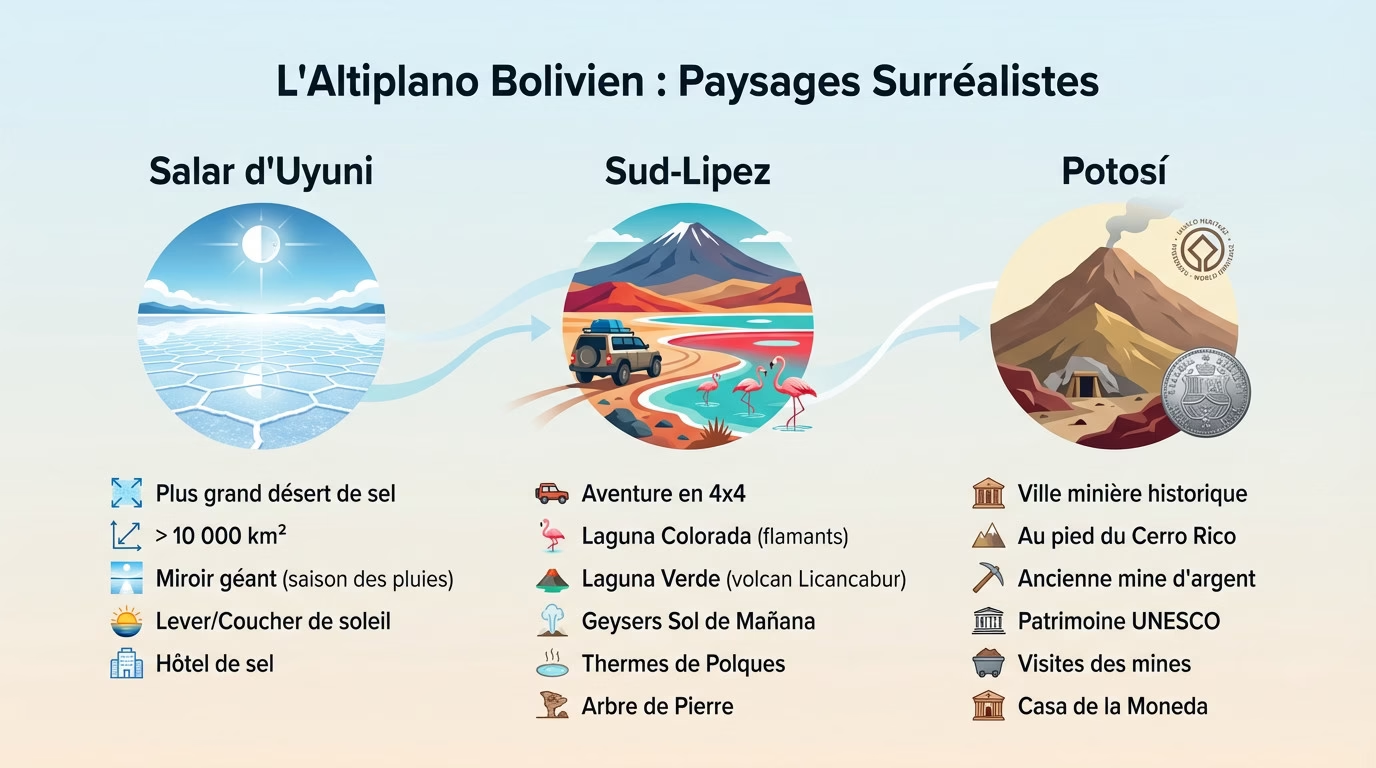
Salar de Uyuni: The World’s Largest Mirror
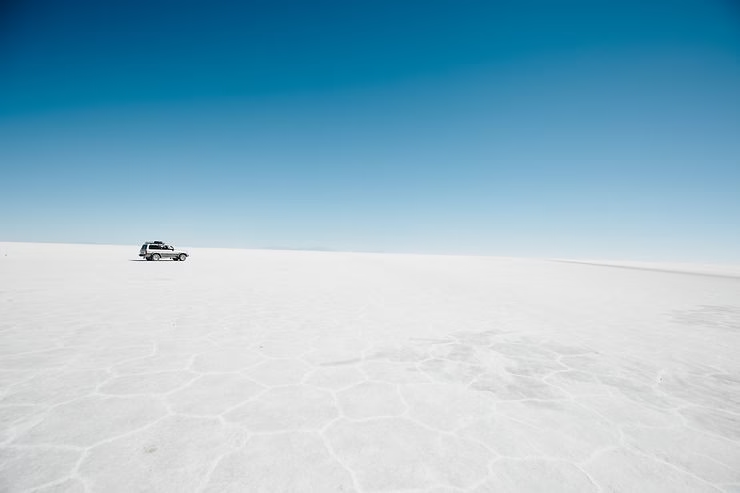
Salar de Uyuni goes beyond the simple concept of a salt desert. It’s a raw sensory experience that puts you in your place. Imagine a blinding whiteness and total silence over more than 10,000 km². You are literally walking on a frozen sea.
When it rains, the ground transforms into an infinite giant mirror. The horizon completely disappears, merging the sky with the earth. Your photos won’t even seem real, as the optical effect is so powerful.
Here’s my expert tip to avoid the crowds: aim for sunrise or sunset. The colors explode on the salt. For total immersion, sleep in a salt hotel.
The Sud-Lípez: A Road Trip Between Colorful Lagoons and Geysers
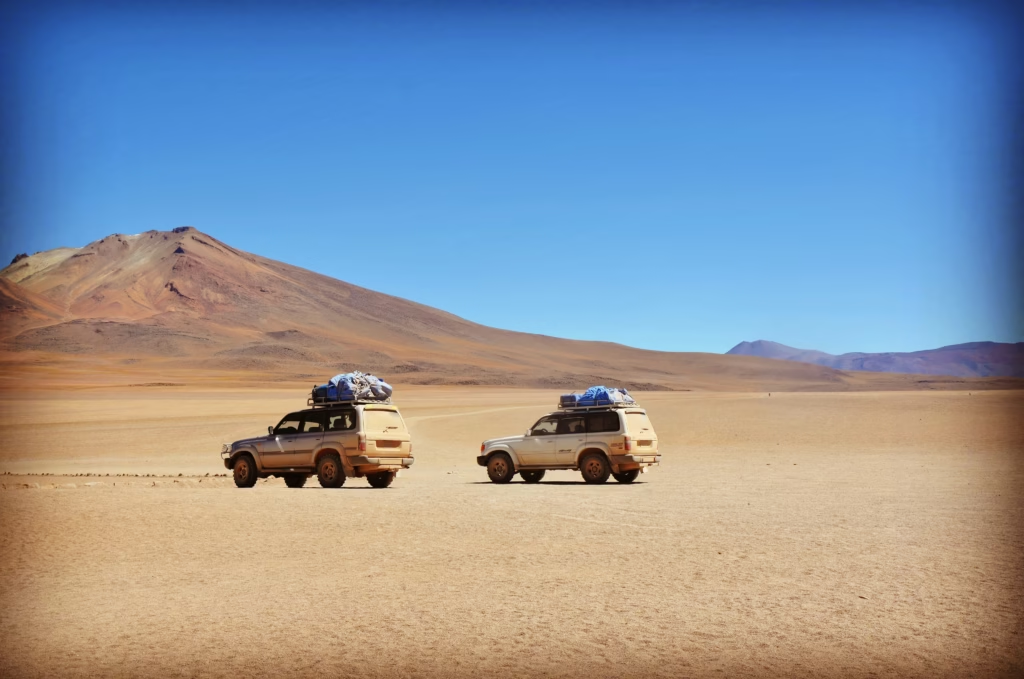
The Sud-Lípez abruptly extends the adventure begun in Uyuni. This hostile and isolated region can only be conquered by 4×4. You feel tiny, as if parachuted onto another planet far from any civilization.
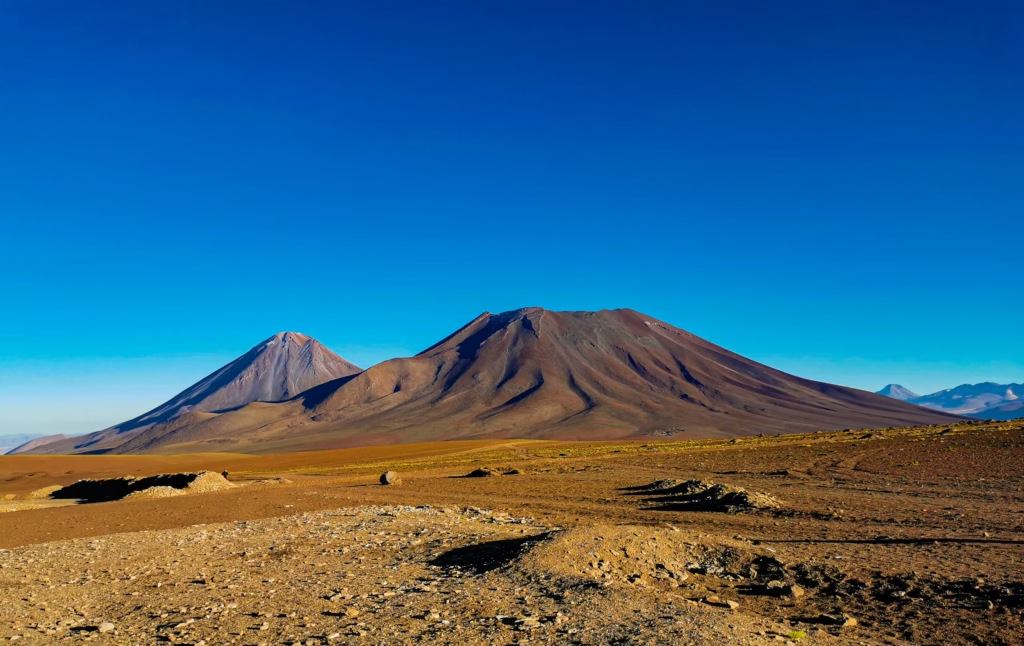
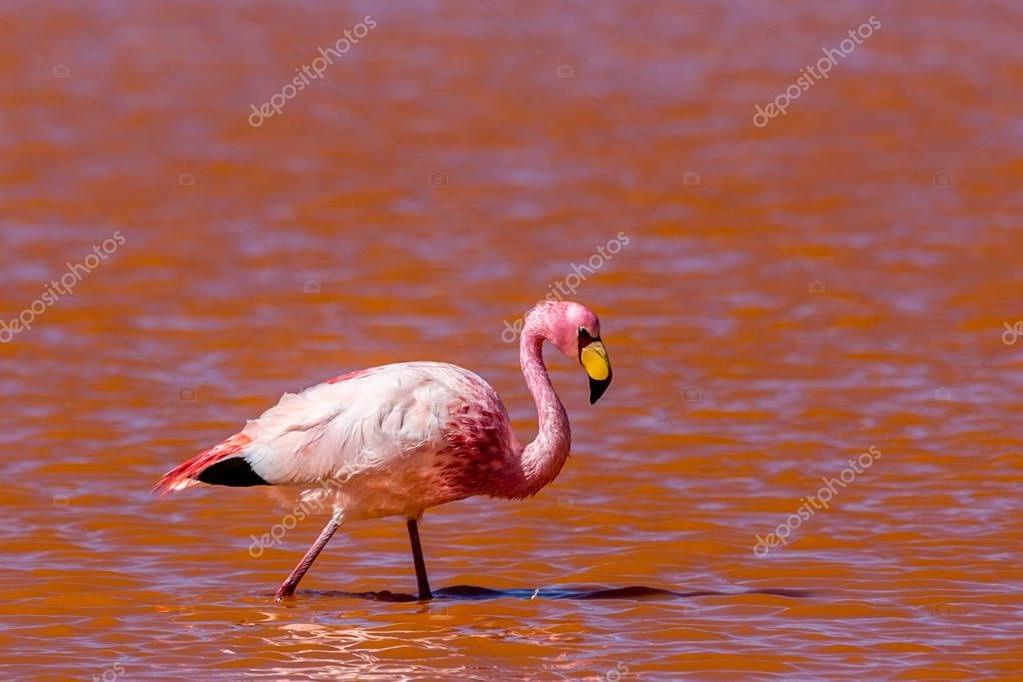
Here, deserts meet dormant volcanoes and lagoons with unreal hues. Laguna Colorada shines with its thousands of pink flamingos. Further on, Laguna Verde sparkles at the foot of Licancabur volcano.
But be careful not to miss the geological gems of the area:
- The Sol de Mañana geysers and their sulfuric vapors.
- The Polques hot springs for a high-altitude warm bath.
- The Stone Tree, an iconic rock formation sculpted by the wind.
Potosí: Immersion in Latin American Mining History
Potosí is not a relaxing stop; it’s an open-air history lesson. This city, one of the highest in the world, lives in the shadow of the famous Cerro Rico.
It was once the Spanish Empire’s treasury, the largest silver mine in existence. This opulence cost millions of lives, a tragedy etched into this UNESCO World Heritage site.
Descending into the mines today is a poignant experience, far from mass tourism. You will understand the harsh reality of the miners. Then, visit the Casa de la Moneda to grasp the economic impact.
Iconic Cities: History, Culture, and Local Life
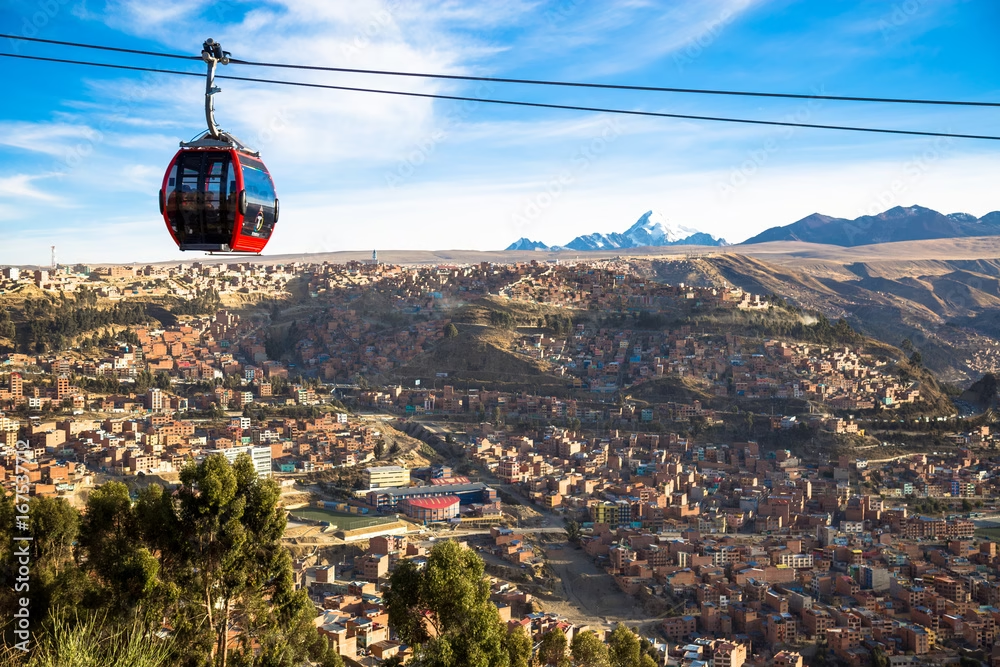
La Paz is not just visited; it’s experienced as a raw adventure. Imagine a giant basin perched in the Andes Mountains, where the chaos of traditional markets clashes with the verticality of modern buildings.
Forget the roads. The cable car network (Mi Teleférico) is the only viable means of transport and, above all, offers an exceptional view of this urban jungle.
- Stroll through the Witches’ Market (Mercado de las Brujas) to understand local beliefs.
- Explore the Valley of the Moon (Valle de la Luna) for its strange geological formations.
- Experience the atmosphere of the popular neighborhoods away from classic tourist routes.
La Paz: The Administrative Capital with Organized Chaos
Sucre: The Constitutional Capital, a Colonial Gem
A change of scenery with Sucre, the country’s official capital. Nicknamed the “White City,” it exudes a calm atmosphere and colonial charm, a stark contrast to the hustle and bustle of La Paz.
A UNESCO World Heritage site, the city captivates with its immaculate buildings and flowery patios. It was here, within these history-rich walls, that Bolivian independence was signed.
A few kilometers away, Cal Orcko Park offers a surprising interlude. There, you’ll discover one of the world’s largest dinosaur footprint sites, frozen on an impressive cliff.
Cochabamba: Bolivia’s Gastronomic Heart
Further down, Cochabamba claims its title as the city of “eternal spring”. Its pleasant year-round climate and relaxed atmosphere stand in stark contrast to the harshness of the Altiplano.
It is, above all, Bolivia’s gastronomic capital. You absolutely must taste the local dishes and get lost in La Cancha market, one of the largest in South America.
Finally, look up at the Cristo de la Concordia. This statue of Christ dominates the city and offers an impressive panorama, boldly rivaling Brazil’s Corcovado.
Adventures Between the Andes and the Amazon
Forget the urban pavement for areas where nature rules, from the Andean peaks to the Amazonian fringe.
The Takesi Trek: In the Footsteps of the Incas
Looking for an accessible adventure? The Takesi trek allows you to discover the diversity of Bolivian ecosystems without being an expert. This 2 to 3-day journey follows an authentic Inca paved path. It’s history unfolding beneath your feet.
The scenery changes dramatically. You leave the arid mountains of the Andes to gradually descend towards the humid Yungas forest. The climatic transition is abrupt and striking.
The authentic experience is paramount here. You will
Coroico: The Gateway to the Lush Yungas
Coroico is a semi-tropical village that serves as a refuge. It’s a real breath of fresh air after the oppressive altitude of La Paz. You are here at the gateway to the Amazon.
To get there, take the old “Death Road.” It is now a
Once there, explore the coffee, cocoa, and coca plantations. Take the opportunity to swim in waterfalls and observe the local wildlife. The presence of Afro-Bolivian communities adds a unique cultural richness.
Madidi National Park: Record Biodiversity
Madidi National Park is home to one of the world’s greatest biodiversities. It’s a raw immersion into the heart of the Amazon jungle. Biologists continuously record new species there.
Exploration begins from the town of Rurrenabaque. I recommend spending several days in an eco-lodge to truly experience the wildlife. It’s the best strategy to maximize your chances of observing wildlife.
You might encounter jaguars, monkeys, and capybaras there. Keep an eye out for the famous pink river dolphins. These encounters are truly unforgettable.
Sacred Sites and Geological Wonders
Bolivia is also a journey through time, encountering ancient civilizations and geological phenomena that defy imagination.
Lake Titicaca: The Cradle of Inca Civilization
Lake Titicaca stands as the world’s highest navigable lake. Its mystical aura immediately captivates visitors. It is a place of major cultural importance.
A deep blue inland sea dominates the landscape. The snow-capped peaks of the Cordillera Real majestically encircle it. This setting offers a striking visual spectacle. Nature dictates its laws here.
The town of Copacabana serves as a starting point for excursions. It is a vital pilgrimage destination for Bolivians. The atmosphere there is unique.
Isla del Sol: Mystical Hike at 4,000 Meters
Isla del Sol represents the absolute spiritual heart of Lake Titicaca. Andean mythology places the birth of Inca civilization here. It is a land steeped in history.
No cars circulate on this preserved island. You move solely on foot along ancient trails. Archaeological remains stand alongside panoramic views of the lake. Time seems to have stood still.
Take a boat to the north and cross the island southwards. It’s the best way to discover the area. I recommend staying with locals. The immersion in Aymara culture will be complete.
Torotoro National Park: In the Footsteps of Dinosaurs
Torotoro National Park is a hidden gem for geology enthusiasts. It remains easily accessible from the city of Cochabamba. It’s a surprising stop.
You’ll discover spectacular canyons and waterfalls there. Exploring caves, such as the Umajalanta cavern, is intense. The ground reveals thousands of perfectly preserved dinosaur footprints. It’s a true open-air museum.
Allow at least two days to explore the park. Stay overnight in the small village of Torotoro. This way, you’ll soak up the local atmosphere.
Unique Experiences and Bolivian Flavors
Beyond the major sites, Bolivia can also be discovered through more intimate experiences that awaken the taste buds and the spirit of adventure.
Tarija: Tasting on the World’s Highest Wine Route
Forget the stereotypical image of the arid Altiplano. Tarija, located in the south of the country, surprises with its striking resemblance to Andalusia, offering a mild climate and a festive atmosphere that contrasts with the rest of the territory.
This is where Bolivia’s wine reputation is made. The vineyards climb to over 2,000 meters in altitude, making them the highest in the world and giving the wine a unique aromatic intensity impossible to replicate elsewhere.
Don’t leave the region without visiting the bodegas to taste Singani, the national spirit. If you can, aim for February or March to participate in the excitement of the Fiesta de la Vendimia.
Tiwanaku and Sajama: Beyond the Beaten Path
Tiwanaku is not just a tourist stop; it’s the remnant of a major pre-Inca power. This spiritual center of one of the oldest South American civilizations impresses with its scale, notably thanks to the famous Gate of the Sun.
For lovers of raw landscapes, Sajama National Park is a clear choice. The first national park created in Bolivia, it reveals a wild Altiplano landscape dominated by Nevado Sajama volcano, the absolute roof of the country.
This natural sanctuary is home to geological treasures like geysers and thermal waters, surrounded by the world’s highest Queñua forest. It’s the ultimate destination for those who cherish solitude.
Bolivian Authenticity: More Than a Trip, an Encounter
Bolivia’s true wealth does not lie in its mines, but in its people. The country’s strength relies on the omnipresence of indigenous cultures, notably the Aymara and Quechua, which shape the national identity.
What is striking here is this raw authenticity, far from artificial staging. Bolivia still resists mass tourism, offering a daily life where ancestral traditions are not a show, but a living reality.
The best advice is to stray from classic routes to wander through local markets and chat with locals. It is in these spontaneous exchanges that you will touch the true Bolivian soul.
Your Practical Guide for an Unforgettable Trip to Bolivia
The 10 Places at a Glance
Visualize your itinerary with this precise summary. Everything is here to help you decide.
| Iconic Place | Region | Approx. Altitude | Best Season | Key Activity |
|---|---|---|---|---|
| Salar de Uyuni | Altiplano | 3,650 m | April–November (dry) / Jan–March (mirror effect) | 4×4 excursion, photos |
| Sud-Lípez | Altiplano | 4,000 – 5,000 m | April–November | Road trip, desert landscapes |
| La Paz | Andes | 3,640 m | April–November | Urban exploration, cable car |
| Sucre | Andes | 2,800 m | Year-round | Culture, colonial history |
| Lake Titicaca | Altiplano | 3,812 m | April–November | Hiking (Isla del Sol), culture |
| Madidi National Park | Amazon | 200 – 6,000 m | April–October (dry season) | Wildlife, jungle trek |
| Torotoro National Park | Andes | 2,600 m | April–November | Paleontology, caving |
| Takesi Trek | Andes / Yungas | 2,000 – 4,650 m | April–October | Hiking, cultural immersion |
| Coroico | Yungas | 1,700 m | Year-round | Cycling descent, relaxation |
| Tarija | Valleys | 1,850 m | Year-round (Feb–March for grape harvest) | Wine tourism, gastronomy |
Essential Tips: Safety, Health, and Altitude
Altitude is unforgiving if neglected from the start. Doctors recommend acclimatizing for two days in La Paz or Sucre. Drink three liters of water daily to avoid “soroche” (altitude sickness). Coca tea remains your best natural ally.
Don’t leave without seeing your doctor for vaccinations. A comprehensive first-aid kit often saves a trip, especially for digestion. Experienced travelers always pack broad-spectrum antibiotics. It’s better to be safe than to spoil your stay.
Vigilance is essential in bus stations and cities. Keep your valuables close to you, never in checked luggage. A moment of inattention can be costly.
Thorough preparation avoids many logistical headaches once you’re there. Here’s what most tourists forget before departure. Check these three vital points:
- Take out good travel insurance that covers repatriation.
- Pack clothes for all temperatures (layering technique).
- Carry cash with you as ATMs are rare in rural areas.
Travel Responsibly
Bolivia remains an extremely fragile ecosystem despite its raw beauty. Mass tourism is starting to leave visible traces. We have a responsibility to protect this unique natural heritage. Your impact must be positive or entirely neutral.
“Cholitas” are not mere tourist attractions for your social media. Always ask for permission before taking out your camera; it’s basic etiquette. A simple refusal must be accepted. A few words of Spanish or Aymara often open many more doors.
Leave absolutely nothing behind, especially in national parks. A plastic waste takes centuries to disappear from the Andean landscapes. Choose local agencies that adhere to a strict ethical charter. It’s the only way to preserve these lands.
Buy your crafts directly from producers without going through intermediaries. Eat in small family restaurants to taste the real cuisine. Your money thus truly supports the local economy.
Bolivia unveils a mosaic of breathtaking landscapes, from Andean peaks to the Amazon jungle. This authentic country, vibrant with millennia-old traditions, offers much more than just a trip: a true human adventure. Prepare to be dazzled by this land of contrasts and to live an unforgettable experience in the heart of South America.
FAQ
What is the most iconic site in Bolivia?
Undoubtedly, the Salar de Uyuni is the most famous natural landmark. This immense salt flat, spanning over 10,000 km², visible from space, offers a breathtaking spectacle, especially when it transforms into a giant mirror during the rainy season.
Which city is considered the most beautiful in Bolivia?
Sucre, nicknamed the “White City,” often holds this title. A UNESCO World Heritage site, it captivates travelers with its immaculate colonial architecture, flowered patios, and peaceful atmosphere, far from the hustle and bustle of large metropolises.
What are the major archaeological sites to explore?
The Tiwanaku site, with its famous Gate of the Sun, is essential for understanding pre-Inca civilizations. On Lake Titicaca, the Isla del Sol also houses sacred remains, such as the Inca stairs and the fountain of youth, in a magnificent natural setting.
What are the must-see places on a first trip?
Beyond the Salar de Uyuni, a classic itinerary must include Lake Titicaca, the dizzying city of La Paz, and the Sud-Lípez region for its colorful lagoons. For a complete experience, an immersion in the Amazon via Madidi National Park is highly recommended.
What is Bolivia’s geographical particularity?
Bolivia stands out for its extreme biodiversity and altitude contrasts. The country stretches from the snow-capped peaks of the Andes Mountains and the arid Altiplano to the lush tropical forests of the Amazon, offering a unique variety of landscapes in South America.
What is the best time to visit Bolivia?
The dry season, from April to November, is ideal for enjoying blue skies and exploring the Altiplano or the Amazon in good conditions. However, the months of January to March are preferred by photographers wishing to observe the mirror effect on the Salar de Uyuni.
La Paz or Sucre: which is the true capital?
Bolivia has two capitals. Sucre is the constitutional and historical capital where independence was signed, while La Paz is the seat of government and the administrative capital, constituting the country’s political and economic center.

