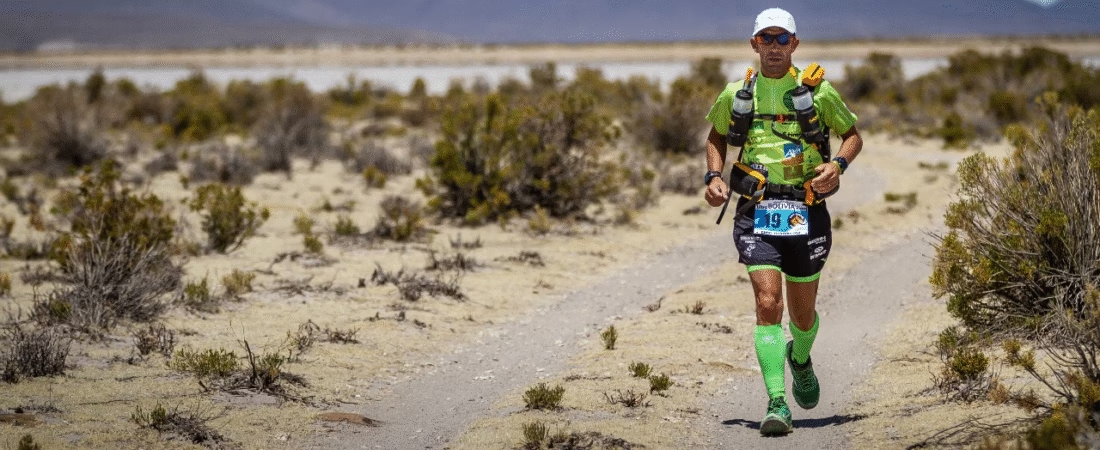
Tired of endurance races without a real challenge? The Ultra Bolivia Race shatters those expectations with its 220 km over 7 stages in the Bolivian Altiplano (over 3600 m altitude), where strict partial self-sufficiency and nighttime temperatures below -10°C test your physical and mental limits. Discover the secrets to managing 14,000 kilocalories without a gas stove, navigating between endless salt flats, and overcoming the daily challenges of this unique adventure. An experience that transforms every participant into a hero, etched forever on the Salar de Uyuni.
- The Ultra Bolivia Race: An Extraordinary Adventure in the Heart of the Bolivian Altiplano
- The Challenge of Partial Self-Sufficiency: Managing Essentials in Extreme Environments
- Unique Routes and Environments: An Immersion in the Heart of Bolivia
- The Stages of the Ultra Bolivia Race: A Daily Challenge
- Preparation, Logistics, and Altitude Management: Keys to Success
- The Ultra Bolivia Race: An Experience Beyond Competition
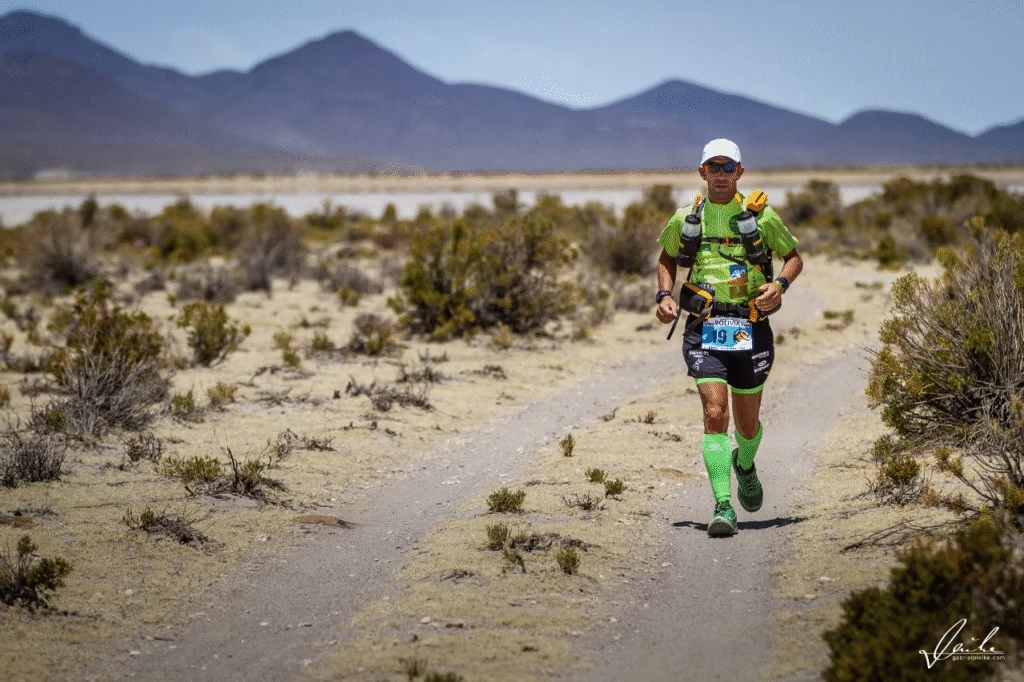
The Ultra Bolivia Race: An Extraordinary Adventure in the Heart of the Bolivian Altiplano
Race Overview
The next edition of the Ultra Bolivia Race will take place from September 21 to 27, 2026. This 220 km, 7-stage race crosses the Bolivian Altiplano at over 3600 meters altitude. Only 4 spots remain available to challenge these extreme conditions.
The route features unique landscapes: Salar de Coipasa, the archaeological site of Alcaya at 4100 meters, Tunupa volcano, and Salar de Uyuni. Runners face nighttime temperatures of -10°C and daytime temperatures of +10°C. Each stage involves a total positive elevation gain of 2400 meters.
With strict partial self-sufficiency, each participant carries their equipment and 14,000 kcal of food. Gas stoves are prohibited. Water is provided at checkpoints, but water bottles are mandatory. A medical team provides support throughout the event.
The 7 stages must be completed within a maximum of 10 hours. Participants who do not meet this deadline are ranked according to the kilometers covered. The altitude and extreme climatic conditions require rigorous preparation. Only 4 spots are available for this unique edition.
The Challenge of Partial Self-Sufficiency: Managing Essentials in Extreme Environments
Principles and Implications of Self-Sufficiency
Partial self-sufficiency requires rigorous preparation. Participants carry equipment, food, and personal belongings on the Altiplano at 3600m+. Water is provided at checkpoints and morning/evening bivouacs. Every gram influences performance at altitude, where rarefied air increases physical exertion. The race crosses demanding landscapes such as the Salar de Coipasa and the Salar de Uyuni.
Food and Energy Management
Minimum 14,000 kcal for 7 days (2,000/day). Gas stoves prohibited: solid fuel tablets mandatory. Dehydrated foods are preferred for their lightness and caloric density. Precise calorie management is crucial to avoid exhaustion during the stages.
Essential Equipment for Extreme Conditions
Extreme conditions (-10°C at night, intense sun on salt flats) require adapted equipment. A -10°C sleeping bag and insulating mat are essential. Sun protection (cream, glasses) is mandatory. Safety items: compass, knife, survival blanket checked:
- Robust backpack for 220 km over 7 stages
- 2 headlamps with spare batteries
- Lightweight cooking utensils without a gas stove
- First aid kit adapted to isolated environments
- Salt tablets for electrolyte balance
- 2 one-liter water bottles
Every detail impacts safety and performance. Adhering to these instructions is vital for success in the Ultra Bolivia Race.
Unique Routes and Environments: An Immersion in the Heart of Bolivia
The Iconic Landscapes of the Altiplano
The Bolivian Altiplano, at over 3600 meters, offers unique landscapes. The race crosses the Salar de Coipasa (2500 km²), the archaeological site of Alcaya (4100 m), Tunupa Volcano, and the Salar de Uyuni. The terrain varies between salt flats, rocky trails, and volcanic landscapes. Authentic villages and cactus islands complete this exceptional route. The Alcaya site, with its Chullpa ruins and mummies, impresses runners. Tunupa dominates the landscape, offering a spectacular view of the Salar de Uyuni.
Extreme Climatic Conditions
In September, nighttime temperatures drop to -10°C, while daytime temperatures rarely exceed +10°C. Strong sunlight and glare on the salt flats require protective eyewear. High altitude reduces oxygen, increasing fatigue. Partial self-sufficiency requires carrying your own equipment. A -10°C sleeping bag and solid fuel stoves are mandatory. Managing 2000 kcal daily is imperative. The total elevation gain of 2400 meters accentuates the physical difficulty.
The Starting Point and the Mythical Finish
The race starts in Salinas, 550 km south of La Paz. The awards ceremony is held on the Salar de Uyuni, a symbol of the event. This majestic setting marks the end of a unique challenge. This 220 km, 7-stage route, entirely self-sufficient, tests the resilience of athletes.
The Stages of the Ultra Bolivia Race: A Daily Challenge
Progression and Specifics of Each Race Day
Ultra Bolivia Race (Sept 21-27, 2026): Altiplano (+3600m). 7 stages: salt flats, Alcaya, Tunupa Volcano. Nights -10°C. Partial self-sufficiency: food (2000 kcal/day), equipment, navigation without a stove. 10h/stage: latecomers ranked by distance. Start Salinas (550 km La Paz).
| Step | Distance (km) | Elevation Gain (mD+) | Elevation Loss (mD-) | Time Limit (h) |
|---|---|---|---|---|
| 1 | 33 | 500 | 500 | 10 |
| 2 | 27 | 200 | 200 | 10 |
| 3 | 33 | 850 | 850 | 10 |
| 4 | 29 | 520 | 520 | 10 |
| 5 | 30 | 130 | 200 | 10 |
| 6 | 42 | 100 | 100 | 10 |
| 7 | 26 | 60 | 40 | 10 |
High elevation gains (850m stage 3) and altitude require adaptation. Salar de Uyuni (10,000 km²): unique landscapes. No stove: crucial food management. Total elevation gain 2400m. Variable conditions: sun and glacial winds.
Preparation, Logistics, and Altitude Management: Keys to Success
Altitude Acclimatization: A Determining Factor
The race crosses the Altiplano at over 3600 meters, reaching 4100 meters at Alcaya. The high altitude requires rigorous acclimatization.
Rest 2-3 days in La Paz (3600 m) after arrival. Monitor for AMS symptoms: headaches, nausea, shortness of breath.
Hydrate regularly to avoid dehydration. A detailed information letter is provided. Nighttime temperatures down to -10°C, daytime temperatures between +2 and +10°C, requiring appropriate clothing layers.
Logistics Before and After the Race
Meet at Hotel Naira in La Paz. Organized transfer to Salinas (550 km, 8-hour drive). Hotel nights in Salinas before and Colchani after the race.
Flights to La Paz (El Alto airport, the highest in the world) and Uyuni are at your expense. Water distributed at checkpoints and bivouacs. Water bottles (2x1L) mandatory for personal storage. Water is also provided at morning and evening bivouacs.
Personal food: minimum 14,000 kcal for 7 days. Gas stoves prohibited, use solid fuel tablets.
Registration and Navigation Procedures
Registration: signed form, passport, repatriation insurance, deposit, medical certificate and ECG (less than 30 days old). Limited spots.
Marked route with map provided. 24/7 medical monitoring provided by the organization.
- Rest 2-3 days in La Paz for acclimatization
- Monitor signs of fatigue and AMS
- Plan transfers (El Alto and Uyuni airports) carefully
The Ultra Bolivia Race: An Experience Beyond Competition
A Race That Leaves a Lasting Impression
The Ultra Bolivia Race covers 220 km over 7 stages on the Bolivian Altiplano, at over 3600 meters altitude. Temperatures range from -10°C at night to +10°C during the day. Participants must carry their own food and equipment.
The route crosses unique landscapes: Salar de Coipasa, the archaeological site of Alcaya at 4100 m, Tunupa volcano, and Salar de Uyuni. Cultural immersion in local villages enriches the experience.
The Reward of the Salar de Uyuni
The awards ceremony takes place on the Salar de Uyuni, a symbol of accomplishment. This white salt expanse offers an exceptional reward after a colossal challenge.
Each runner leaves with lasting pride, marked by Bolivia’s wild beauty and the resilience demonstrated in the face of extremes.
The Ultra Bolivia Race goes beyond a simple sporting challenge: it’s an intense human adventure, blending extreme physical effort, magnificent Bolivian landscapes, and cultural immersion. The ceremony on the Salar de Uyuni seals this legendary journey. An event that leaves an indelible mark with its wild beauty and the pride of having pushed one’s limits.
FAQ
What is the total distance and number of stages of the Ultra Bolivia Race?
The Ultra Bolivia Race is a 220-kilometer event spread over 7 distinct stages. Each stage presents unique challenges in terms of distance and elevation, crossing extreme landscapes of the Bolivian Altiplano. Participants must adhere to a 10-hour time limit per stage, although those who do not meet it can continue the race, even if they are ranked based on kilometers covered.
What are the main challenges related to altitude during the race?
The average altitude of the race exceeds 3600 meters, with peaks reaching 4100 meters at the archaeological site of Alcaya. Participants must acclimatize before departure, by planning 2 to 3 days of rest in La Paz. Significant thermal variations and the risk of Acute Mountain Sickness (AMS) require constant vigilance, especially regarding symptoms like headaches or nausea. The organization provides a detailed letter on altitude adaptation to prepare runners.
What equipment is mandatory to participate in the Ultra Bolivia Race?
Mandatory equipment includes a -10°C comfort sleeping bag, an insulating mat, a compass, a knife, a whistle, a survival blanket, two headlamps with spare batteries, cooking utensils, solid fuel tablets, a first aid kit, salt tablets, sunscreen, sunglasses, and two one-liter water bottles. Gas stoves are strictly prohibited, requiring the use of solid fuel for meal preparation.
How do participants manage their food during the race?
Participants must carry their own food, with a minimum of 14,000 kilocalories for 7 days (approximately 2,000 kcal per day). The organization distributes water at checkpoints and morning/evening bivouacs, but runners must bring their own water bottles. Gas stoves are prohibited, requiring the use of solid fuel tablets to cook meals, which necessitates meticulous food planning.
When will the next edition of the Ultra Bolivia Race take place?
The next edition of the Ultra Bolivia Race is scheduled from September 21 to 27, 2026. The start takes place in Salinas, located 550 km south of La Paz, with an organized transfer from Hotel Naira in La Paz. Registrations are limited and require sending a signed form, a copy of the passport, a repatriation insurance certificate, and a deposit.

