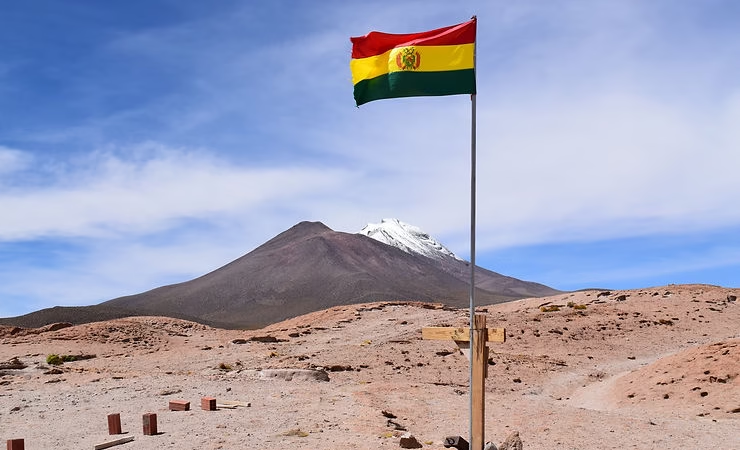
Préparer un voyage en Bolivie, c’est dire oui à l’aventure, à la diversité des paysages, et à un vrai choc culturel. Entre déserts de sel, montagnes andines, villes coloniales, jungle amazonienne et lacs d’altitude, ce pays d’Amérique du Sud offre une richesse unique à ceux qui osent sortir des sentiers battus.
Mais construire un itinéraire de 2 semaines en Bolivie, ce n’est pas si simple. Les distances sont longues, l’altitude est réelle, et les immanquables sont nombreux. C’est pourquoi je t’ai préparé un parcours réaliste et équilibré, basé sur mon propre voyage à travers le pays. Il te permettra de profiter des essentiels sans te presser, tout en laissant place à la découverte.
👉 Et si tu veux gagner du temps pour réserver tes activités à l’avance (excursion au salar d’Uyuni, visite des mines de Potosí, jungle à Rurrenabaque…), je te recommande de jeter un œil à cette sélection de circuits et d’expériences en Bolivie proposée par GetYourGuide.
Prêt(e) à partir ? On commence !
📅 Aperçu de l’itinéraire en Bolivie jour par jour
Voici un résumé rapide de ce que je te propose pour ces 2 semaines en Bolivie. Un itinéraire pensé pour alterner villes, nature, culture et grands espaces, avec un rythme adapté aux transports locaux et à l’altitude :
| Jour | Destination | À faire |
| 1 | La Paz | Arrivée, acclimatation, balade en ville |
| 2 | La Paz | Téléphérique, marché des sorcières, centre historique |
| 3 | La Paz → Sucre | Vol ou bus vers Sucre, installation |
| 4 | Sucre | Découverte de la ville blanche, mirador |
| 5 | Sucre → Potosí | Trajet + visite des mines de Potosí |
| 6 | Potosí → Uyuni | Route vers Uyuni, repos avant le tour |
| 7-9 | Salar d’Uyuni | Tour de 3 jours : désert de sel, lagunes, geysers |
| 10 | Retour à La Paz | Journée de transition |
| 11 | La Paz | Marchés, musées, montée à El Alto |
| 12-14 | Rurrenabaque | Jungle ou pampas : immersion amazonienne |
💡 Chaque étape est détaillée juste après : activités, conseils, où dormir, et quoi réserver pour profiter au max.
🏙️ Étape 1 : La Paz (Jours 1 à 3)
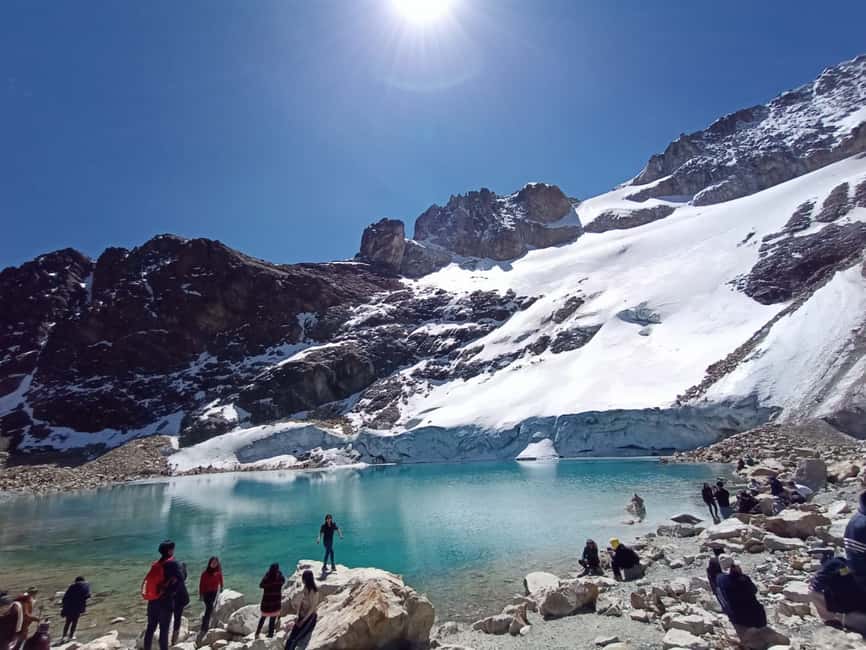
Impossible de commencer un itinéraire de 2 semaines en Bolivie sans passer par La Paz, la capitale la plus haute du monde, perchée à plus de 3 600 mètres d’altitude. C’est l’endroit idéal pour atterrir, s’acclimater doucement, et plonger dans l’ambiance unique du pays.
🌬️ Jour 1 – Arrivée et acclimatation
Si tu arrives en avion, prends le temps de récupérer du décalage horaire et surtout de t’habituer à l’altitude. Bois beaucoup d’eau, évite l’alcool et opte pour une petite marche tranquille dans ton quartier.
💡 Astuce terrain : Prends une infusion de maté de coca dès ton arrivée – c’est la boisson locale recommandée contre le soroche (le mal de l’altitude).
🚠 Jour 2 – Explorer La Paz en hauteur
Découvre La Paz autrement grâce à Mi Teleférico, le réseau de téléphériques urbains le plus haut du monde. Pour quelques centimes, tu peux traverser la ville d’en haut avec une vue panoramique incroyable.
À ne pas manquer :
- Marché des sorcières (Mercado de las Brujas)
- Rue Jaén, l’une des plus jolies de la ville
- Plaza Murillo et le centre historique
- Belvédère de Killi Killi pour le coucher de soleil
🛫 Jour 3 – Trajet vers Sucre
Plusieurs options s’offrent à toi :
- ✈️ Vol direct (45 min) → rapide, pratique, souvent à bon prix
- 🚌 Bus de nuit (12h environ) → économique mais long, altitude éprouvante
🎒 Si tu veux gagner une demi-journée, privilégie l’avion pour maximiser ton itinéraire de 2 semaines en Bolivie.
🛏️ Où dormir à La Paz ?
Voici quelques hébergements recommandés :
- Budget : The Adventure Brew Hostel
- Confort abordable : Hostal Naira
- Haut de gamme : Atix Hotel (quartier de Calacoto)
🧭 La Paz te plonge directement dans l’ambiance bolivienne : colorée, animée, un peu chaotique… mais totalement envoûtante.
🏛️ Étape 2 : Sucre (Jours 4 à 5)
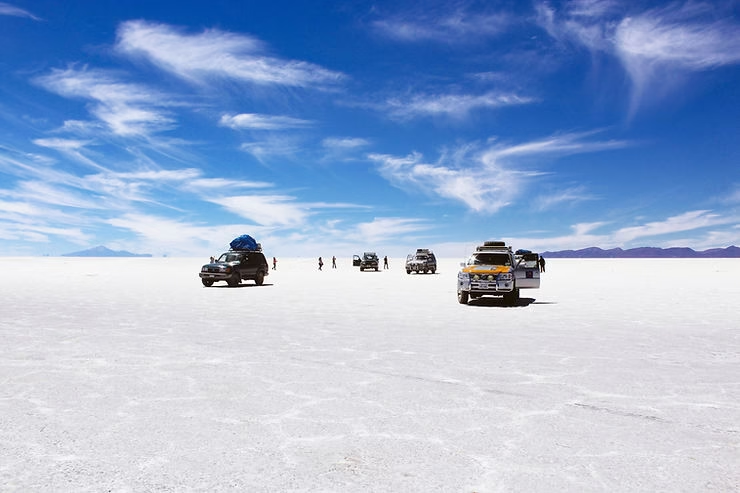
Deuxième étape incontournable de ton itinéraire de 2 semaines en Bolivie, Sucre est une bouffée d’air après le tumulte de La Paz. Classée au patrimoine mondial de l’UNESCO, cette ville coloniale pleine de charme t’offre un rythme plus doux, des façades blanches éclatantes, et une ambiance chaleureuse.
✈️ Comment y aller depuis La Paz ?
- ✈️ Avion : Vols fréquents avec Amaszonas ou EcoJet (45 min environ)
- 🚌 Bus de nuit : Plus long (10 à 12h), mais possible si tu veux économiser une nuit d’hôtel
✨ Conseil perso : choisis l’avion si ton budget le permet. Cela te laisse plus de temps sur place, essentiel dans un itinéraire serré.
🏙️ Jour 4 – Découverte du centre historique
À Sucre, tout se visite à pied. Voici les spots à ne pas manquer :
- Plaza 25 de Mayo
- La Catedral Metropolitana
- Le monastère San Felipe de Neri (vue panoramique au coucher du soleil)
- La Casa de la Libertad, berceau de l’indépendance bolivienne
💡 Flâne dans les rues blanches du centre, et arrête-toi au marché central pour goûter un jus frais ou un almuerzo local à moins de 2€.
📸 Jour 5 – Culture & panorama
Tu peux continuer ta visite culturelle ou opter pour une activité un peu plus locale :
- Visiter le musée ethnographique ASUR
- Monter jusqu’au mirador de La Recoleta pour une vue splendide sur la ville
- Atelier de tissage traditionnel (possible via certaines agences locales)
Si tu voyages léger, c’est aussi le bon moment pour faire un peu de lessive et recharger les batteries avant de reprendre la route.
🛏️ Où dormir à Sucre ?
- Budget : KulturBerlin (avec soirées animées et bon resto)
- Rapport qualité-prix : Casa Verde B&B
- Confort & tranquillité : Mi Pueblo Samary Hotel Boutique
Sucre est une parenthèse agréable dans ton itinéraire de 2 semaines en Bolivie : moins d’altitude, plus de confort, et une ambiance paisible. Une vraie respiration avant de repartir vers l’aventure dans les montagnes et le désert.
⛏️ Étape 3 : Potosí & Uyuni (Jours 6 à 9)
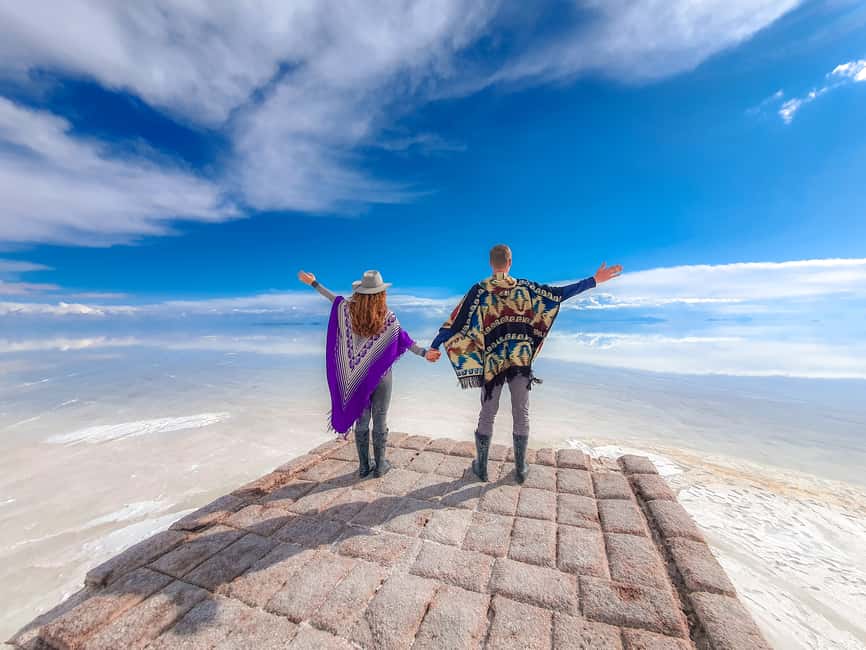
On entre ici dans le cœur de l’aventure. Après les villes, place aux paysages extrêmes et à l’histoire minière de la Bolivie. Ton itinéraire de 2 semaines en Bolivie ne serait pas complet sans un passage par Potosí, l’ancienne ville la plus riche du continent, et surtout sans une immersion de 3 jours dans le salar d’Uyuni, l’un des plus beaux spectacles naturels du monde.
🚐 Jour 6 – De Sucre à Potosí puis Uyuni
Le matin, départ en bus ou taxi partagé vers Potosí (environ 3h de route).
Option 1 : visite express des mines
- Tu peux faire un tour guidé dans une mine coopérative (2-3h), à condition d’être en bonne forme physique. Claustrophobes ou sensibles à la poussière : s’abstenir.
- Expérience intense, mais qui aide à comprendre le passé et la dure réalité actuelle des mineurs boliviens.
Ensuite, reprends la route vers Uyuni dans l’après-midi ou en soirée (6h de trajet). Tu peux aussi dormir à Potosí et faire le trajet le lendemain matin.
💡 Astuce logistique : réservez à l’avance votre bus vers Uyuni, surtout en haute saison (juin à septembre).
🏜️ Jours 7 à 9 – Excursion dans le salar d’Uyuni
C’est sans aucun doute l’un des moments forts de ton itinéraire de 2 semaines en Bolivie.
Tu peux choisir :
- Tour de 3 jours / 2 nuits → recommandé si tu veux voir les lagunes, les geysers, le désert de Siloli et les flamants roses
- Tour de 2 jours / 1 nuit → pour un timing plus serré
Jour 1 : Salar d’Uyuni, cimetière de trains, île Incahuasi
Jour 2 : Lagune Colorada, geysers Sol de Mañana, bains thermaux
Jour 3 : Lagune Verte, désert de Dali, retour à Uyuni
🎟️ Réserve ton tour à l’avance pour éviter les mauvaises surprises : voir les options disponibles ici
🎒 Que prévoir pour l’excursion ?
- Vêtements chauds (il peut geler la nuit)
- Lunettes de soleil, crème solaire, baume à lèvres
- Une gourde filtrante pour éviter d’acheter des bouteilles (👉 insère ton lien affilié OKO ici)
- Des snacks et un rouleau de papier toilette (toujours utile 😅)
🛏️ Où dormir à Uyuni (avant/après le tour) ?
- Budget : Piedra Blanca Backpackers
- Confort : Hotel de Sal Casa Andina
- Authentique : Tonito Hotel (restaurant Minuteman Pizza à tester !)
Cette étape est l’une des plus mémorables d’un voyage de deux semaines en Bolivie. Tu passeras par des décors lunaires, tu verras des flamants roses à 4 000 mètres d’altitude, et tu réaliseras à quel point ce pays est unique.
🛬 Étape 4 : Retour à La Paz & exploration (Jours 10 à 11)
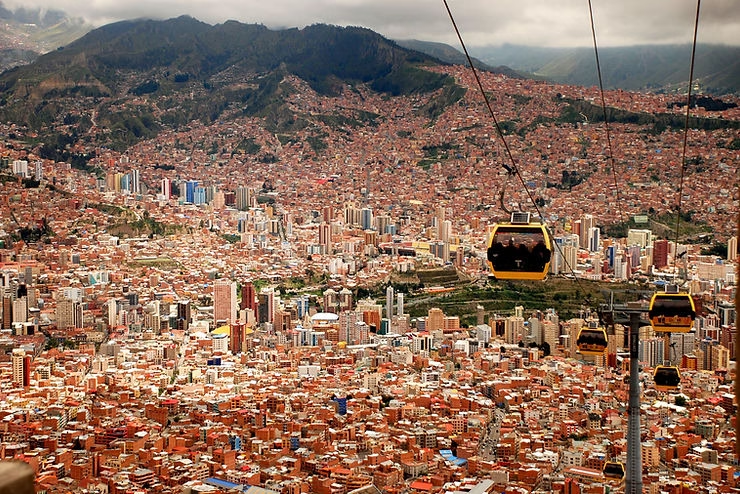
Après trois jours d’aventure dans le salar et les paysages du Sud Lipez, il est temps de revenir à La Paz pour une étape un peu plus urbaine. Ces deux jours sont parfaits pour te reposer, faire quelques emplettes, et découvrir ce que tu n’as pas encore eu le temps de voir au début de ton itinéraire de 2 semaines en Bolivie.
🚌 Jour 10 – Retour à La Paz
Tu peux revenir à La Paz :
- Soit en vol depuis Uyuni (rapide, souvent en matinée)
- Soit en bus de nuit (environ 10h)
💡 Le vol est plus cher mais t’évite de perdre une journée entière. Si tu es fatigué par le tour du salar, n’hésite pas à l’opter !
Arrivé à La Paz, choisis un hôtel confortable pour recharger les batteries.
🏙️ Jour 11 – Derniers incontournables à La Paz
Voici quelques idées pour bien profiter de ta journée :
- 🛍️ Marché de l’Alto (jeudi et dimanche) : immense marché local avec de tout, ambiance 100% bolivienne
- 🚠 Téléphérique jusqu’à El Alto : vues incroyables sur toute la ville
- 🏛️ Musée de la coca ou musée national d’ethnographie
- 🌅 Mirador Killi Killi ou encore mirador de Laikakota pour la fin de journée
🧭 Si tu veux faire une activité guidée ou insolite, jette un œil à cette sélection d’expériences à La Paz
🛏️ Où dormir à La Paz pour ces deux nuits ?
Tu peux rester dans le même hébergement qu’au début ou tester un autre quartier plus calme :
- Calacoto : plus résidentiel, à l’écart du centre
- Sopocachi : jeune, animé, idéal pour les cafés et restaus
Ces deux journées font office de pont entre le sud et l’Amazonie dans ton itinéraire. C’est aussi l’occasion de racheter ce que tu aurais oublié avant de filer vers la dernière grande étape : Rurrenabaque et la jungle bolivienne 🌿
🌴 Étape 5 : Rurrenabaque & l’Amazonie bolivienne (Jours 12 à 14)
Pour finir ton itinéraire de 2 semaines en Bolivie en beauté, direction le nord du pays et l’ambiance totalement différente de la jungle amazonienne. En à peine 45 minutes de vol depuis La Paz, tu te retrouves à Rurrenabaque, petite ville tropicale entourée de nature sauvage. Idéal pour une immersion loin du monde connecté.
✈️ Comment aller à Rurrenabaque ?
- Vols quotidiens avec Amaszonas depuis La Paz (environ 45 min)
- Attention : vols parfois annulés à cause de la météo
- 🚌 Option possible en bus (~18h) mais longue et inconfortable
💡 Réserve ton vol à l’avance, et prévois un peu de marge pour le retour en cas d’aléas météo.
🐒 Choisir entre jungle et pampas
Depuis Rurre, deux options s’offrent à toi :
1. La jungle (Parc Madidi)
- Trek, observation d’animaux, immersion totale
- Plus physique et plus nature
- Hébergements en lodge écologiques
2. La pampa
- Balade en pirogue, observation facile de la faune (singes, caïmans, dauphins roses)
- Moins de marche, plus de confort
- Idéal pour les photographes ou les familles
🎟️ Tu peux réserver ton tour facilement ici : excursions Rurrenabaque avec GetYourGuide
🎒 Que prévoir ?
- Répulsif moustiques fort (jungle = bestioles garanties)
- Gourde filtrante (OKO, Lifestraw)
- Maillot de bain (si baignade possible avec les dauphins)
- Lampe frontale, vêtements légers mais couvrants
- Sac étanche ou pochette waterproof
🛏️ Où dormir à Rurrenabaque ?
- Avant ou après ton tour :
- Budget : Hostal El Lobo
- Confort nature : Mashaquipe Ecolodge
- Immersion : Chalalan Ecolodge (dans le parc Madidi)
🚨 Retour vers La Paz ou l’aéroport ?
- Soit tu prends un vol retour vers La Paz directement le jour 14
- Soit tu reviens la veille si ton vol international est le lendemain (option plus sécurisée)
Rurrenabaque est la touche finale parfaite de ton itinéraire. Après les montagnes et le désert, tu plonges dans un tout autre décor. Beaucoup de voyageurs disent que c’est ici qu’ils ont vécu leur moment le plus fort en Bolivie.
🧳 Préparer ce voyage : conseils pratiques
Un bon itinéraire de 2 semaines en Bolivie, c’est aussi de la logistique bien pensée. Voici tout ce qu’il faut savoir pour voyager sereinement, éviter les galères, et profiter à fond.
💰 Budget moyen pour 2 semaines en Bolivie
La Bolivie est l’un des pays les plus abordables d’Amérique du Sud. Voici une estimation de budget par jour :
| Poste | Prix moyen/jour |
| Hébergement | 10 à 30 € |
| Repas | 5 à 10 € |
| Transports | 5 à 15 € |
| Activités (tours, musées…) | 10 à 30 € |
| Extras (souvenirs, snacks…) | 5 à 10 € |
🔍 Pour 2 semaines, compte en moyenne 600 à 900 € tout compris (hors vols internationaux).
🏥 Santé & altitude
- La majorité des destinations de ton itinéraire se situent entre 3 000 et 4 000 m d’altitude.
- Le mal aigu des montagnes (soroche) peut affecter les voyageurs non acclimatés : bois beaucoup, évite l’alcool, marche doucement.
- Prends toujours une petite trousse avec paracétamol, pansements, désinfectant et médicaments pour l’altitude si besoin (Diamox, sur prescription).
💡 Pense à une assurance voyage adaptée ! Certaines couvrent les annulations de vol à Rurrenabaque ou les urgences en altitude.
📶 Internet & eSIM en Bolivie
Le wifi est souvent lent ou capricieux, surtout en dehors des grandes villes. Pour rester connecté :
- 📱 Choisis une eSIM internationale avec données illimitées (Holafly ou Airalo)
- Évite les SIM locales si tu ne parles pas espagnol ou que tu ne restes pas longtemps
👉 Je recommande l’eSIM Holafly pour la Bolivie, avec le code promo LAREUNION pour une réduction immédiate.
🎒 Équipement à emporter absolument
Voici la liste des indispensables testés et approuvés pendant mon voyage :
- 🎒 Sac à dos 40-50L (léger et compact)
- 🧥 Veste coupe-vent et polaire (surtout pour Uyuni)
- 🥾 Baskets ou chaussures de rando
- 🌞 Lunettes de soleil, crème solaire
- 💧 Gourde filtrante OKO (pratique + écolo)
- 📷 Caméra type Insta360 ou GoPro pour capter les paysages
Ces conseils t’aideront à profiter pleinement de ton voyage de deux semaines en Bolivie, sans stress ni imprévus inutiles. Un minimum d’organisation pour un maximum de liberté !
❓ FAQ – Itinéraire de 2 semaines en Bolivie
Est-ce que 2 semaines suffisent pour visiter la Bolivie ?
Oui, 2 semaines permettent d’explorer les incontournables du pays : La Paz, Sucre, Uyuni et l’Amazonie. Il faut un itinéraire bien structuré (comme celui proposé ici) et quelques vols internes pour gagner du temps.
Faut-il parler espagnol pour voyager en Bolivie ?
Ce n’est pas obligatoire, mais quelques bases sont très utiles. Les locaux ne parlent presque jamais français, et peu parlent anglais. Une app de traduction hors ligne peut beaucoup aider.
Est-ce que la Bolivie est dangereuse ?
Globalement non, surtout si tu respectes les précautions de base : ne pas exhiber d’objets de valeur, éviter les déplacements nocturnes isolés, et suivre les consignes locales. C’est un pays sûr pour les voyageurs, même en solo.
Quel est le meilleur moment pour partir ?
La saison sèche, entre mai et octobre, est idéale pour voyager dans l’altiplano et visiter Uyuni. Attention, les nuits peuvent être très froides à cette période, notamment dans le désert.
Peut-on faire ce voyage en mode petit budget ?
Oui ! La Bolivie est l’un des pays les plus économiques d’Amérique du Sud. Avec un peu d’organisation, tu peux voyager confortablement avec moins de 40 € par jour.
✅ Conclusion
Ce guide complet pour un itinéraire de 2 semaines en Bolivie te donne toutes les clés pour organiser ton voyage de manière fluide, équilibrée et pleine d’expériences inoubliables.
Entre les hauteurs vertigineuses de La Paz, les rues paisibles de Sucre, l’immensité blanche du salar d’Uyuni et la nature luxuriante de l’Amazonie, la Bolivie offre une diversité qu’aucun autre pays ne réunit sur un si petit territoire.
👉 Besoin d’encore plus de conseils ?Abonne-toi à ma newsletter pour recevoir mes bons plans exclusifs, checklists, et idées d’itinéraires alternatifs directement dans ta boîte mail.
👉 Et si tu veux réserver tes activités en avance, je te recommande cette sélection fiable de circuits et d’expériences en Bolivie.
Bon voyage, et surtout… vive la Bolivie ! 🇧🇴
Bien construire un itinéraire de 2 semaines en Bolivie
Deux semaines suffisent pour vivre un très beau premier voyage en Bolivie, à condition de rester réaliste sur les distances et de ménager l’acclimatation. Le plus efficace consiste souvent à combiner La Paz, le Salar d’Uyuni, le lac Titicaca et une ou deux étapes complémentaires, plutôt que d’essayer de tout voir trop vite.
Questions fréquentes avant de partir
- 2 semaines, est-ce assez ? Oui, pour découvrir les incontournables et avoir un bon aperçu du pays sans transformer le voyage en marathon.
- Faut-il ajouter l’Amazonie ou Santa Cruz ? Seulement si vous acceptez de prendre un vol intérieur ou de retirer une étape andine.
- Quel budget prévoir ? Consultez notre guide sur le budget en Bolivie pour ajuster hébergements, transports et activités.
- Quel rythme adopter ? Prévoyez au moins un vrai temps de respiration à La Paz ou Copacabana pour ne pas subir l’altitude.
Pour affiner ce circuit, enchaînez avec notre itinéraire de 3 semaines, le guide transport en Bolivie et notre checklist valise spéciale Bolivie.

