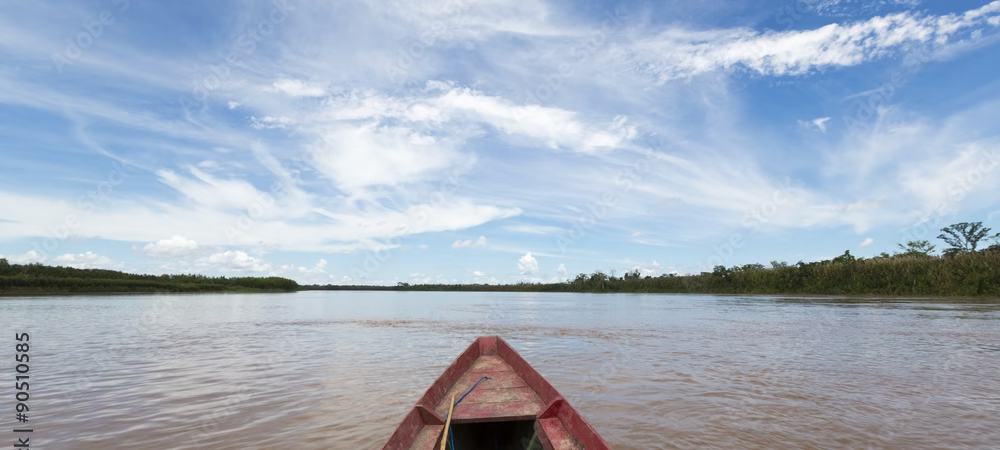
Do you dream of wilderness exploration, howler monkeys, pink dolphins and pirogue excursions in a wild setting? Then head for Rurrenabaque, or “Rurre” to its friends. This small tropical spot in northern Boliviais the ideal gateway to the Bolivian Amazon, which is more accessible, more affordable and less crowded than Brazil or Peru.
Whether you choose to immerse yourself in the Selva, the dense forest of Madidi Park, or navigate the swamps of the Pampa, Rurrenabaque promises a unique sensory adventure: muggy heat, animal calls, sunsets over the river, and unforgettable encounters.
In this article, I’ll explain how to organize your expedition, choose between the Pampa and the jungle, book the right lodge, prepare your bag, and set off in complete safety. Ready to experience the Amazon in its raw state?
🐒 Why visit Rurrenabaque, gateway to the Bolivian Amazon?
Located in the north of Boliviaon the edge of Madidi National Park, Rurrenabaque is a quiet village on the banks of the Río Béni. At first glance, the town doesn’t look like much… but it’s the starting point for all expeditions to the jungle or the Pampa, and that changes everything.
What makes Rurre unique is its double access door:
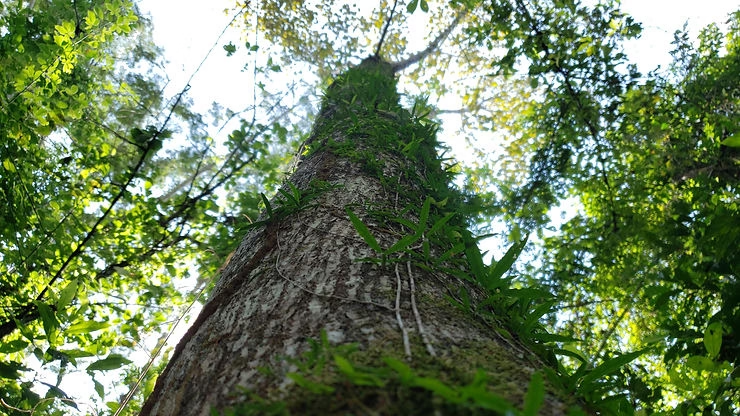
- La Selva (dense jungle) in Madidi Park, one of the most biodiverse areas in the world
- La Pampa (open marshland), ideal for wildlife observation
Here, you forget the road, the noise, and sometimes even the electricity. You leave by boat, on foot, in the dampness of the forest or the calm of the canals, accompanied by a local guide who knows every sound, every plant, every footprint.
It’s also a more economical and immersive alternative to excursions in the Peruvian or Brazilian Amazon. And much wilder.
👉 In short, if you want to experience a real tropical adventure, sleep in a hammock under a mosquito net, watch monkeys, come across a caiman or swim with pink dolphins… Rurrenabaque is the perfect place.
🌳 Selva or Pampa: which expedition to choose?
It’s THE big question everyone asks when they arrive in Rurrenabaque: should they head for the Selva, the thick jungle of Madidi Park, or explore the Pampa, the vast marshy plain lined with rivers and populated by animals?
Here’s a little comparison to help you choose:
🌴 La Selva – For lovers of raw nature and total immersion
- Landscape type: dense rainforest, muddy trails, lush vegetation
- Activities: jungle trekking, flora observation, animal tracks, learning about medicinal plants
- Fauna: more discreet – you need to be patient and lucky to spot mammals
- Experience: very rootsy, often without electricity or comfort, total immersion
- Recommended duration: 3 to 5 days
🐊 La Pampa – Easy wildlife watching
- Landscape type: canals, open swamps, low vegetation
- Activities: pirogue rides, piranha fishing, anacondas, swimming with pink dolphins.
- Fauna: very rich and visible (capybaras, caimans, monkeys, birds, turtles)
- Experience: more comfortable and accessible, numerous lodges
- Recommended duration: 2 to 3 days
🤔 Verdict: why not do both?
Many travelers choose to combine Selva + Pampa over 4 to 6 days. This way, you can experience jungle immersion + animal observation, for a complete and varied adventure.
👉 Whatever happens, be sure to bring your OKO water bottle here, you can’t drink unfiltered tap or river water.Selva or Pampa
✈️ How do I get to Rurrenabaque?
Getting to Rurrenabaque is a bit of an adventure in itself. Located some 400 km from La Paz, the town can be reached by plane or by road, with two very different atmospheres…
🛫 By plane: fast and panoramic
- Duration: 40 to 50 minutes
- Departure: from La Paz’s El Alto airport
- Company: mainly Amaszonas (beware of cancellations)
- Benefit: incredible views of the Bolivian Amazon from the air, saving time and comfort
- Disadvantage: flights sometimes cancelled in unstable weather conditions, higher price.
👉 Book in advance, especially in high season. And remember to leave a little margin if you have a connection afterwards.
🚌 By bus: the roots experience
- Duration: between 16 and 20 hours (yes, you read that right)
- Route: very long, winding, sometimes dangerous in the rainy season
- Departure: from La Paz (bus station)
- Advantage: an economical solution if you have the time and a strong back.
- Disadvantage: fatigue, discomfort, frequent delays
👉 Consider it if you really want to save money, or if you like “all-terrain” adventure. But clearly: flying is the best option for conserving your energy.
🏡 Choosing the right lodge or local agency
In Rurrenabaque, you’ll find numerous agencies and lodges offering expeditions to the Selva, the Pampa… or both. But not all are created equal. Here are a few tips to help you avoid unpleasant surprises and enjoy a respectful, comfortable and unforgettable experience.
✅ The right selection criteria
- Native or experienced guides: give preference to those from local communities (they know the flora and fauna inside out).
- Group size: prefer small groups (max 6-8 people) for greater immersion
- Environmental ethics: no animal feeding, waste management, respect for the park
- Minimum comfort: mosquito net, drinking water, meals included, clean sanitary facilities
- Languages spoken: Spanish of course, but some agencies also offer English-speaking guides.
🔎 How to book?
- You can book on site at Rurre (cheaper, but uncertain in high season).
- Or online before you arrive, via the lodge/agency websites (more reassuring).
- Make sure to compare services, especially the actual duration of activities, not just the number of days.
🌿 Some famous lodges (to be inserted if you have affiliate or partner links):
- Mashaquipe Eco Lodge (Madidi Park)
- Pampas San Miguel del Bala
- Fluvial Tours
- Madidi Jungle Ecolodge
💡 Don’t forget your OKO water bottle : even eco-friendly lodges don’t always have filtered water. And a Insta360 is ideal for filming your documentary-style pirogue ride 😍
🎒 What to pack for the jungle?
Immersing yourself in the Bolivian jungle is great… but it can’t be improvised. Heat, humidity, mosquitoes, mud, sudden downpours… Your backpack needs to be well thought-out. Here’s a checklist of essentials not to forget.
🌿 The essentials
- 🧢 Hat or cap (the sun is beating down hard)
- 🌧️ Poncho or waterproof jacket (rain is unpredictable)
- 🦟 Powerful mosquito repellent (DEET or equivalent)
- 🧤 Lightweight clothing (long sleeves, thin pants)
- 💡 Headlamp (often no electricity at night)
- 👟 Non-slip closed shoes (trail or light hiking type)
- 🛌 Sleeping bag or silk sheet (depending on lodge)
- 🧴 S un cream, sunglasses
- 📸 Camera Insta360 for capturing animals on the move without the need to aim 🎥
💧 Water & hygiene
- 💦 OKO water bottle or filtering straw: essential for never running out of drinking water
- 🚿 Biodegradable soap, microfiber towel
- 🧻 Toilet paper (lodges don’t always have it)
🧳 A useful little bonus
- 🪡 First-aid kit (bandages, disinfectant, paracetamol)
- 📱 Phone in airplane mode with GPS app offline
- 📓 Notebook and pen to record the names of plants/animals learned with the guide
🩺 Health and safety in the Bolivian Amazon
A trip to the jungle is an exceptional adventure, but you need to be vigilant. Here are the health precautions you need to take to enjoy your stay in Rurrenabaque and the Amazon region in complete safety.
💉 Vaccines and prevention
- Yellow fever vaccine: strongly recommended, sometimes required for entry to Madidi Park. At least 10 days before departure.
- Hepatitis A & typhoid: recommended for all stays in Bolivia
- Anti-malarial drugs: malaria is rare but possible in the area. Consult a doctor before leaving to assess the risk according to the season and duration.
🦟 Mosquitoes and other small bugs
- Always wear covering clothing in the morning and at the end of the day
- Apply a powerful repellent (such as DEET) to exposed skin
- Use your mosquito net at night (provided in most lodges).
- For bites: soothing cream or vinegar
💧 Water and food
- Never drink unfiltered tap or river water: your OKO water bottle will be your best friend
- Prefer cooked food, avoid raw vegetables in poorly equipped lodges.
- Remember to wash your hands often, or use hydroalcoholic gel.
🐍 Other risks to be aware of
- Snakes, spiders: rare but present. Stay on the trails, always check your bag or shoes.
- Heat & dehydration: drink often, cover your head, and take breaks.
- Orientation: never go into the jungle alone without a guide, even if you have a GPS app.
💰 Budget for a jungle expedition
The good news is that travelling in the Bolivian Amazon is much more affordable than in other South American countries. And yet, the experience is no less intense – quite the contrary!
Here’s an estimate of average prices for a well-organized trip from Rurrenabaque, depending on duration and type of expedition.
🎒 Average rates per person (all inclusive)
| Type of shipment | Duration | Average price (in bolivianos) | Included |
| Basic pampa | 2 days / 1 night | 700 – 1,000 BOB | Transport, guide, meals, accommodation |
| Selva basique | 3 days / 2 nights | 1,200 – 1,500 BOB | Ditto, + entrance to Madidi Park (approx. 200 BOB) |
| Pampa + Selva combo | 4 to 5 days | 1,500 – 2,000 BOB | Combined tours |
💡 1 € ≈ 7.5 BOB (to be verified at current rate)
📦 What can affect the price?
- Lodge comfort (hammock vs. private room with shower)
- Group size (the more private, the more expensive)
- The agency chosen (some offer a more ethical or eco-responsible service)
- The season: prices can rise slightly between June and August
🧾 Small extras to foresee
- Tip for guide: approx. 20-50 BOB depending on duration and quality
- Entrance to Madidi Park if you go to the Selva: ~200 BOB
- Flight La Paz – Rurre: between 350 and 600 BOB depending on the season
🧭 Conclusion
Exploring the Bolivian jungle from Rurrenabaque is one of the most beautiful nature experiences in South America. Between the mystical density of the Selva and the teeming fauna of the Pampa, the sensations are strong, the memories engraved, and the adventure authentic.
By taking the time to choose your expedition, your lodge, your guide and your equipment (with a OKO water bottle of course!), you can experience the Amazon at its purest.
So, ready to swap Andean peaks for tropical humidity, volcanoes for capybaras, and buses for a pirogue gliding down the rio Yacuma? 🐒🌿

