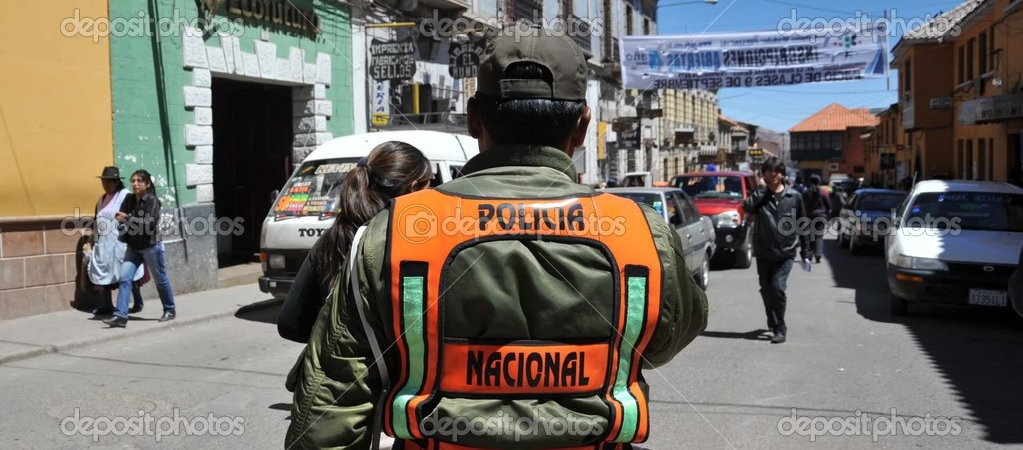
Is Bolivia a dangerous country for travellers? Between breathtaking landscapes and safety concerns, this South American destination raises both fascination and questions. Discover a nuanced analysis of the situation, sound advice on how to avoid high-risk areas and enjoy a guaranteed change of scenery, far from the clichés about safety in Latin America.
The general safety situation in Bolivia for travelers
Risk perception and reality in Bolivia
Between breathtaking landscapes and safety concerns, Bolivia remains a destination to be discovered with caution. Safety varies according to the region and the experience of each traveller.
Statistics show a crime rate similar to other South American countries. In Bolivia, the risks are often comparable to those in Peru, with varying levels of security depending on the area.
Common types of crime encountered by travellers
In La Paz, pickpocketing is rife in transport and tourist areas. The techniques are well-honed, with accomplices distracting travellers to steal their belongings.
Violent assaults remain the exception, but scams are flourishing. Bogus cabs are a real threat, as are scams involving fake policemen or money changers.
Safety differences between urban and rural areas
In the cities, La Paz and Santa Cruz concentrate most incidents. Away from the tourist circuits, rural areas generally offer more tranquillity despite their isolation.
Isolated regions like Uyuni and the Amazon are full of surprises. Roads come to an abrupt halt, and borders can be smuggled and trafficked. A local guide can prove invaluable.
Impact of the political and social situation on safety
Spontaneous demonstrations are the order of the day in Bolivia. Roadblocks and unplanned roadblocks punctuate travel, especially in politically sensitive areas.
There are several sources of information to help anticipate these disruptions. Local media, embassies and traveler networks all share sound advice for travelers.
Essential safety precautions and advice for a trip to Bolivia
Preventive measures before departure
Travel insurance covering repatriation and medical expenses is essential, especially for remote areas such as the Salar d’Uyuni or Lake Titicaca.
Before you leave, register on Fil d’Ariane and prepare a kit with copies of papers, medication and embassy contact details for a safe and worry-free trip. For added security, you can also register with the register of French nationals established outside France, which can be done online at service-public.fr.
How to behave in Bolivian cities
In La Paz or Santa Cruz, protect your belongings by keeping them out of sight. Avoid deserted streets and don’t show any valuables.
At night, prefer official cabs and avoid El Alto in La Paz. Find out about dangerous neighborhoods before taking to the streets of Sucre or Cochabamba.
Transport and road safety
Choose reputable bus companies such as Trans Titicaca. Always check the reliability of agencies to avoid unforeseen events on Altiplano roads.
For cabs, opt for radio cabs in La Paz. Personal driving is risky on winding roads. Find out before you travel at night through Bolivia.
Areas to watch out for and neighborhoods to avoid in Bolivia
Mapping sensitive areas in major cities
In La Paz, the El Alto district should be avoided, especially on Thursdays when the market is held. Robberies are frequent, often organized by accomplices acting in groups.
In other tourist towns, Santa Cruz concentrates its risks in areas such as Plan 3000 and Los Pozos. In Cochabamba and Sucre, caution is advised in poorly lit areas, especially at night.
Border regions and isolated areas at risk
The borders with Peru and Brazil present increased risks. Trafficking of all kinds is more frequent, reinforced by the remoteness of rescue services and the absence of health services.
The Bolivian Amazon requires rigorous preparation. It’s best to be accompanied by a local guide to avoid surprises, especially in remote areas where the emergency can become a real logistical challenge.
Safety on popular tourist excursions
Immersion in the Salar d’Uuni is best undertaken with caution. Some unscrupulous agencies take advantage of tourists, with broken promises or unsafe travel conditions.
When exploring Lake Titicaca or archaeological sites, vigilance is the order of the day. In national parks, staying on marked trails and following the advice of nature rangers avoids unpleasant surprises.
Seasonal impact on passenger safety
Rains from November to March make some roads impassable. Landslides threaten routes through the mountains, sometimes blocking entire regions.
To enjoy Bolivia in any season, it’s best to adapt to the conditions. The dry season offers more freedom, while the wet season requires more flexibility and caution.
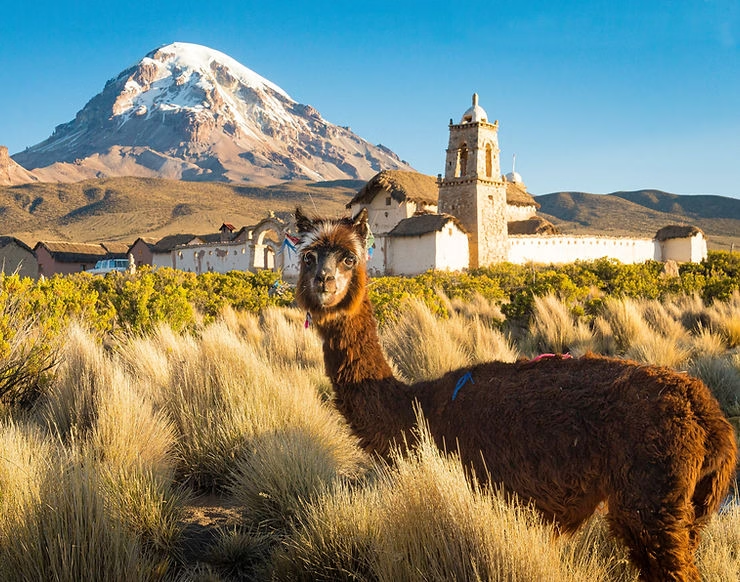
Specific health risks and medical precautions
Challenges of altitude and acute mountain sickness
In La Paz and on the Altiplano, altitudes often exceed 3,000 metres. The first symptoms of altitude sickness (headaches, nausea) appear as early as 2,500 metres above sea level.
To adapt, acclimatize gradually. Drink coca to lessen the effects. Avoid alcohol for the first few days, for a safe trip.
Mosquito-borne diseases
In the Bolivian Amazon, infected mosquitoes transmit dengue fever, zika and yellow fever. Use a strong repellent and wear long clothing to avoid bites.
Vaccination against yellow fever is compulsory for certain border departments. Consult a health professional before leaving for optimum prevention.
Health precautions and daily hygiene
Tap water is unfit for consumption. Prefer bottled water or use purification tablets. Water and contaminated food often cause digestive problems.
Take along a first-aid kit with antibiotics and rehydrating agents. Whether you’re in the city or the countryside, access to health care varies from region to region.
Impact of the seasons on health
The rainy season (November-March) favors water-borne and contaminated infections. Flooding complicates access to healthcare in isolated areas.
Adapt your itinerary to limit these risks. Avoid areas with high mosquito populations during the hot, humid months for a worry-free stay.
Bolivia, a South American country of breathtaking beauty, can be discovered with a few simple precautions. Respecting the altitude, avoiding high-risk areas and listening to the advice of locals open the doors to a journey rich in authentic encounters and unforgettable landscapes. With a little preparation, this wild setting reveals its unique hospitality and magic, ready to write the most beautiful pages of your travel diary.

