Two colonial jewels not to be missed in Bolivia
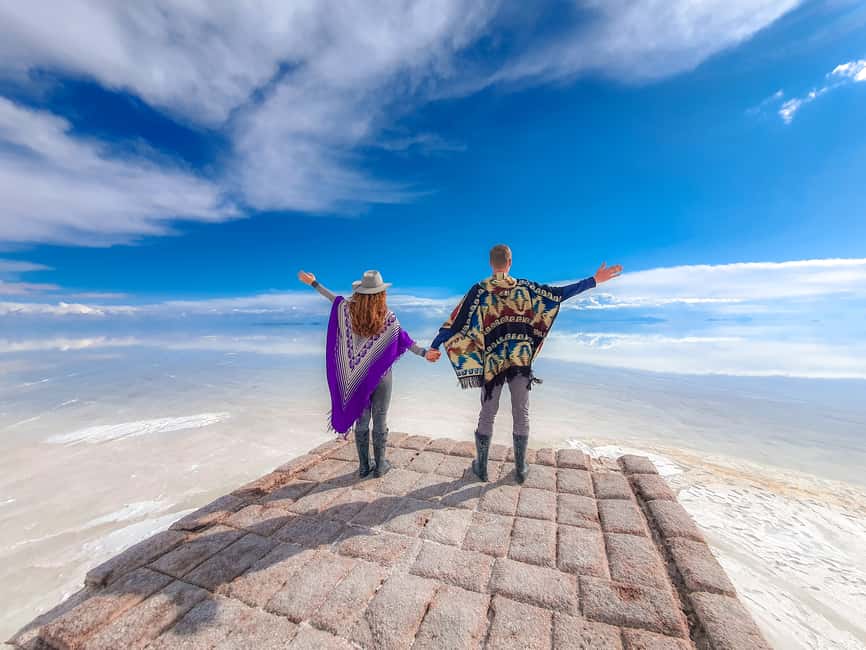
When you think of a trip to Boliviawe often imagine the crazy landscapes of the Salar d’Uyuni or the dizzying Andean peaks. Yet the country is also home to two cities steeped in history and full of charm: Sucre, the gentle white capital, and Potosí, the mining town perched at an altitude of over 4,000 metres.
Both UNESCO World Heritage Sites, they offer a fascinating immersion in the country’s colonial past, with cobbled streets, Baroque churches, fascinating museums and memorable local encounters. They’re also an excellent combo for a cultural break in an itinerary that’s often very nature or adventure-oriented.
In this article, we’ll show you what to do, what to see, where to sleep and how to organize your stay in Sucre and Potosí without missing a thing.
🏛️ Sucre, the colonial pearl of Bolivia
White, calm and perched at an altitude of 2,800 metres, Sucre is often a favourite with travellers. Constitutional capital of Boliviawith its perfectly preserved colonial buildings, mild climate, numerous cafés and a tranquil atmosphere that makes you want to put down your bag for a few days.
📸 What to see and do in Sucre?
- Plaza 25 de Mayo: the vibrant heart of the city, surrounded by historic buildings.
- La Casa de la Libertad: a fascinating museum where Bolivian independence was signed.
- La Recoleta convent: for panoramic views of the whole city.
- Art and ethnography museums: a cultural detour not to be missed.
- The central market: perfect for sampling fresh fruit juices, empanadas and observing local life.
🛌 Where to sleep in Sucre?
You’ll find charming accommodation in renovated colonial houses. Here is a selection to book on Hotels.com :
- Historic hostals with flower-filled patio
- Charming little inns at affordable prices
- Well-located apartments for a few days of slow travel
🎓 Want to learn Spanish?
Sucre is the ideal spot to take language courses: many schools offer private or group lessons at low prices. And because the city is so peaceful, it’s the perfect environment in which to learn.
⛏️ Potosí, a dive into Bolivia’s mining history Bolivia
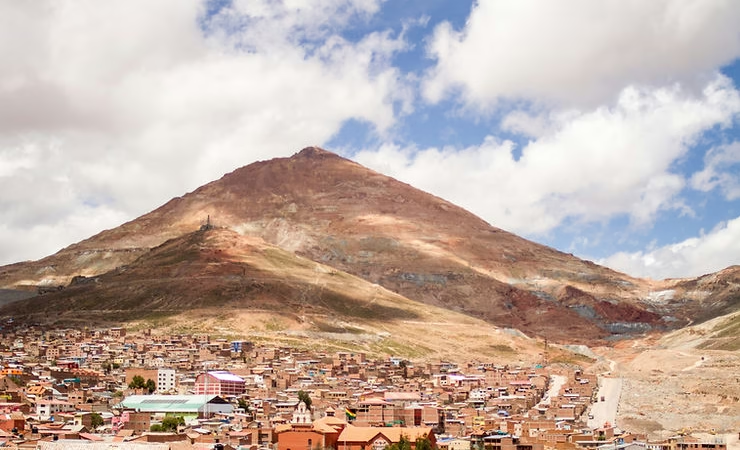
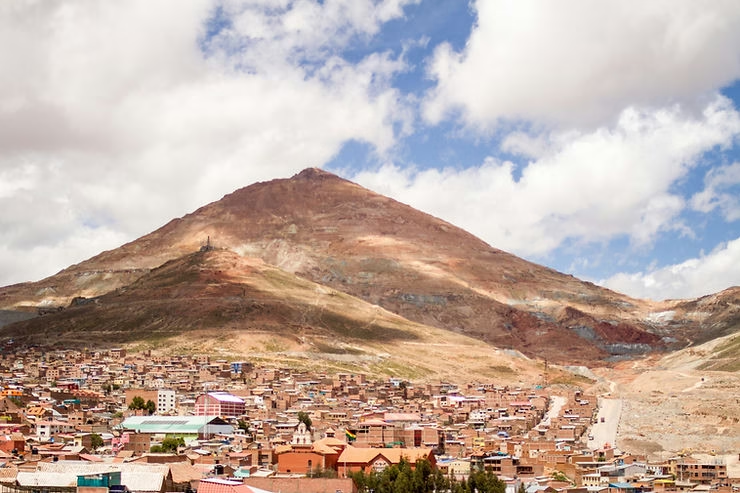
At an altitude of over 4,000 metres, Potosí is impressive from the moment you arrive. Dominated by the immense Cerro Rico, the “rich mountain” that made its glory (and its tragedy), the town is a veritable open-air museum of the colonial era… and a brutal immersion in the social realities of yesterday and today.
🏛️ What to see and do in Potosí
- The Cerro Rico and its mines: an intense, sometimes overwhelming experience. You can visit a working mine with a local guide, meet the miners, and understand the daily life of this harsh profession. Not for everyone, but unforgettable.
- La Casa de la Moneda: a magnificent museum on the history of money in Bolivia Boliviahoused in a sublime colonial building. A real must-see.
- The historic center: stroll along cobbled streets lined with churches, wooden balconies and colorful buildings.
- Local market: try the salteñas, stock up on souvenirs, or observe daily life.
🧠 What you need to know before visiting Potosí
- The altitude makes itself felt, especially when arriving from Sucre. Allow 1 or 2 quiet days at first to acclimatize.
- The city may seem a little rough compared to Sucre, but it offers a candid insight into the country’s economic and social history.
🧳 Practical info: how to visit Sucre and Potosí?
These two colonial cities are often visited together, as they are easily connected by road and complement each other in the ambience they offer. Here’s everything you need to know to plan your itinerary.
🚍 How do I get there?
- From La Paz to Sucre: direct flight (approx. 1h) or overnight bus (12-14h)
- From Sucre to Potosí: about 3 hours by bus, sometimes winding but very pretty.
- From Uyuni: 7-8h drive to Sucre or 6h to Potosí
📆 How long will you be staying?
- Sucre deserves at least 2 or 3 days to take the time to stroll around.
- Potosí can be visited in 1 or 2 days, depending on whether or not you visit the mines.
🛌 Where to sleep?
- In Sucre: many small colonial gems at low prices to book on Hotels.com
- In Potosí: opt for central accommodation with heating if possible (the nights are cold!).
🌞 Best time to visit
- Dry season (May to October) = ideal
- Rainy season (December to March): possible, but less pleasant in Potosí (roads can be slippery).
📅 Our ideal combo: Sucre + Potosí in 5 days
Want to get the most out of these two cities without running? Here’s a well-balanced itinerary, perfect for immersing yourself in their history while enjoying their unique atmosphere.
🔹 Day 1 – Arrival in Sucre
- Quiet installation in a colonial hostal (book here)
- Stroll around Plaza 25 de Mayo
- Sunset from the convent of La Recoleta
🔹 Day 2 – Culture and gastronomy
- Visit Casa de la Libertad
- Tour of museums or the central market
- Dinner in a small local restaurant with live music
🔹 Day 3 – Departure for Potosí
- Early morning bus (3h drive)
- Quiet afternoon to acclimatize to the altitude
- Stroll through the historic center and overnight stay
🔹 Day 4 – Diving into mining history
- Guided tour of a Cerro Rico mine (must be booked the day before)
- Afternoon at the Casa de la Moneda or in the colonial streets
- Hot tea + well-deserved rest
🔹 Day 5 – Return or next stage
- Possibility of returning to Uyuni or La Paz according to your itinerary
With this combo, you can enjoy both the cultural sweetness of Sucre and the historical power of Potosí, without having to rush. Two atmospheres, two energies, and a concentrate of Bolivia not to be missed!
🧭 Conclusion
If you want to enrich your trip to Bolivia with a historical, cultural and human dimension, Sucre and Potosí are a must. One offers calm, charm and a gentle way of life, the other confronts you with a raw reality and a strong history, engraved in stone and soil.
Their geographical proximity means you can easily combine them, whether you’re a slow traveler or on a tighter itinerary. And believe me: walking through the streets of these two cities is like flipping through the living pages of Bolivia’s past.

