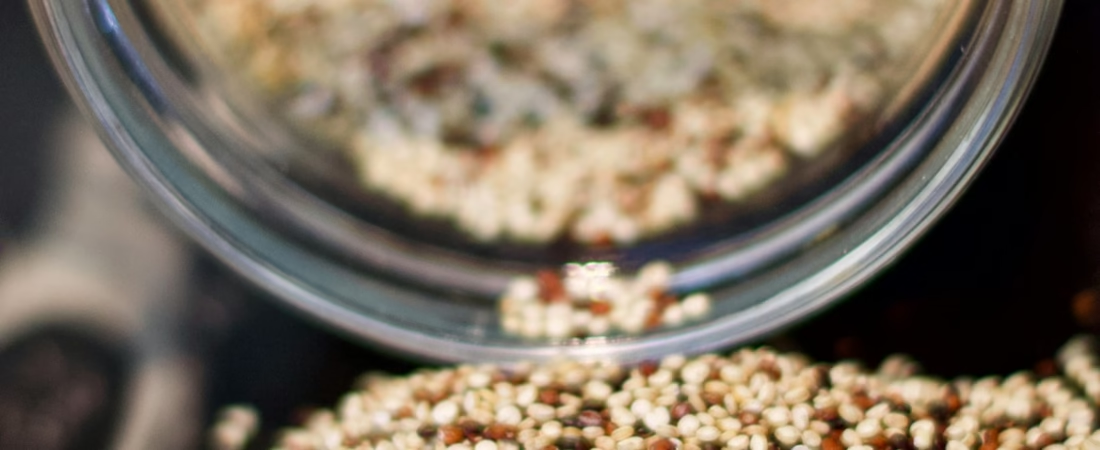
Key point: quinoa is not just a cereal, but an incredible Andean pseudo-cereal rich in complete proteins. It’s a must-have gluten-free superfood for boosting energy and providing variety. A sacred heritage of the Incas, who worshipped this “mother of all grains” as far back as 6,000 years ago! 🌾
Have you ever found yourself lacking inspiration in front of your plate, looking for a healthy yet tasty option to vary your daily pleasures? We found the miracle solution during our trip to South America with quinoa, the gold of the Andes, an ancestral seed with incredible virtues that has radically transformed our diet. We reveal everything you need to know about this nutritional treasure, with our practical tips for cooking it perfectly, avoiding bitterness and delighting the whole family 🌾.
- Andean gold, much more than just a seed
- Concentrated superpowers on the plate
- The other side of the coin: when gold loses its lustre
- Quinoa in everyday life: what you need to know before taking the plunge
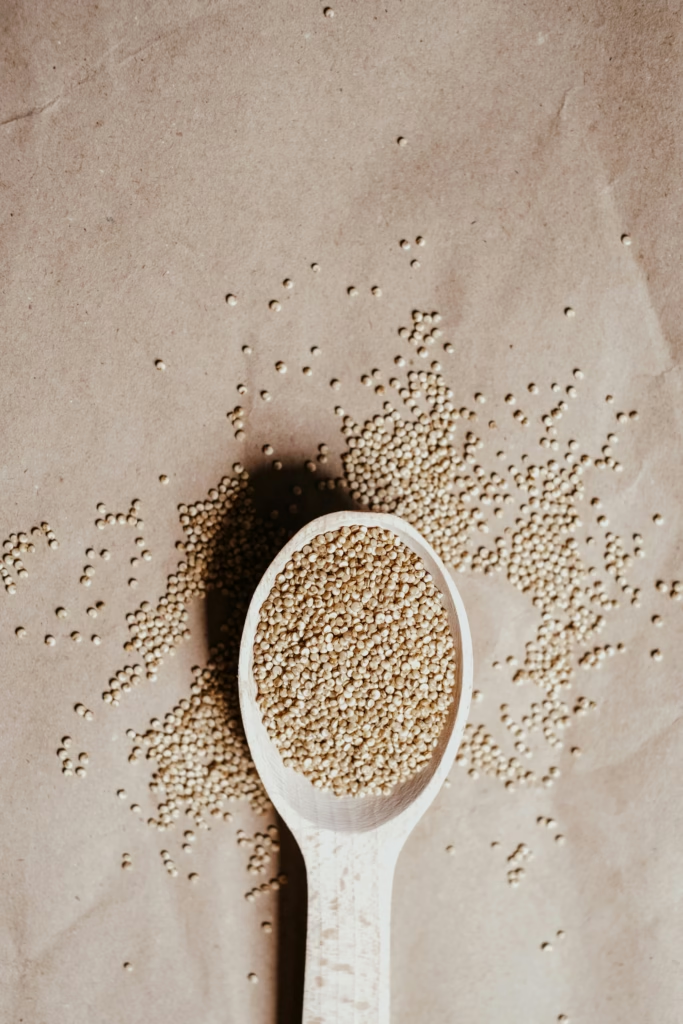
Andean gold, much more than just a seed
The “mother of all grains” for the Andean peoples
Forget the idea of a simple culinary trend. It’s not a recent fad. Domesticated over 6,000 years ago in the Andean highlands around Lake Titicaca, quinoa – the gold of the Andes – was already feeding entire civilizations.
For the Incas, this plant was sacred. They respectfully called it “chisiya mama”, the “mother of all grains”. It was a vital pillar of their diet, along with potatoes and corn, long before the Spanish colonists scorned it.
In fact, the word “quinoa” comes straight from the Quechua language, “kinwa”.
What exactly is a pseudo-cereal?
Let’s clarify a simple technical point. Quinoa is not a cereal like wheat. It’s a pseudo-cereal, botanically related to spinach or beet, which took us by surprise.
This means we eat its seeds cereal-style, but the plant is not a grass. It’s precisely this biological detail that partly explains its highly sought-after nutritional profile.
The thousand and one faces of quinoa
There isn’t just one quinoa, but thousands of distinct varieties. On site, we saw the plant grow up to two meters tall, with colors ranging from bright yellow to dark purple.
Quinoa is an incredibly resilient plant, capable of growing in the salt deserts of the Altiplano as well as on the Chilean coast.
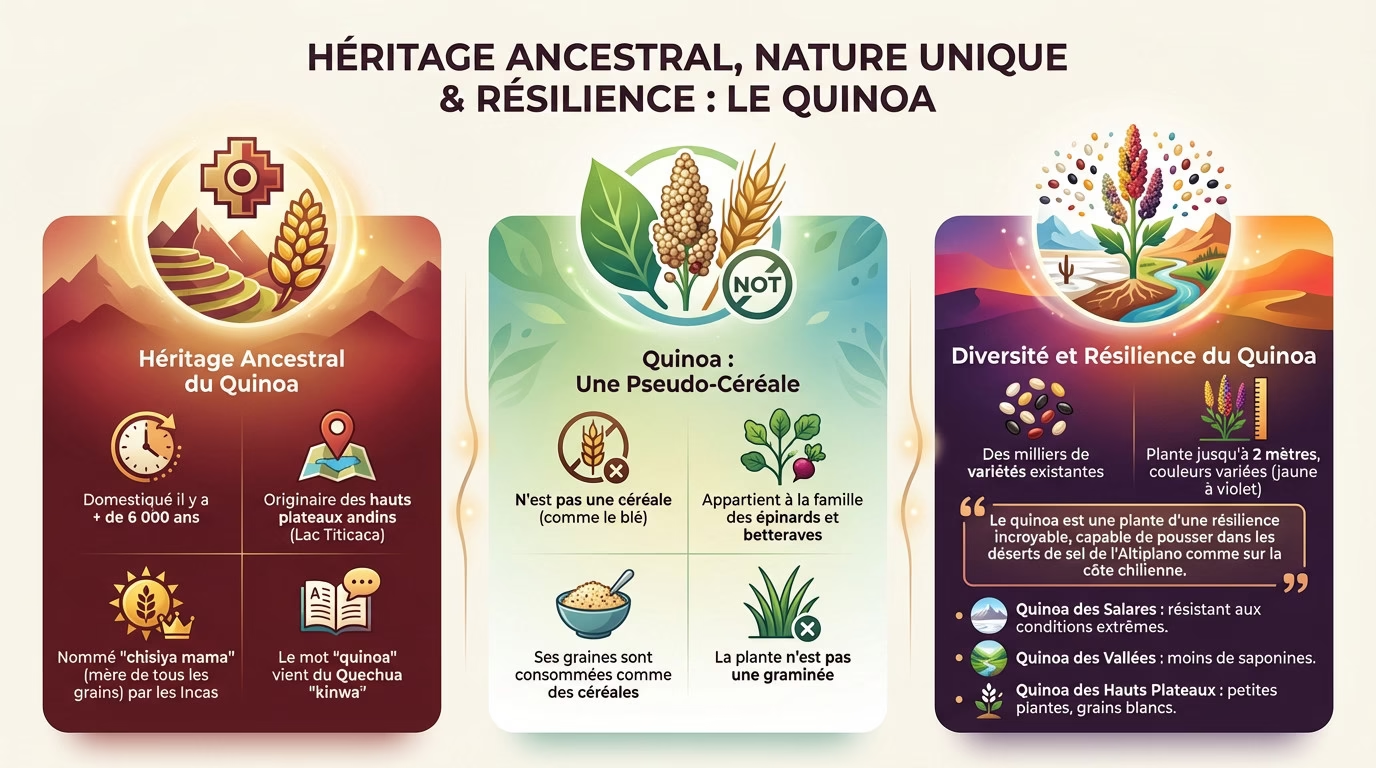
- Quinoa des Salares: resistant to extreme conditions such as salt.
- Valley quinoa: taller plants with fewer saponins.
- Highland quinoa: small plants producing white grains.
Concentrated superpowers on the plate
The champion of plant proteins
It soon became clear why quinoa is often referred to as the gold of the Andes. With around 16.5g of protein per 100g, it’s a slap in the face to corn or wheat. But its major advantage is thatit contains all the essential amino acids. A real nutritional nugget for us.
It’s super rare for a simple vegetable, take our word for it. Its lysine content is much higher than the usual cereals we eat. That’s why we call it a complete protein.
NASA has even studied it to feed its astronauts– no mean feat! We totally support this choice.
Gluten-free, high-fiber and low glycemic index
We’ve got three other advantages to tell you about that have blown us away on the road. First, it’s naturally gluten-free, which is a lifesaver for those with gluten intolerance or celiac disease. A godsend when traveling.
Next, we noted its high fiber content, around 7g per 100g. This really helps you feel fuller for longer after a meal, without craving. It’s also great for intestinal transit.
Finally, its low glycemic index of around 53 prevents nasty spikes in blood sugar. It’s a golden ally for managing your energy when you’re out and about. So you don’t feel drained.
A cocktail of minerals and vitamins
Its benefits don’t stop there, we guarantee. It’s literally a mine of minerals and vitamins for tired bodies. We’ve rarely seen such a complete food.
- An excellent source of magnesium for stress management.
- Iron to combat traveler’s fatigue.
- Phosphorus, B vitamins and antioxidants.
- It is scientifically recognized nutritional scientifically recognized.
The other side of the coin: when gold loses its lustre
With a CV like that, you’d think everything would be perfect. But quinoa’s runaway success also has its dark side, especially for those who have been growing it for centuries.
The “Quinoa Boom” and its bitter consequences
In the 2000s, global demand for quinoa – the gold of the Andes – literally exploded. Prices soared, which at first seemed like good news for farmers in Bolivia and Peru.
But the paradox soon became apparent. This historic staple had become a luxury export product, eventually costing too much for local populations who could no longer keep up.
Gold from the Andes enriched exporters, but sometimes starved those who saw it growing on their doorstep and could no longer afford it.
Social tensions and a threatened heritage
This gold rush led to severe land tensions and unbridled intensive farming. We have sadly moved on from subsistence farming to a logic of pure yield for export, changing the whole landscape.
This has jeopardized an ancestral cultural know-how, once a staple crop in the Bolivian Altiplano. The UN has even declared 2013 the International Year of Quinoa in an attempt to raise awareness of these critical issues.
This is unfortunately the price to pay when a local food becomes a global star. 😔
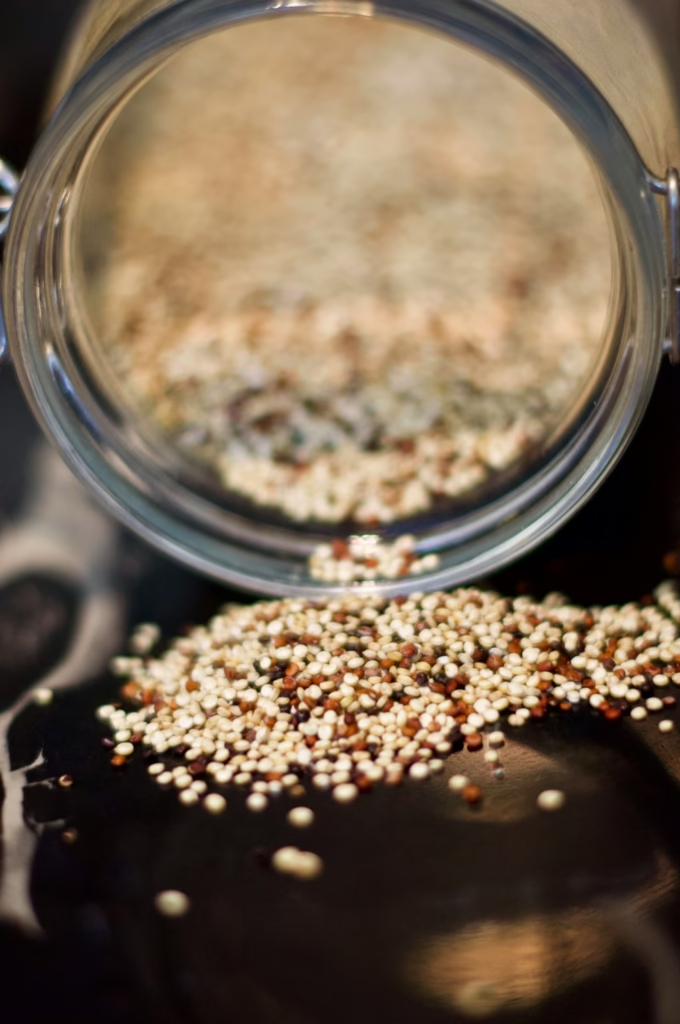
Quinoa in everyday life: what you need to know before taking the plunge
So, do we eat it or not? Of course we do! But there are a few things you need to know about quinoa, the gold of the Andes, to prepare it properly and avoid unpleasant surprises. We tell you all about it.
Watch out for saponin, that hidden bitterness
Quinoa’s main “flaw” is its saponin. This is a natural substance that coats the seed to protect it. Problem: it’s bitter and slightly toxic.
A distinction is made between “quinua amarga” (traditional, rich in saponin) and “quinua dulce” (more recent, less bitter). But in all cases, it’s important to take precautions to avoid unpleasant surprises. It’s safer that way.
The procedure is simple: always rinse quinoa with plenty of water before cooking.
My tummy doesn’t like quinoa, why?
Do you experience bloating or tummy aches after meals? It happens, it’s a fact.
The first cause is often insufficient rinsing, which leaves saponin residues behind. This can irritate some people’s digestive systems. We didn’t regret knowing this at all.
Here’s how it works:
- Rinse well with cold water until the water runs clear.
- Start with small quantities if you’re not used to it, because it’s high in fiber.
- Make sure it’s cooked through(the seed is translucent and the germ forms a spiral).
After this little trip to the high plateaus, we’ ll never look at our plate again. Quinoa is a real nugget, but you have to savor it consciously. We hope you enjoyed this discovery as much as we did. Get cooking! 😋

