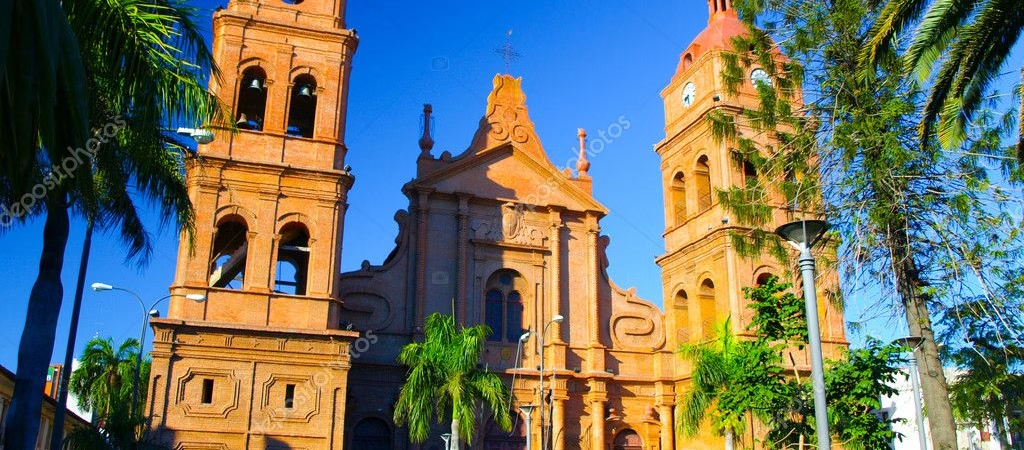
To get to the heart of the matter: Santa Cruz de la Sierra is much more than an economic center, it’s the ideal tropical decompression chamber to start a Bolivian tour without altitude sickness. This stopover at an altitude of 415 metres reveals a little-known facet of the country, between sand dunes and jaguars, in the heart of a modern city that accounts for 30% of the national GDP.
Think Bolivia is all about the polar cold of the Andes and the shortness of breath at altitude? Think again, because our trip to Santa Cruz de la Sierra in Bolivia proved that this country hides a vibrant, tropical soul far removed from the usual clichés. Get ready to break the mould, as we take you on an exploration of a modern metropolis surrounded by sand dunes, where we swap the beanie for the heat of the jungle to watch jaguars and discover a Jesuit heritage unique in the world 🐆.
- Santa Cruz, the economic engine that breaks codes
- The beating heart of the city, between history and Camba culture
- Escape the city: nature at your fingertips
- On the trail of Bolivia’s Oriente treasures
- The route of the Jesuit missions, a heritage unique in the world
- Practical information and travel tips
Santa Cruz, the economic engine that breaks codes
Forget the altiplano, this is tropical Bolivia
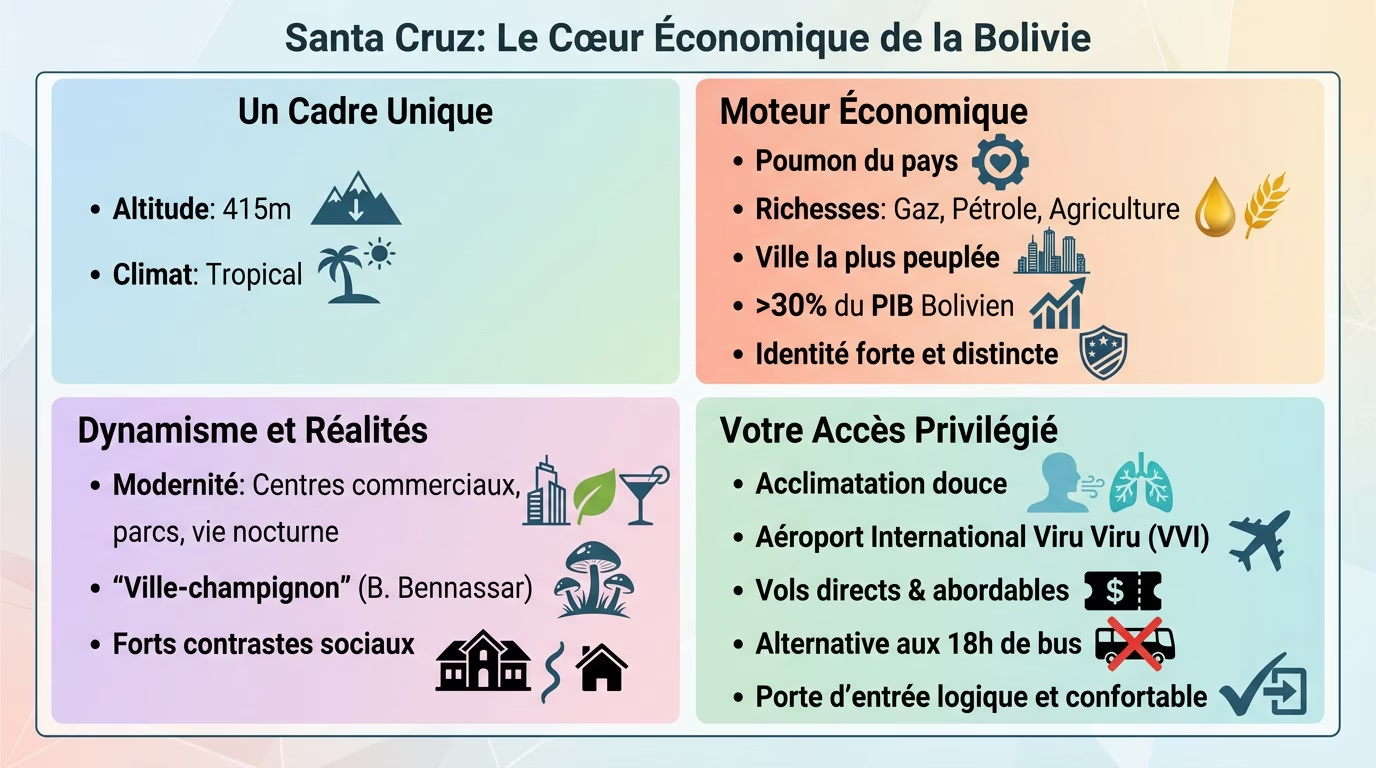
It soon became clear that the Andean image of the place didn’t hold water here. With its low altitude of 415 metres and sweltering tropical climate, Santa Cruz is a real game-changer for any traveller used to the cold.
It’s clearly the economic lung of the country. Between gas, oil and massive agriculture, this overpopulated metropolis generates over 30% of Bolivia’s GDP. You can feel this raw energy everywhere, far from the usual clichés.
This financial power forges a fierce local identity, often creating sparks with central government. You can feel it.
A “boomtown” of modernity and contrasts
We were blown away by the gleaming shopping malls and huge parks. The chic restaurants and nightclubs prove that this is a city on the move, far removed from the poverty we imagined elsewhere.
The historian Bartolomé Bennassar, on a trip to the area, was struck by this dazzling development, describing Santa Cruz de la Sierra as a veritable “boomtown”.
But beware: this modern facade masks sharp social contrasts. Luxury villas stand side by side with much more precarious neighborhoods, a direct reflection of the region.
Why start your Bolivian journey here
If you want to avoid altitude sickness, heed this advice: Santa Cruz is ideal for gentle acclimatization. Starting here, at moderate altitude, prepares your body for the brutality of the Altiplano.
Access is super simple via Viru Viru International Airport (VVI). We found direct flights much more cost-effective, and as a bonus it’s easier than the 18h bus ride.
It’s a logical and comfortable way to start a trip to Santa Cruz de la Sierra in Bolivia.
The beating heart of the city, between history and Camba culture
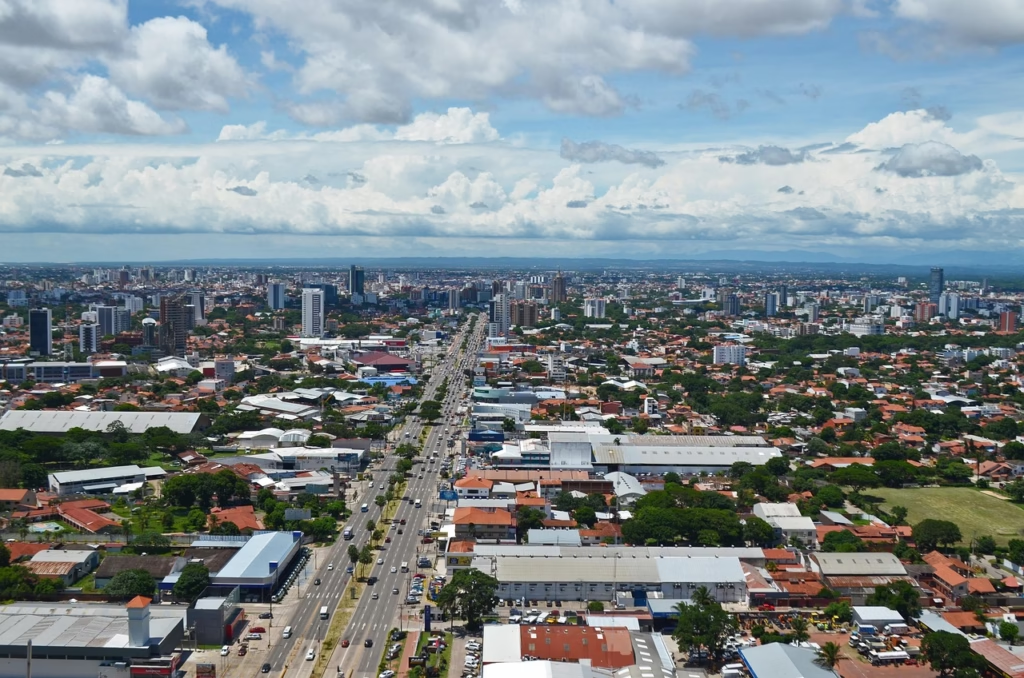
Plaza 24 de Septiembre, the open-air cruceño fair
Forget the image of austere Bolivian squares. Here, under the palm trees, Plaza 24 de Septiembre exudes an incredible human warmth. It’s a veritable social HQ, where locals meet up with juice vendors and chess players – the real pulse of the city.
Just above, the Basílica Menor de San Lorenzo imposes its brick façade. A word of friendly advice? Climb to the top of the bell tower. The bird’s-eye view over the bustling city and rooftops offers a striking perspective that you’d never suspect from below.
We loved settling down with a coffee, just to watch life go by. It’s simple, but that’s what traveling is all about.
Taste the local cuisine: much more than quinoa
Camba cuisine is the ultimate anti-diet, a far cry from Andean standards. Here, meat is king and tropical flavours explode in the mouth with every bite.
Here are the highlights of our trip to Santa Cruz de la Sierra in Bolivia:
- Churrasco, the local barbecue that’s all about quantity.
- Majadito, a creamy rice
- Juicy salteñas, stars of the small hungers.
- The lizard at the Aljibe restaurant, for daring stomachs.
Don’t snub the many street stalls, perfect for eating on the go without breaking the bank. It’s often there, standing on a street corner, that you’ll find raw authenticity.
Camba culture and its surprising communities
To be “camba” is to claim a strong identity on the plains, quite distinct from the Altiplano. This land is also home to groups such as the Isoceño-Guaraní, guardians of a fascinating local history that deserves a little more attention than the average tourist.
More unexpected are the Mennonites. Dressed in outfits from another century, they live on the bangs of modern society in colonies to the east. There are 150,000 of them in Bolivia, a staggering number for these Mennonite communities living on the fringes.
Escape the city: nature at your fingertips
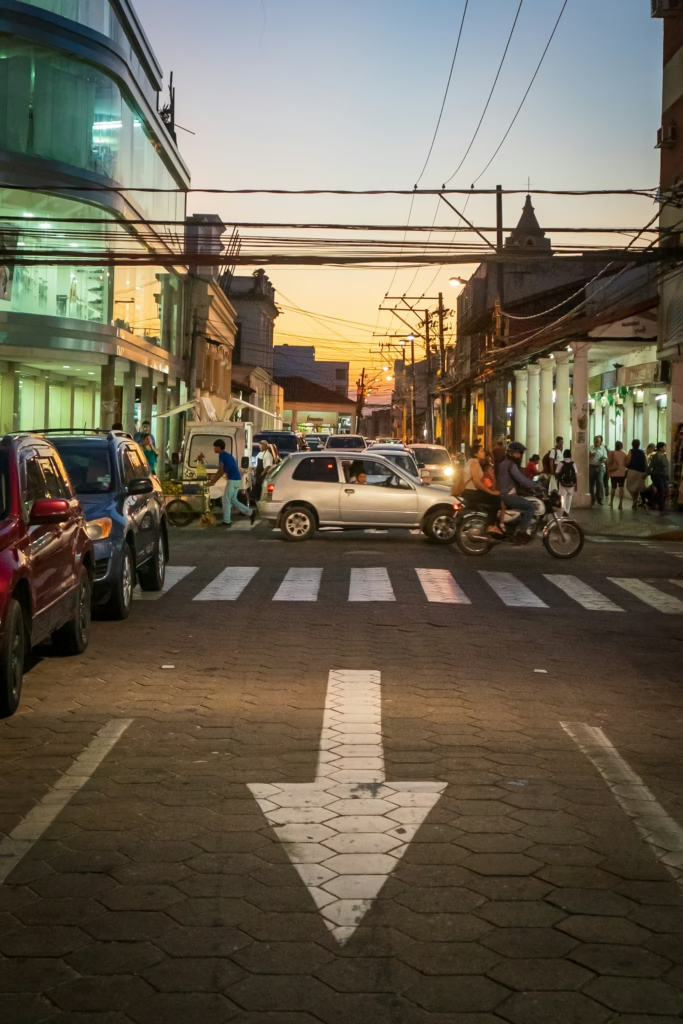
Santa Cruz’s greatest asset may not be the city itself, but what surrounds it. We loved getting away from the concrete and into the exuberant natural surroundings.
The botanical garden, a tropical appetizer
To kick off our trip to Santa Cruz de la Sierra in Bolivia, we headed off to the Santa Cruz Botanical Gardens. Located just half an hour from the city, it’s the ideal place for a first contact with the local flora and fauna.
You can easily spot monkeys and sloths. It’s really a great half-day outing, just to get used to the tropical environment.
A word of advice: watch out for mosquitoes at sunset – they’re really voracious!
The sand dunes of Lomas de Arena park
We discovered this surprising place: a desert of dunes just 18 km from the city. The striking contrast between the tropical forest and these immense sand dunes left us speechless.
The star activity here is sandboarding. It’s a fun and memorable experience. As an added bonus, the blue lagoon is great for birdwatching and offers the chance to see sloths in the surrounding forest.
Access can be a bit tricky by public transport (collectivo + walking), so a cab or organized tour may be a good option.
Amboró National Park, a biodiversity sanctuary
Amboró National Park is an absolute must for us. It is easily accessible from Santa Cruz or Samaipata. It’s a true jewel of Bolivian nature.
The park is unique in that it is home to three different ecosystems, which explains its incredible biodiversity:
- the foothills of the Andes
- Northern Chaco
- the amazon basin
You can see giant prehistoric ferns, waterfalls and lagoons. One- or two-day hikes are the most common way to get a good overview.
On the trail of Bolivia’s Oriente treasures
After these initial discoveries, it’s time to push things a little further. The Santa Cruz region hides some truly unique experiences, for those seeking adventure.
Samaipata and the mystery of the pre-Inca fort
Samaipata seduced us with its quiet, bohemian atmosphere, making it the perfect base from which to explore the region. It’s a true haven of peace, in stark contrast to the urban bustle of Santa Cruz.
The UNESCO-listed archaeological site of El Fuerte is well worth a visit, even if it’s not a military fort. It’s an immense rock sculpted by pre-Inca cultures. It’s a place steeped in history and mystery, and still full of questions.
We strongly advise you to take a guide on site to really grasp the significance of the sculptures and the history of the site.
The ultimate jaguar-watching experience
Many travelers dream of seeing a jaguar on a trip to Santa Cruz de la Sierra in Bolivia. The region is one of the best places in the world for this. It’s a powerful experience, but one that requires patience.
There are two options: the San Miguelito Jaguar Conservation Ranch, which protects jaguars by compensating ranchers, and the Kaa Iya National Park, Bolivia’s largest, managed directly by indigenous communities.
To maximize your chances of spotting them, opt for the dry season, from May to September. This is the ideal time to see them.
Kaa Iya Park, a wilderness of immensity
Kaa Iya Park is an adventure in itself, believe us. It’s an immense wilderness, recognized as the world’s largest protected area of tropical dry forest.
It’s a territory managed by the indigenous Guarani-Izoceño communities. It’s an immersion not only in nature, but also in a local culture that protects these lands.
But beware: you need to be prepared for rustic conditions and high temperatures. It’s not all plain sailing.
The route of the Jesuit missions, a heritage unique in the world
If you thought you’d seen it all, wait until you discover Chiquitania. We’re off on a journey back in time, following in the footsteps of the Jesuit missions, a UNESCO-listed treasure.
What is Chiquitania?
Chiquitania is a vast region of savannah and tropical dry forest, stretching to the east of Santa Cruz. It takes its name from the Chiquitanos Indians who populate these lands. It’s an isolated area of raw beauty, offering a complete change of scenery far from the hustle and bustle of urban life.
Its main attraction is undoubtedly the famous Jesuit Mission Route, a must on any trip to Santa Cruz de la Sierra in Bolivia. This is a collection of villages founded in the 17th and 18th centuries, whose wooden churches are still standing today. It’s a UNESCO World Heritage Site that we’re absolutely delighted to have discovered.
Baroque churches in the middle of the jungle
The visual shock is immediate: huge carved wooden churches, in a flamboyant Baroque style, stand proudly in the midst of small, peaceful tropical villages. It’s a totally unexpected sight, in stark contrast to the surrounding vegetation.
The most striking missions are San Javier and Concepción. Each church is unique, boasting impressive twisted columns, vivid paintings and eye-catching gilded altars. As an added bonus, this heritage is alive and well, carefully maintained by local communities who still perpetuate Baroque music 🎻.
How do I organize this excursion?
In terms of logistics, the complete loop takes several days. You can do it with a rental car (a 4×4 is highly recommended) for greater freedom, or take the easy way out with organized tours from Santa Cruz.
For travelers with more time and a tighter budget, there’s the option of local transport (bus, trufis). It’s considerably slower, but a much more immersive way to meet the locals. Beware, however, that the roads can be difficult, especially in the rainy season 🌧️.
Practical information and travel tips
When to go to Santa Cruz?
The answer is simple: for a successful trip to Santa Cruz de la Sierra in Bolivia, aim for the dry season, from April-May to October-November. Temperatures remain pleasant and rain is rare. Frankly, it’s the ideal time of year for all excursions without ending up soaking wet.
Conversely, the rainy season, from December to March, can really complicate matters. Some roads become impassable, especially towards the missions or in the parks. What’s more, it’s much hotter and the humidity can be overwhelming.
Accommodation and transport
When it comes to accommodation, there’s something for everyone. There are nice youth hostels with swimming pools, such as the Jodanga Hostel, as well as more upmarket hotels. Your choice will depend above all on your budget and the ambience you’re looking for.
In town, cabs and microphones are everywhere and really cheap. For excursions further afield, car rental offers great freedom, but organized tours are a simple and effective option if you don’t want to drive.
In Santa Cruz, modernity is everywhere, but wealth comes from the land, creating a city of contrasts between agricultural opulence and working-class neighborhoods.
Health and safety: what you need to know
When it comes to health, don’t panic, but be prepared. Vaccination against yellow fever is highly recommended for this zone, and malaria also circulates in rural areas. Take a look at the Institut Pasteur’s recommendations before you leave.
- Don’t skimp on protection against mosquitoes.
- Beware of Chagas disease, transmitted by bedbugs.
- Make sure you’re up to date on universal vaccines.
As far as safety is concerned, as in any big city, you must remain vigilant. The department of Santa Cruz has a slightly higher crime rate, so use common sense. Follow the travel advice to avoid trouble.
Santa Cruz blew us away! Far from Andean clichés, this tropical metropolis offers a perfect blend of modernity and tradition. Whether for its exuberant nature or its festive atmosphere, it’s an unmissable stopover that we absolutely loved. Frankly, it’s the ideal gateway to a smooth start to your Bolivian adventure. 🇧🇴✨

