Key points to remember: To avoid altitude sickness, the ideal itinerary starts in Peru to ensure gradual acclimatization before the Bolivian high plateaus. This step-by-step climbing strategy protects your health and allows you to take full advantage of the Andean landscapes. Finally, aiming for the dry season from May to October guarantees clear skies for exploring Machu Picchu and the salt desert.
Is the fear of altitude sickness or the headache of local transport keeping you from validating your grand departure for the Andes? Here’s our Peru-Bolivia travel itinerary and practical advice, a roadmap designed to gently tame the altitude and avoid the usual tourist pitfalls. From the transport budget to the secrets of experiencing Machu Picchu and the Salar d’Uyuni without the crowds, here’s everything we’d like to know to make the most of this unforgettable journey 🦙.
- Peru Bolivia itinerary: where to start for altitude? 🏔️
- Peru’s nuggets: from Cusco to the lost city 🏺
- Crossing Lake Titicaca and crossing the border without a hitch 🛶
- Wild Bolivia: between urban chaos and salt desert 🌵
- Health and equipment: what really goes in the bag 🎒
- Budget and transport: how we managed our finances 💰
Peru Bolivia itinerary: where to start for altitude? 🏔️
After dreaming in front of the map, the question of the direction of the route soon arises, so as not to end up bedridden from lack of oxygen.
The choice of direction: Peru first or Bolivia?
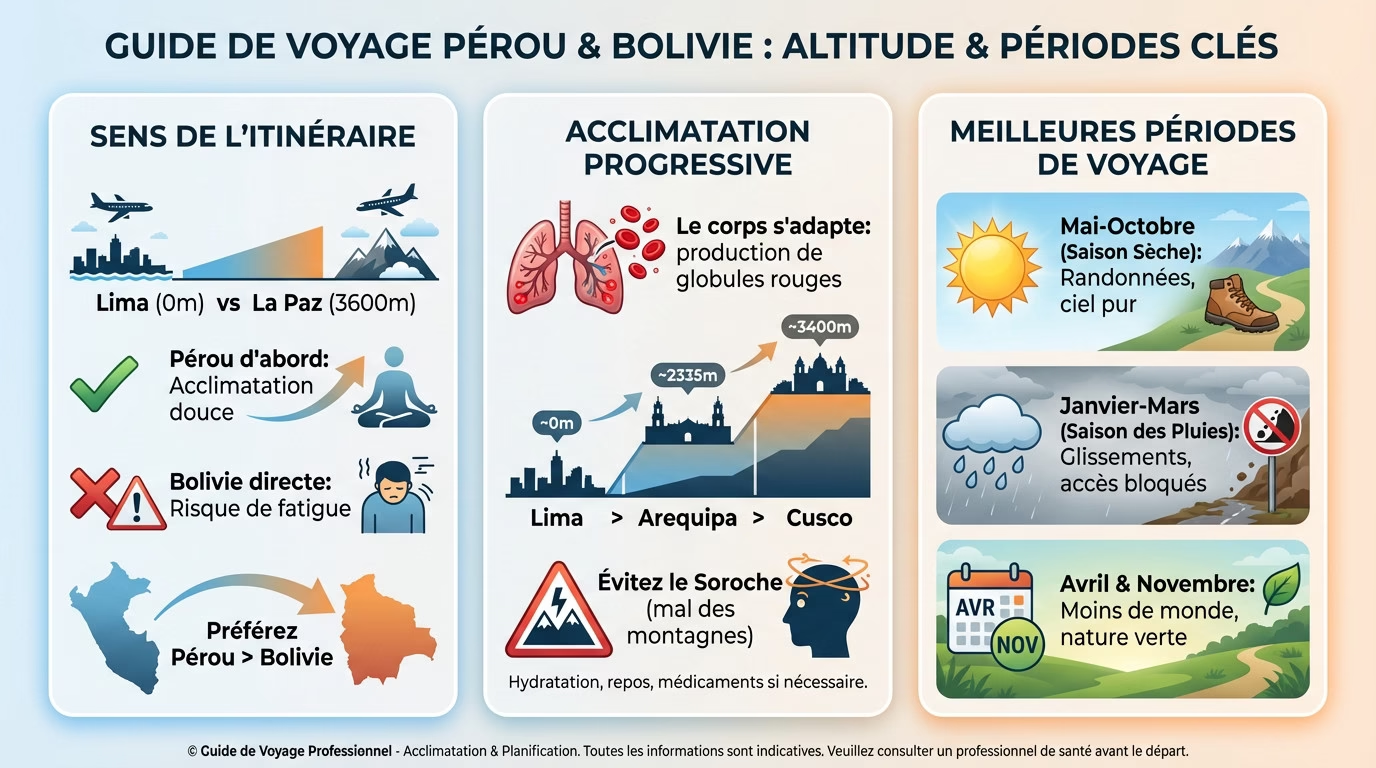
Lima is at sea level, while La Paz welcomes you brutally at 3600 meters altitude. For us, the Peruvian option was clearly much gentler on the body.
Landing directly in Bolivia means taking an unnecessary risk of immediate intense fatigue as soon as you step off the plane. We strongly advise you to save the Bolivian highlands for the second part of this trip.
This strategic loop allows you to enjoy without suffering unnecessarily. Listening to yourself is essential from the very first days.
Why progressive ascent saves your lungs
The body needs time to produce more red blood cells and absorb the rarefied oxygen. It’s not just a matter of comfort, it’s a question of physical survival.
We headed for Arequipa before attempting Cusco, a brilliant intermediate stage. It allows us toavoid the famous soroche that spoils everything if we climb too fast to the summits.
Find out about the risks about the risks of altitude sickness before you leave – it’s essential for your safety.
The best time to avoid getting soaked
The dry season, from May to October, is the ideal time for mountain hiking. The sky is often pure blue, perfect for incredible cloudless photos.
Between January and March, the rainy season hits the Andes hard. Landslides can block some railway accesses.
If you’re looking for the best plan for a Peru Bolivia travel itinerary and practical tips, aim for April or November. There are fewer people, the climate remains mild and the landscapes are super green.
Peru’s nuggets: from Cusco to the lost city 🏺
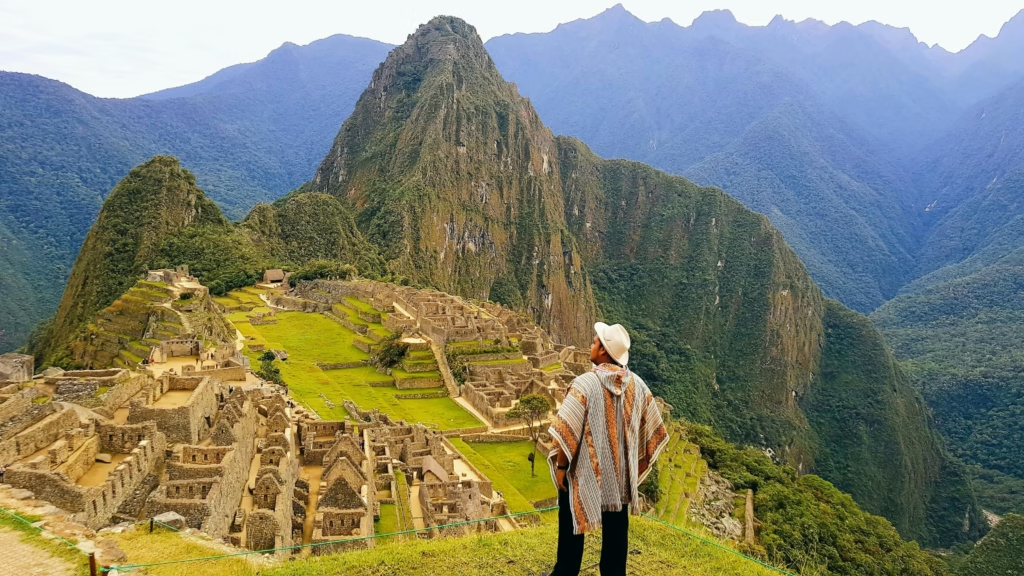
Once we’d tamed the altitude, we headed for the historic heart of the Inca Empire, where every stone tells a legend.
Cusco and the Sacred Valley, our big favorite
Cusco, the ancient capital, charmed us with its cobbled streets. It’s the ideal starting point for structuring a coherent and memorable Peru-Bolivia itinerary and practical advice.
- Pisac for its artisan market and breathtaking agricultural terraces.
- The Maras salt flats, a white checkerboard
- The fortress of Ollantaytambo, the last Inca stronghold against the conquistadors.
We loved exploring without a guide. We simply took the local collectivos. It’s much cheaper and much more authentic to meet the locals on a daily basis.
Planning a stress-free visit to Machu Picchu
Beware of the new imposed tours! Reservations must be made months in advance. Your choice of tour determines your view of the city, so don’t get the wrong ticket or you’ll be bitterly disappointed.
As for train logistics from Ollantaytambo or Aguas Calientes, prices rise quickly. You’ll need to plan your transport budget accordingly.
Machu Picchu can’t be visited, it has to be earned after a meticulous logistical process that demands patience and anticipation.
Lima, the gourmet stopover we weren’t expecting
We swung between Miraflores and Barranco. The former is ultra-modern, the latter resolutely bohemian. Two perfect atmospheres for a gentle end to your stay.
You can’t miss the fresh ceviche near the coast. Peruvian gastronomy is one of the best in the world, without debate, your taste buds will thank us.
Don’t forget to check the information on cab safety in Lima to avoid unpleasant surprises.
Crossing Lake Titicaca and crossing the border without a hitch 🛶
Puno or Copacabana: which side of the lake to choose?
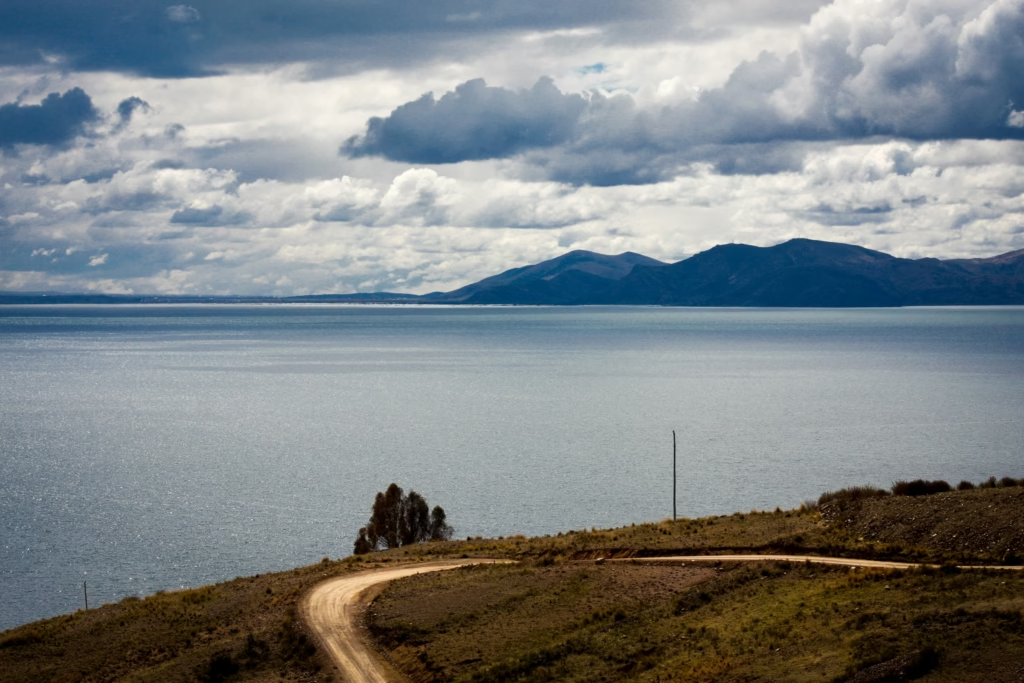
For this Peru Bolivia travel itinerary and practical tips, Puno seemed too industrial for us. In contrast, Copacabana has the charm of a high-altitude seaside resort. It’s prettier and feels better.
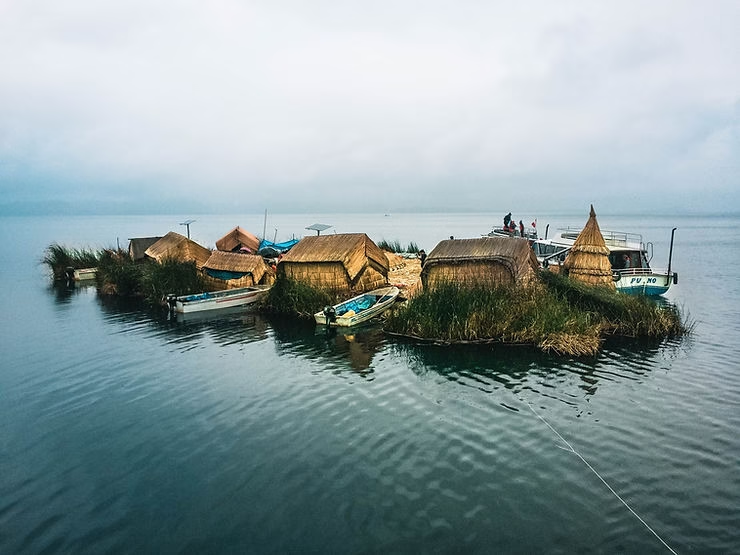
When it comes to authenticity, there’s no mistaking the two shores. The Uros Islands are almost embarrassingly theatrical. The Isla del Sol on the Bolivian side remains wild and mystical. Value for money is clearly in Bolivia’s favor.
Beware of water excursions, and compare boat types carefully. Some boats are slow and not very comfortable to cross.
From Peru to Bolivia, practical instructions
At the Kasani station, you have to get off the bus to have your passport stamped. It’s a simple procedure, but the wait can be long. Everyone has to go through, no exceptions.
Beware of stamp scams, some of which charge illegal fees. Remain firm: passage is normally free for tourists. Don’t take out your cash – it’s a bluff to get you to pay.
Check the existence of the physical stamp, as recommended by France Diplomatie. Without this proof on the passport, the trouble begins.
Isla del Sol, a timeless interlude
We recommend sleeping on the island for the experience. In the evening, when the tourist groups leave, it’s absolutely quiet. It’s magical to enjoy the silence under the stars.
There are no cars here, and everything is done on foot on trails that are often uphill. It’s a steep climb, so take it easy. The altitude makes each step a little heavier.
Leave your big bags in Copacabana at the hotel locker. Ride light with a small bag to enjoy the view.
Wild Bolivia: between urban chaos and salt desert 🌵
As you head further south, the scenery changes radically, giving way to raw nature and suspended cities.
Surviving La Paz and its vertiginous cable cars
Mi Teleférico acts as a veritable subway of the skies, linking the different neighborhoods. The bird’s-eye view of the immense La Paz basin is incredible. It’s clearly the best way to fly over this urban chaos.
At the Witches’ Market, we come across dried llama fetuses. It’s strange, even macabre, but a fascinating insight into local rituals. As an added bonus, the Valley of the Moon offers a totally eroded lunar setting.
Beware of the unforgiving terrain. Every street is a test of breath. Take your time, without shame.
The 4×4 expedition in South Lipez, the highlight of the day
To make a success of this Peru Bolivia travel itinerary and practical tips, the choice of agency is vital. Don’t aim for the lowest price. Mechanical safety must be your top priority.
- The Laguna Colorada and its thousands of pink flamingos.
- The bubbling geysers of Sol de Mañana.
- Surreal rock formations sculpted by the wind.
South Lipez is a test of endurance where the biting cold is offset by indescribable visual beauty.
Salar d’Uyuni, our tips for successful photos
Access to Incahuasi Island justifies waking up early. The sight of these giant cacti rising up from the salt flats is surreal. This is without doubt the best viewpoint at sunrise.
For photos, play with perspective. Use objects in the foreground to create illusions. The total absence of relief fools the eye and allows for all kinds of creative follies.
Beware: salt reflects UV rays violently. Sunglasses and sunscreen are mandatory to avoid burning.
Health and equipment: what really goes in the bag 🎒
Before zipping up this Peru Bolivia itinerary and practical tips, we’d like to take a look at the health logistics and bag contents to avoid any problems.
Managing soroche and vaccinations before departure
As for injections,Hepatitis A is a must, as is Yellow Fever, which is recommended for Bolivia. Take a look at your health booklet well before take-off, it’s now or never.
For altitude sickness, we’ve tested coca leaf infusion or specific tablets. Hydration remains your best weapon against headaches. Above all, skip the alcohol for the first few days, or you’ll be in for a rough ride.
To be on the safe side, check out the vaccines recommended for Bolivia by the Institut Pasteur.
The onion technique for never being cold
Forget the big single sweater, and layer up with thin technical layers instead. At 4,000 meters, the sun is scorching, but as soon as you move into the shade, the fridge is guaranteed.
The wind is treacherous, often masking the sun’s bite on the face. Just spread some sun cream on your face and keep a chapstick handy – it saved the day for us.
For the night, pack a thermal meat bag in your luggage. You’ve been warned that hostels rarely heat up.
Safety and logistical contingencies, we tell you everything
In bus stations, your small bag must stay glued to you. Pickpocketing through distraction is commonplace, and we’ve seen travelers foolishly cheated.
Road blockages are part of the scenery, especially in Bolivia. Remain zen and flexible on your schedule, and always plan a buffer day to avoid missing your flight.
Take a look at the official news about roadblocks in Bolivia before you leave.
Budget and transport: how we managed our finances 💰
Finally, let’s talk about money and mobility, because crossing the Andes requires a bit offinancial organization.
Bus, flight or collectivo: which mode to choose?
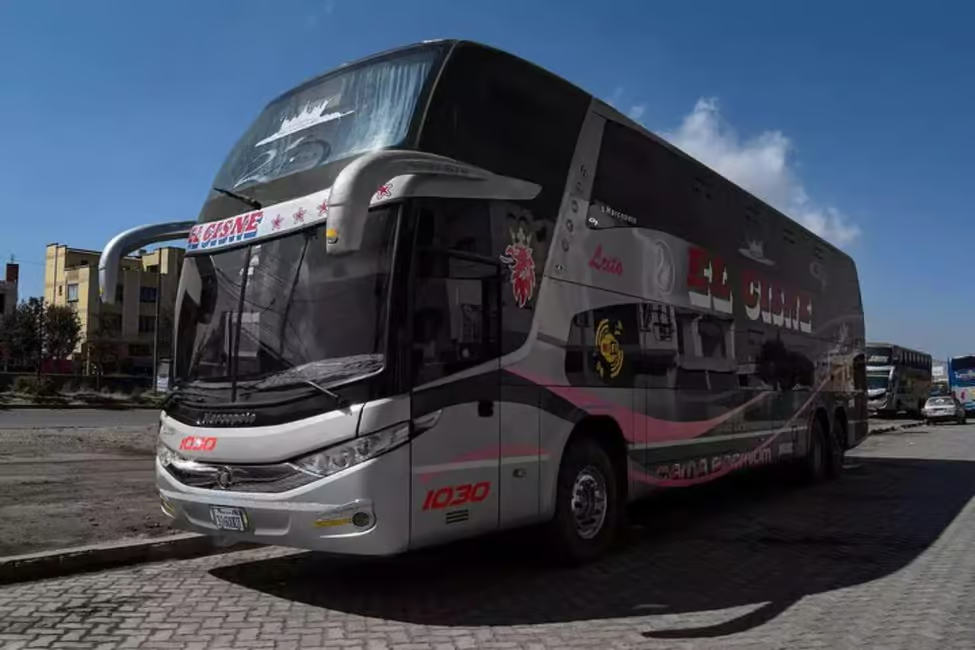
We quickly realized the trick: the “Cama” buses are incredibly comfortable for long night-time journeys. It seemed like the best way tosave a night in a hotel and still get ahead.
In the Sacred Valley, collectivos are king. These are very inexpensive shared vans. They’re ideal for short trips, and simply leave when they’re full.
Internal flights are still useful for saving time, especially between Lima and Cusco. Keep an eye out for promotions from local airlines.
Estimated real costs for three weeks on site
On the wallet side, you should expect to pay around 40 to 50 euros per person per day. This covers food, a bed in a dormitory and basic local transport without excess.
Beware, organizing your Peru Bolivia trip – itinerary and practical tips – involves two major items of expenditure: Machu Picchu and the Uyuni tour weigh heavily. These are the two big ticket items.
The difference is obvious: Bolivia remains cheaper overall than Peru. You can eat for next to nothing in the markets.
Sleeping in the warm: our tried-and-tested accommodation recommendations
We enjoyed alternating between social inns for atmosphere and small, charming hotels for rest and relaxation. There are some real nuggets with mountain views at very reasonable prices.
A detail that makes all the difference: always check the reviews for the presence of heating. An unheated room in Potosi is an icy ordeal to be avoided at all costs.
Here’s what we chose to avoid shivering at night:
- Hostels with guaranteed hot water.
- Salt hotels in Uyuni.
- welcoming family guesthouses.
This journey between Peru and Bolivia will remain engraved in our memories as an extraordinary adventure. From the narrow streets of Cusco to the white immensity of the Salar d’Uyuni, every kilometer was worth the effort of acclimatization. 🏔️ If you’re still hesitating, go for it: these Andean lands have a soul that draws you in at first sight. Ready for take-off? ✈️🇵🇪🇧🇴

