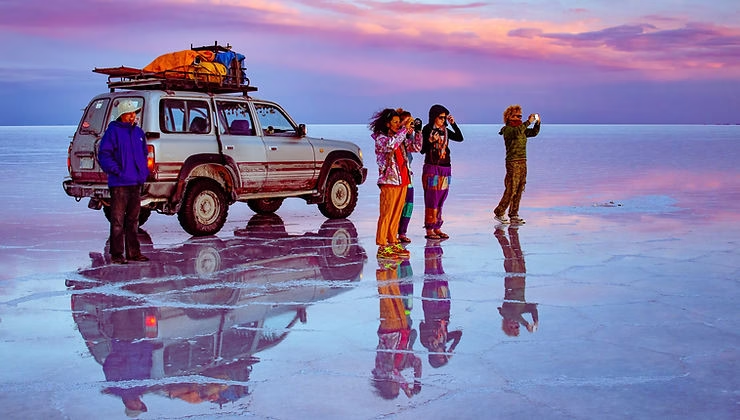
Car rental Bolivia: ready for the challenge? Do you need freedom on the roads to explore the landscapes at your own pace, but the thought of potholes, 4,000-meter passes, and police checkpoints holds you back? Good news: we’re revealing everything you need to know before you set off. From the checklist of essential documents to choosing the perfect 4×4, and tips to avoid scams, this guide prepares you for a worry-free road trip. So, no more unpleasant surprises: enjoy the secrets for an unforgettable Bolivian adventure!
Renting a car in Bolivia: the pros and cons
Craving total freedom to explore Bolivia’s breathtaking landscapes? Between off-the-beaten-path discoveries and unexpected events, you need to weigh the pros and cons. Imagine driving at 4,000 meters altitude with the vastness of the Uyuni salt flats as a backdrop… or making your way along a muddy track in the Yungas!
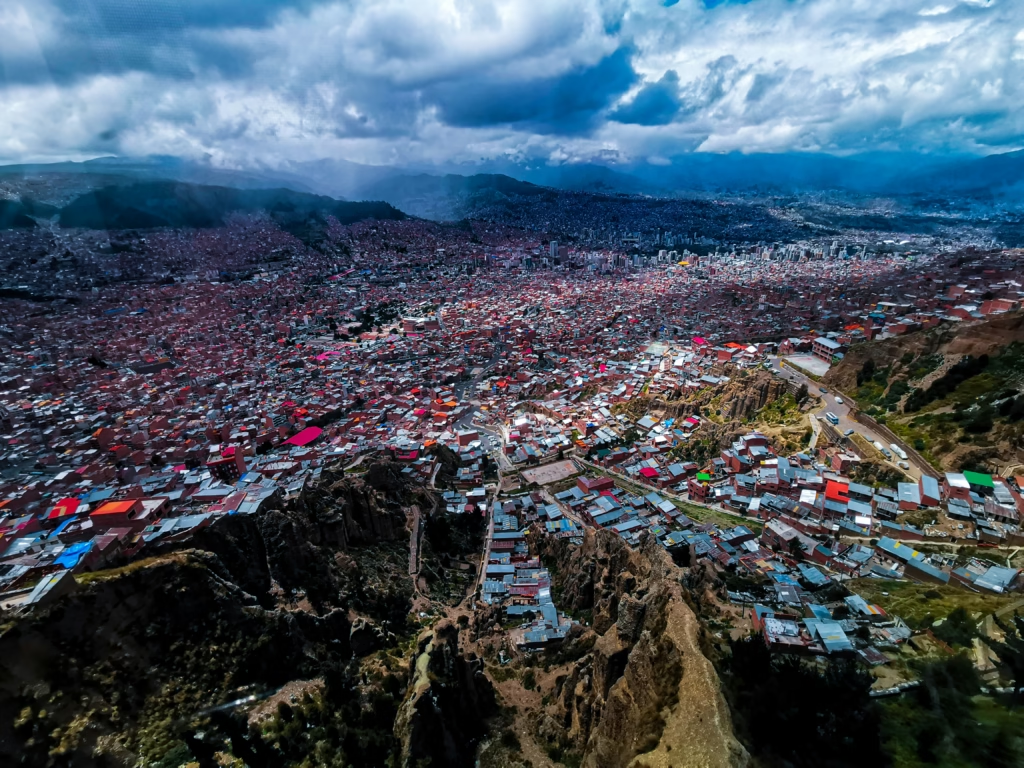
So, shall we go for it? The advantages of a solo adventure
Good news: car rental opens up unique possibilities. You’ll be able to explore the Uyuni salt flats at sunrise, spontaneously detour to an unknown waterfall, or stop in remote villages of the Yungas. No schedule to follow: Bolivia is discovered at your own pace.
- Total freedom to visit off-the-beaten-path sites
- Flexibility to adapt to weather conditions or local encounters
- Access to regions inaccessible by public transport
A 4×4 is essential for tackling dirt tracks and 5,000-meter passes. Opt for a recent model with functional air conditioning and a sturdy roof: you’ll avoid surprises in torrential rain.
Challenges not to underestimate: what awaits you on the road
Beware, this adventure is not for the faint of heart. Of the 50,000 km of road networks, only 20% are paved. The old “Death Road” in the Yungas, with its 600-meter precipices, is the most extreme example.
- Lack of signage: plan for a reliable GPS (Maps.me or Here We Go)
- Risk of roadblocks: always keep reserves of water and fuel
- Driving at high altitude: plan for breaks to avoid altitude sickness
- Possibility of bribes: keep your passport safe
The rainy season (November to March) turns some roads into muddy rivers. A 4×4 with off-road tires is an essential ally. It’s best to avoid driving at night: visibility is almost zero without lighting.
In short: prepare your Bolivian road trip
With good preparation, the experience remains unforgettable. Compare rental offers for a vehicle equipped with suitable tires. Demand a detailed inspection before signing: check the spare tires, brakes, and roof. Take out insurance covering unpaved tracks. An up-to-date GPS and a paper map are essential: Google Maps can show non-existent roads!
Ready to get started? Here are the essential links to plan your adventure:
And most importantly, print the contact details for emergency services. Bolivia holds surprises, but with these precautions, your adventure will be as memorable as it is safe.
Conditions for renting: are you ready to go?
Essential documents: your checklist before you leave
Have you checked your documents before flying out? An international driving permit is mandatory in Bolivia, even if your national license is in the Roman alphabet. Most agencies require this document to avoid hassles with road checks.
Also bring your original passport and photocopies. In case of doubt, local police prefer copies to avoid losing your official document.
For the deposit, forget your debit card. Only international credit cards are accepted. Make sure the name on the card matches the main driver and that the limit is sufficient.
- International driving permit: essential to avoid refusal at the agency.
- Passport: keep a copy on you in case of a check.
- Credit card: the only solution for the security deposit.
Age, experience, and hidden fees
The minimum age required? 21 in most cases. But beware: if you are between 21 and 24, some rental companies add “young driver” fees. An unpleasant surprise that can be expensive.
And if you’re over 25? You avoid extra costs, but still check the conditions. Some establishments set the age at 25 without exception. Don’t panic: a few agencies offer special packages for 21-year-olds, but they are rare.
A tip: compare offers to avoid pitfalls. One misread clause and you pay 20% more.
Insurance, your safety net
Have you taken out insurance? Good, but check the exclusions! In Bolivia, unpaved roads are numerous. However, many contracts do not cover damage on these tracks. Result: you pay out of your own pocket for scratches caused by gravel.
Opt for a comprehensive CDW/LDW package, including glass breakage, tires, and undercarriage. Reputable agencies even offer deductible reimbursement in case of a claim. Travel insurance won’t be enough: it protects you, not the vehicle.
What if you forget the deposit? Some rental companies refuse the rental. Others require additional insurance to reduce the risk. Check the conditions before booking.
Choosing the vehicle: your best ally on Bolivian tracks
Why a 4×4 or SUV is not a luxury
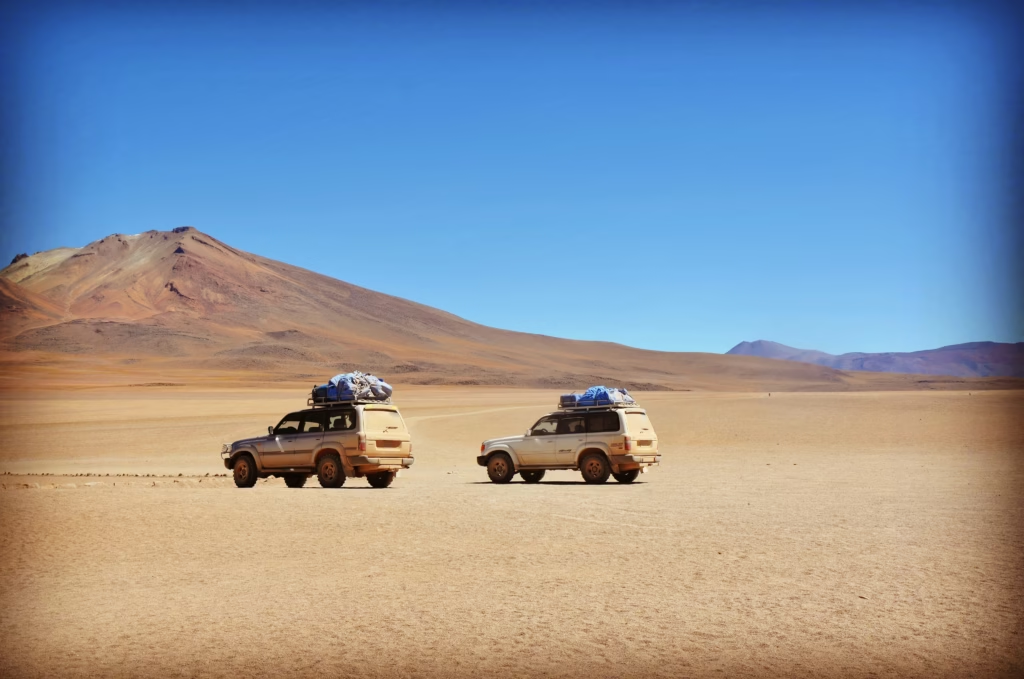
Even if a 4×4 costs more, it’s a smart choice to avoid trouble. Roads outside cities are often dirt tracks with potholes. A raised vehicle limits damage to the chassis and improves visibility in the mountains. Off-road tires are essential: they prevent skidding on the Uyuni Salt Flat or the bends of the Death Road. Prioritize ground clearance greater than 20 cm to overcome obstacles. On the Altiplano, sharp rocks or mud pits after rain won’t be a match for a good 4×4.
Equipment you absolutely must not forget
Imagine being stuck in the middle of the pampa without water. Here is your survival checklist:
- Suitable GPS: Ditch Google Maps. Prefer a model with offline maps or Maps.me. Opt for a dual-band GPS (L1+L5) in the mountains for greater accuracy.
- Tool kit and spare tires: Check for a spare wheel. Add a jack, wrenches, and a patch for punctures. A multi-tool can help with quick repairs.
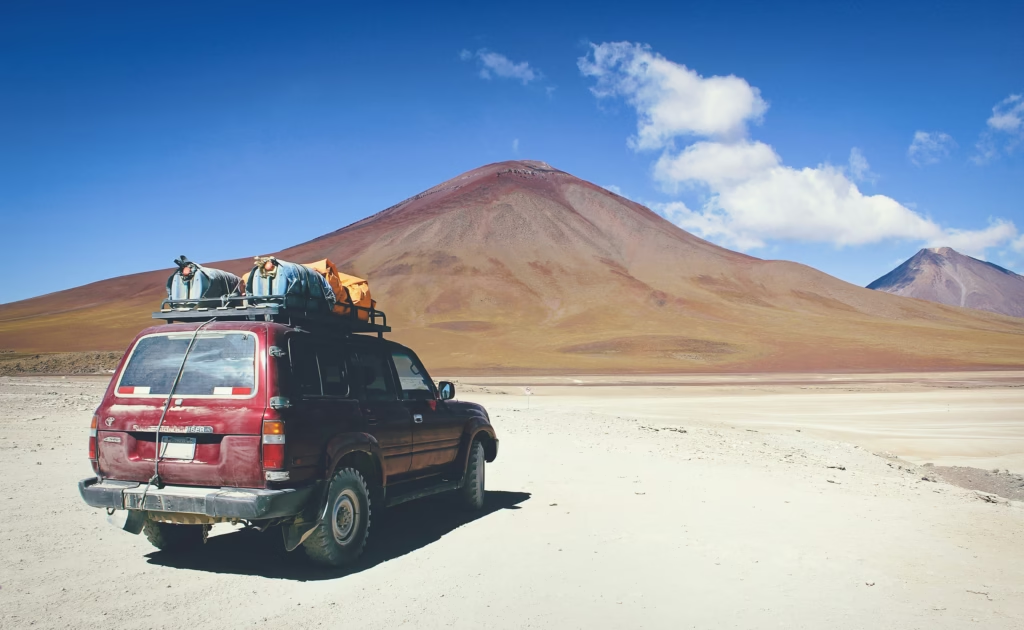
- Fuel cans: Stations are rare. Plan for an extra 20 to 30 liters to cross isolated areas. Prefer plastic jerrycans of 10 to 20 liters, which are lighter to handle.
- Supplies: Water, energy snacks (dried fruit, bars), blanket, and warm clothes. In case of a breakdown at -10°C, it’s better to be prepared.
Where to pick up your car?
Prefer the airports of La Paz, Santa Cruz, or Cochabamba, or in-city agencies. La Paz is convenient for the Uyuni Salt Flat, but prices there are sometimes higher. Use KAYAK or Rentalcars.com to save up to 46%. Book 2 months in advance, especially from May to September. Check the vehicle’s condition before signing: a forgotten scratch could cost you the deposit! In Santa Cruz, agencies like Europcar offer recent fleets ideal for the Chaco. Compare the included insurances: some cover punctures, others don’t. A final look at customer reviews avoids unpleasant surprises. Finally, check if the “full-to-full” policy is applied: you’ll need to return the tank at the same level as when you picked it up.
Driving in Bolivia: the driver’s survival guide
The Bolivian highway code… and its interpretations
Need to understand the driving rules in Bolivia? The local reality sometimes counts more than the official code!
- Drive on the right: like at home, but beware of the unexpected.
- Priority to the right: in theory. In practice, it’s often the first one there or the one who honks that goes.
- Roundabouts: the entering vehicle has priority (the opposite of Europe).
- Mountain roads: the uphill vehicle has priority.
- Horn: it’s an essential communication tool to signal your presence.
- Speed limits: 40 km/h in town, 70-80 km/h outside built-up areas, but the road condition dictates the actual speed.
Driving in Bolivia holds surprises. On mountain roads, sharp turns and precipices require maximum concentration. And if you encounter a herd of llamas? Slow down, respect their right of way… and enjoy the show!
Managing the unexpected: breakdowns, police checks, and tolls
Do you think road checks are harmless? In Bolivia, it’s better to be prepared.
Let’s start with police checks: stay calm, courteous, and only show photocopies of your documents initially. If a request for a “bribe” emerges, remain firm but polite. Always demand an official receipt – a legal practice in Bolivia. Your best move? Negotiate gently or offer to settle with the rental agency.
For breakdowns, check that your contract includes breakdown assistance. Carry a spare wheel, basic tools, and a local SIM card to call for help. In case of a breakdown in an isolated area, stay with the vehicle and signal your presence. Plan for fuel and water reserves, as gas stations can be hundreds of kilometers apart.
Finally, tolls are rare but exist on some major routes like the Yungas road. Have small change in Bolivianos ready to avoid delays. For more safety, check out our car safety tips before you go.
Capture your road trip safely
Want to capture the majesty of the Uyuni Salt Flat or the Andean landscapes? A dashcam could save you a lot of trouble!
Not only does it film spectacular landscapes, but it also protects against disputes in case of an accident. In case of a rough road, check that your vehicle is equipped with off-road tires. A GPS adapted to local conditions is an indispensable ally: some roads severely lack signage. Opt for a model with offline mapping – your phone might not have any network at 4,000 m altitude!
And if you want to capture every moment, discover how to choose the best car camera. Tip: opt for a model resistant to water and extreme temperatures, ideally with a long-lasting battery for recharging with a solar power bank.
Additional tip: pack an emergency bag with a headlamp, survival blanket, and whistle. On isolated roads, these accessories sometimes prove invaluable in case of a nighttime breakdown.
Going further: alternatives and border crossings
Is car rental the only option?
Need freedom without constraints? Discover alternatives for getting around in Bolivia!
| Mode of transport | Flexibility | Cost | Comfort/Safety | Ideal for… |
|---|---|---|---|---|
| Self-drive car rental | Very high | High | Medium to high | Independent travelers |
| Car with driver | High | Very high | High | Those who want peace of mind |
| Local buses | Low | Very low | Low | Tight budgets |
| Organized tours | Medium | Medium | High | Discover major sites without worrying about logistics |
Car rental promises total freedom, but beware: Bolivian roads are often unpaved, especially in the Amazon. Organized tours generally include accommodation and guides, ideal for destinations like the Uyuni Salt Flat or the Death Road. Local buses, although cheap, lack reliability in isolated areas.
Can you cross borders with a rental car?
Good news: some rental companies allow crossings, but be prepared for heavy formalities!
Most agencies formally prohibit leaving the territory. The reasons? Risks of theft, strict regulations, and administrative hassles. If you plan to drive to Peru or Chile, contact them 3 to 4 weeks in advance to obtain a paid authorization.
Be wary of consular procedures: they often take longer than expected. Our advice? Be prepared to rent a second vehicle at the border. This avoids unpleasant surprises related to both countries.
Tip: check the rental contract. Some agencies offer “one-way” options at exorbitant prices. Compare and prefer experienced local rental companies for these trips. If crossing is authorized, demand insurance covering unpaved roads, which are common in Bolivia, and carry a GPS adapted to the region.
And if you attempt the crossing, check the vehicle’s condition before departure. Take photos of existing scratches, check the off-road tires, and plan for fuel reserves. Without these precautions, you risk much more than a delay!
In summary, renting a car in Bolivia requires preparation, but the adventure is worth the effort. Challenging roads, but unparalleled freedom and discoveries await you. Ready to take the plunge? Book your car, accommodation, and activities now with our practical links!

