Prepare your trip to Boliviaalso means asking the right questions about health and safety. Between altitude, drinking water, recommended vaccinations, everyday ailments and finding a hospital in case of emergency… it’s best to think ahead to leave with peace of mind.
Bolivia is no more dangerous than anywhere else, but it does require a minimum of preparation: extreme climate, high altitude, variable infrastructure and a few local habits to get used to. In this article, you’ll find all the latest information, practical advice tested in the field, and my tips for avoiding problems (or dealing with them!).
Whether you’re a solo adventurer, a family traveler or a cautious backpacker, this guide will help you travel with peace of mind, get the most out of your adventure, and know what to do if anything goes wrong.
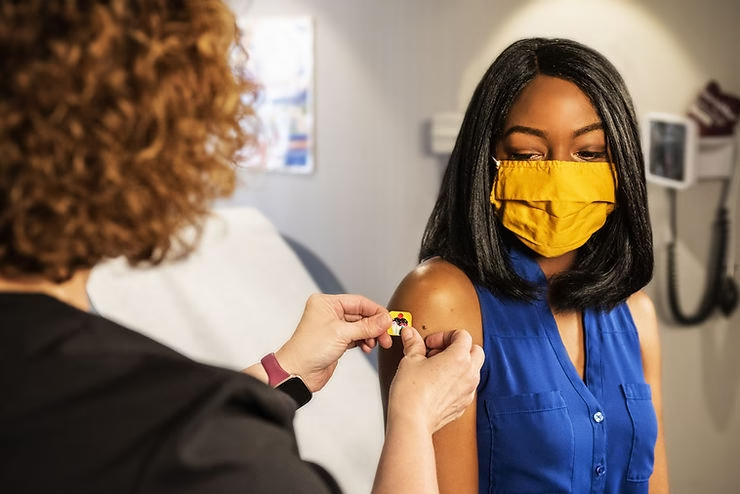
💉 Recommended and required vaccines for Bolivia
Before leaving for BoliviaBefore leaving for Bolivia, it’s a good idea to take a look at your health, so you can travel with a clear head. While no vaccinations are strictly compulsory for travellers from Europe, there are a few recommendations to be taken seriously.
🔹 Compulsory vaccines
- Yellow fever: compulsory only if you come from a country where it is present (e.g. Brazil, Guyana, sub-Saharan Africa), or if you plan to enter the Bolivian Amazon (Rurrenabaque, Trinidad…).👉 An international vaccination certificate may be required on arrival for these areas.
- COVID-19: no longer required at present, but check before departure as rules may change.
🔹 Recommended vaccines
- Hepatitis A (strongly recommended for all)
- Hepatitis B (for long stays, volunteer work, or depending on lifestyle)
- Typhoid
- DTPP (diphtheria, tetanus, pertussis, polio) up to date
- Rabies (for prolonged stays in rural areas or in contact with animals)
💡 Talk to your doctor or an international vaccination center at least 4 to 6 weeks before departure. Some vaccines require several doses or a delay in efficacy.
🔹 Where to get vaccinated?
- In France, at an international vaccination center (hospitals, certain medical centers)
- You can also check the Institut Pasteur website or the French Ministry of Foreign Affairs for recent updates.
🏔️ Altitude in Bolivia: acclimatize and avoid altitude sickness
La Bolivia is one of the highest countries in the world. Whether you’re arriving in La Paz, exploring the Salar d’Uyuni or hiking in Sajama Park, you’ll often find yourself between 3,500 and 4,000 metres above sea level… and sometimes even higher!
🎈 What is “soroche”?
Mountain sickness (soroche) affects some travellers, especially on fast ascents: headaches, nausea, fatigue, shortness of breath, even insomnia or digestive problems.
🗺️ Which regions are concerned?
- La Paz, El Alto, Oruro, Potosí, Uyuni, Sajama, Titicaca: all above 3,600 m
- Amazon (Rurrenabaque, Santa Cruz, Trinidad): much lower (200-500 m)
🧘♂️ Acclimatization tips
- Gradual ascent: starts with a few days at moderate altitude (Sucre, Cochabamba)
- Stay hydrated and avoid alcohol and large meals for the first few days.
- Walk slowly, avoid strenuous effort at first
- Infusion of coca or coca leaves: traditional local remedy (available everywhere)
- Medication: ask your doctor for advice (Diamox in case of particular sensitivity).
🚑 What to do in case of severe symptoms?
- Return to altitude as soon as possible
- Go to hospital or contact emergency services if vomiting, confusion, breathing difficulties
💡 The vast majority of travelers acclimatize well within a few days. Plan a margin at the beginning of your stay to enjoy without worry!
💧 Water, food and hygiene
The question of water and food is essential to staying in shape during your trip to Bolivia. Here’s how to avoid digestive problems and travel with a clear head.
🚰 Can we drink tap water in Bolivia?
- No, except in certain high-end hotels and restaurants equipped with filters.
- For all other cases, prefer bottled water… or even better: use an OKO OKO water bottlefiltered water bottle, which is practical, ecological and economical.
- On treks or in isolated areas: remember to purify your water (filter flask, Micropur tablets).
🥗 Food precautions
- Choose well-cooked foods (meat, eggs, fish).
- Always wash or peel fruit and vegetables.
- In markets, choose stalls frequented by locals (that’s a good sign!).
🧼 Hygiene tips
- Always take hydro-alcoholic gel and a few tissues with you (soap is often not available in public toilets).
- Wash your hands before every meal, especially street food.
- If you have a sensitive stomach, avoid ice cubes and fruit juices made from unfiltered water.
💡 By following these tips, you can enjoy Bolivian gastronomy without stress… and without too many trips to the toilet!
🏥 Hospitals, pharmacies and medical care in Bolivia
A little boo-boo or a health problem? It’s best to know how the Bolivian health system works and where to find the right contacts quickly.
🏨 Hospitals and clinics
- The major cities (La Paz, Santa Cruz, Sucre, Cochabamba) have good public hospitals and private clinics.
- Private clinics: more expensive, but better quality care, sometimes with French- or English-speaking doctors.
- In the countryside or in isolated areas: the medical supply is limited, especially in the case of chronic treatment.
💊 Pharmacies
- Pharmacies can be found everywhere, even in small towns.
- Most common medicines (paracetamol, antibiotics, etc.) are available without a prescription, but beware of counterfeits: choose well-known chains or pharmacies in town.
📞 What to do in an emergency?
- Contact your travel insurance company and the assistance platform before any important medical procedure.
- For a quick consultation, some teleconsultation platforms work well with a Holafly eSIMor a good 4G connection.
- Emergency medical numbers: 118 (ambulance), 110 (police), 120 (fire department).
💡 Useful tips
- Always take a first-aid kit adapted to your profile (see next section).
- Carry your insurance card or contact information (emergency number, WhatsApp, app).
- For chronic illnesses: make sure you have enough medication for your entire stay.
🛡️ Safety in Bolivia: risks and precautions
Travel to Bolivia is generally safe, but there are a few risks to be aware of and simple precautions to take to enjoy your stay without worry.
🕵️♂️ Common risks
- Pickpocketing and pickpocketing: especially in markets, buses, terminals and tourist areas.
- Small scams: fake cabs, currency exchange, unofficial guides.
- Demonstrations and road blockades: fairly frequent, especially in big cities or during election periods.
🚦 Tips for safe travel
- Keep your valuables with you (secret pouch or belt), and avoid showing off cash and camera equipment in the street.
- Take digital and paper copies of your passport, visa and tickets.
- Always use official cabs or radio cabs, and avoid hailing on the street.
- Ask your hotel/hostel about neighborhoods to avoid, especially at night.
- Prefer vending machines located in banks or shopping malls.
- In the event of a problem: first contact the tourist police or your embassy.
🆘 Useful numbers and procedures
- Tourist Police: 800-14-0081
- General emergency number: 110
- Contact your travel insurance company as soon as possible in the event of theft, loss or medical problems.
💡 S tay alert to your surroundings, but don’t get paranoid: most trips to Bolivia go off without a hitch, especially with a little common sense!

🛠️ Practical health & safety tips
Here’s a checklist of simple tips for traveling in Bolivia hassle-free :
🩹 Basic first-aid kit
A must-have:
- Paracetamol, anti-inflammatories
- Antidiarrheal (Imodium or equivalent)
- Antiseptics, dressings, bandages
- Mosquito spray
- Sunscreen and lip balm with SPF
- Personal medication (with prescription)
- OKO Filter Bottle for safe drinking everywhere
- Hydroalcoholic gel, wipes
💡 F eel free to print or download the list before you go!
🧑⚕️ Tips for staying healthy
- Drink regularly, even if you’re not thirsty (the air is dry at altitude).
- Wash your hands before every meal
- Dress warmly in the evening (temperatures drop quickly)
- Eat a varied diet, favour cooked foods
📲 Resources & useful contacts
- Emergency numbers: 110 (police), 118 (ambulance), 120 (fire department)
- Travel Advice” application (MAE)
- Your travel insurance health space (WhatsApp, app, assistance platform)
- Holafly eSIM to contact emergency services even without wifi
❓ FAQ health and safety Bolivia
Are there any compulsory vaccinations for entering Bolivia?
No, except for yellow fever if you come from a high-risk country or are traveling to the Amazon. Hepatitis A, typhoid and DPT vaccines are recommended for all.
Is anti-malarial treatment necessary?
Not compulsory for most classic itineraries (Andes, Uyuni, Titicaca). It may be advisable for the Amazon (Madidi, Rurrenabaque): ask your doctor for advice.
Can I travel to Bolivia pregnant or with children?
Yes, with the right precautions (altitude, diet, hygiene, appropriate pharmacy). Consult a doctor before leaving to adapt your preparation.
How do I contact emergency services in Bolivia?
Dial 110 (police), 118 (ambulance) or 120 (fire department). In the event of a problem, contact your insurance company and keep your Holafly eSIM active for calls/internet.
Are hospitals reliable?
Yes, in big cities (private clinics recommended). In rural areas, resources are more limited: plan for a well-stocked pharmacy and anticipate medical needs.
✅ Conclusion
Travel to Boliviais to plunge into a unique adventure… as long as you are well prepared in terms of health and safety. A little forethought: up-to-date vaccinations, an appropriate first-aid kit, managing the altitude and the little risks of everyday life… and you’ll be able to take full advantage of everything the country has to offer.
Don’t forget the simple things: filtered water (thanks to the gourd OKO), basic hygiene, good reflexes in the face of altitude and caution in town. In the event of a problem, the quality of care in the big cities is decent, especially in private clinics, and you’ll always feel more at ease with a good insurance policy and an eSIM Holafly so you can be reached anywhere.
Listen to your body, trust your common sense, and discover Bolivia with complete peace of mind.
Have a good trip, and take care of yourself!

