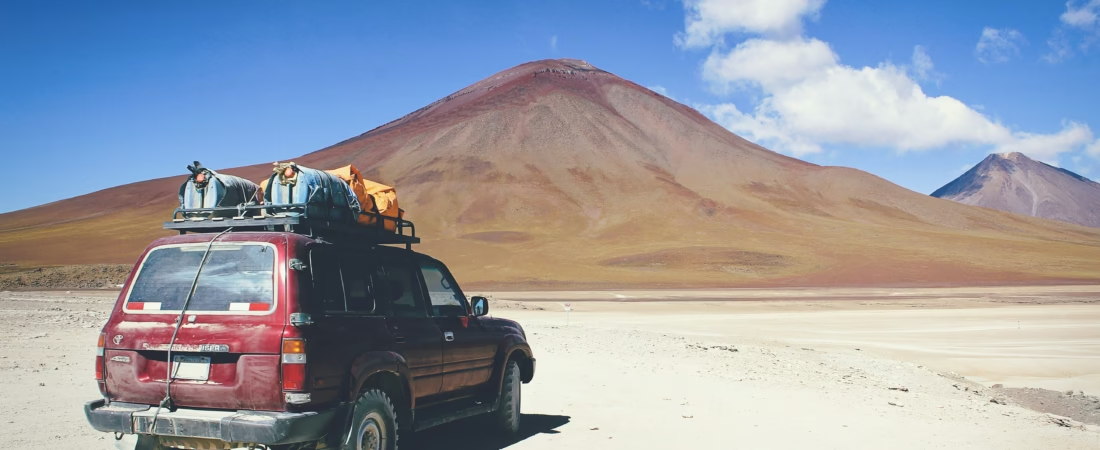
Are you tempted by a road trip to Tupiza Sud Lipez Salar de Uyuni, but wondering about the perfect itinerary, the best places, and how to avoid unpleasant surprises? Between the lunar landscapes, colorful lakes, and the vastness of the Salar, organizing this trip can quickly seem complex. Good news: we’re revealing all the key steps to plan your adventure with peace of mind. Discover why starting from Tupiza offers a more gradual itinerary, how to book a reliable agency, what luggage to pack for extreme temperatures, and even how to capture these unique moments with the right accessories. Ready to turn your dream into reality?
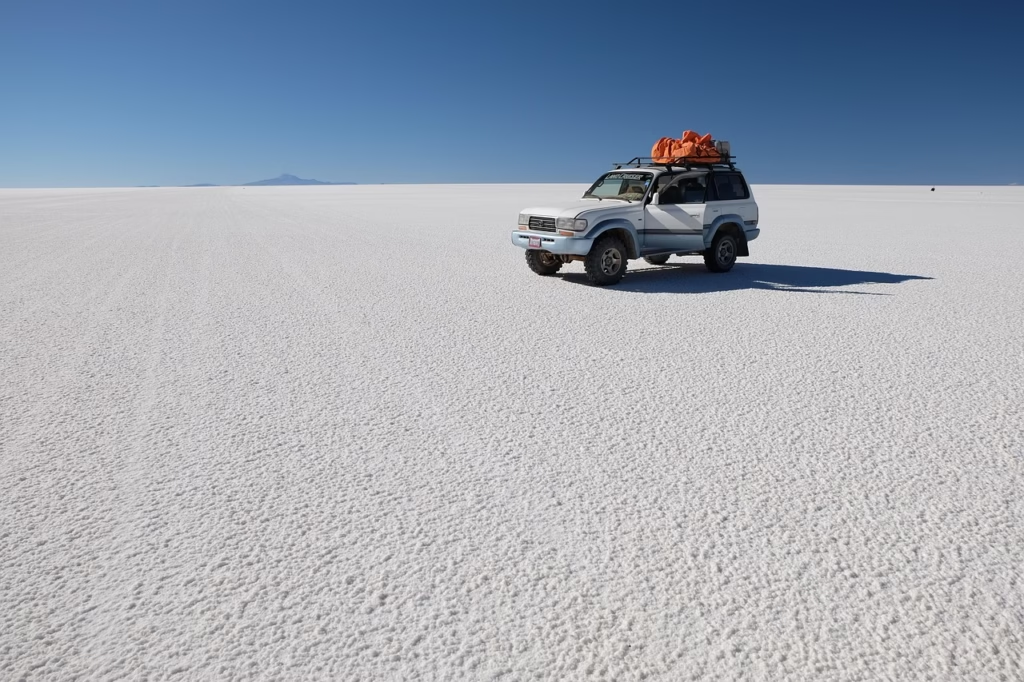
Tupiza or Uyuni: which is the best starting point for your road trip?
Why this choice is the first crucial step in your planning
Ready to embark on a Bolivian adventure, but one question is bothering you: should you start from Tupiza or Uyuni?
Your starting point dictates your entire experience on the Tupiza Sud Lipez Salar de Uyuni road trip. It determines your itinerary, the crowds at the sites, and even the quality of services. Make the right choice now, and you’ll enjoy a more memorable trip.
Imagine yourself alone in front of a breathtaking landscape, without dozens of 4x4s in the background. Or facing queues for the same photo as everyone else. The decision is strategic. Starting from Tupiza facilitates gradual acclimatization, reducing the risk of altitude sickness.
The Showdown: Tupiza vs Uyuni
Here’s the battle of the two towns for your next road trip.
- Uyuni: The classic choice. The most frequented gateway, offering more agencies and competitive prices. Less charming atmosphere, standardized tours with many jeeps.
- Tupiza: The off-the-beaten-path alternative. Reversed itinerary, saving the Salar for the end. Bolivian Wild West landscapes (Quebrada de Palala, El Sillar) without the crowds, but a more expensive departure with fewer agencies.
Our recommendation: choose to start from Tupiza
Here’s why Tupiza deserves your preference to experience this Bolivian adventure differently.
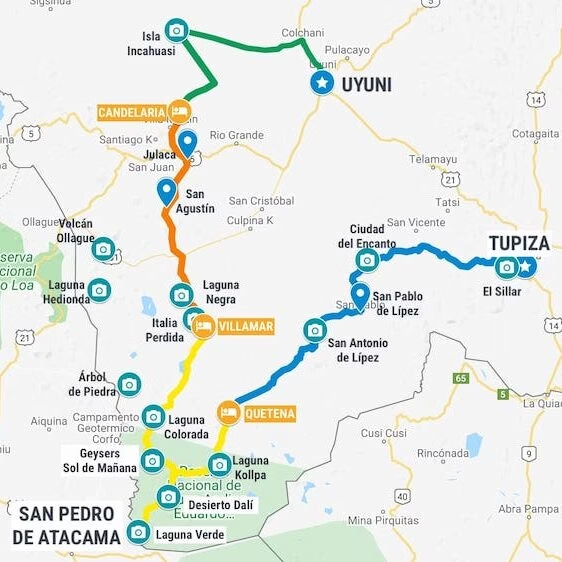
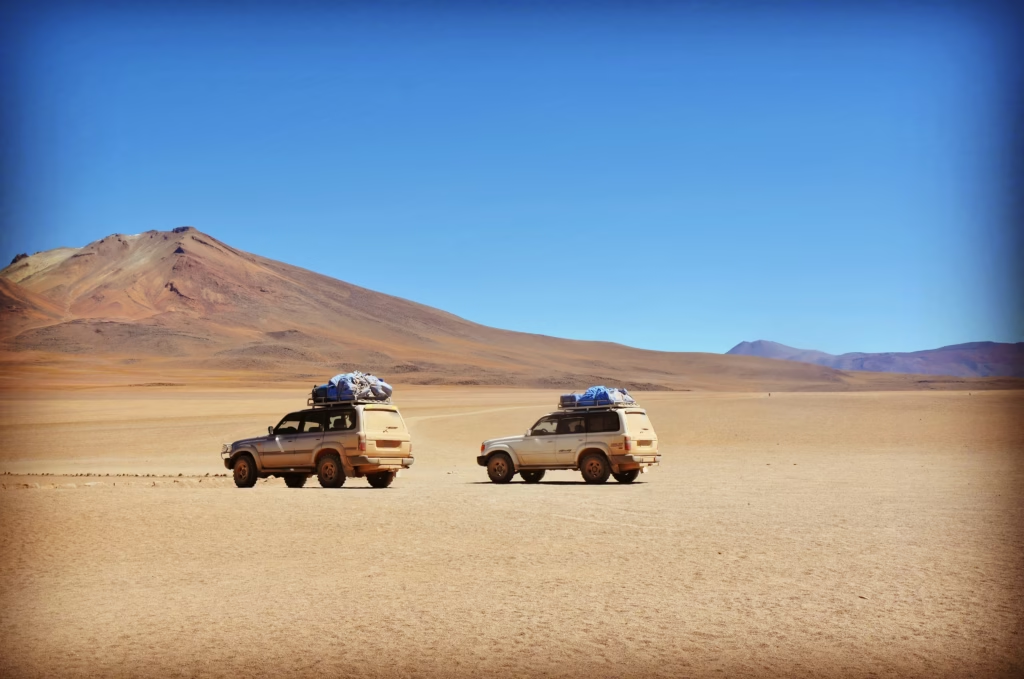
An itinerary that builds up gradually: From Tupiza, start with canyons and rock formations of the Bolivian Wild West. You progress towards the colorful lagoons to end with a grand finale at the Salar. A balanced 4-day itinerary, unlike the short stays from Uyuni.
Fewer crowds, more emotions: Reversed departure compared to the majority of travelers. Sites privatized for the first two days for an intense immersion, like at El Pueblo Fantasma.
Often superior services: Tupiza agencies, fewer in number, offer a dedicated cook for varied and delicious meals. Jeeps accommodate 3 to 5 people (compared to 6 in Uyuni), improving comfort.
| Criterion | Tupiza Advantages | Uyuni Advantages |
|---|---|---|
| Itinerary | Spectacular crescendo, saves the Salar for the end | Starts with the Salar, less gradual |
| Crowds | Sites almost privatized for the first 2 days | Very high crowds at all sites |
| Services | Often with a dedicated cook, quality meals | More standardized services, simple meals |
| Budget | Slightly higher | More economical, more competition |
| Duration | Generally 4 days / 3 nights minimum | 1 to 3-day tours available |
| Authenticity | More immersive and off-the-beaten-path experience | More touristy and standardized experience |
How to book your organized tour: agencies, budget, and practical aspects
Choosing the right agency: our tips
Want to experience the Salar de Uyuni without any hassle? Good news: in Tupiza, agencies are experienced. But to avoid unpleasant surprises, here’s how to choose your partner wisely.
Check recent reviews on TripAdvisor or traveler forums. Tupiza Tours, for example, boasts 4.7/5 on TripAdvisor thanks to its competent guides and well-maintained vehicles. This agency holds the Travellers’ Choice 2025 title. Ask if oxygen is provided (essential at 5,000 m) and if a cook is included – a key detail for hearty meals.
Show up at the agency the day before to meet the team. Some guides, like Gerardo, make all the difference: “His knowledge of hidden paths allowed us to enjoy the landscapes away from tourists,” a traveler recounts. For reference, Tupiza Tours or La Torre Tours are often mentioned in reviews for their professionalism. In summary, check these criteria:
- Review recent feedback (TripAdvisor, forums).
- Verification of essential equipment (vehicle, oxygen, cook).
- Direct contact with the agency to get a feel for them.
What budget should you plan for this dream road trip?
Expect to pay between 180 and 250 USD for a 4-day/3-night tour. This package includes 4×4 transport, basic accommodation (salt hotel or refuge), and all meals (mostly chicken/rice, vegetarian option available). Accommodations remain simple, without heating, but offer total immersion in the Andean landscapes.
Also plan for:
- Entrance fees: 22 USD for the Eduardo Avaroa Reserve + 5 USD for Isla Incahuasi (total 30 USD to be paid in Bolivianos).
- Hot shower: 10 to 20 Bs (1.30 to 2.50 €) per session, available in some refuges.
- Tips (10 to 20 USD) and alcoholic beverages.
These prices are justified by the complexity of the route. A guide like Ruben (Tripadvisor reviews) is worth his weight in gold: “His safe driving and good humor transformed the trip into a memorable adventure.” Booking on-site in Tupiza can save 10 to 15% for a group of 4 people, but always prioritize quality. Starting from Tupiza also avoids the “pack of 4x4s” from Uyuni, as several travelers point out. For an English-speaking guide, expect to pay an additional 240 USD for the group.
Your total budget will thus be around 210-280 USD. Book on-site to negotiate, but don’t skimp on safety or experience: your team will be your ally against the glacial cold and altitude challenges.
Your 4-day, 3-night itinerary, from Tupiza to the Salar de Uyuni
Day 1: The Bolivian Wild West and the first lunar landscapes
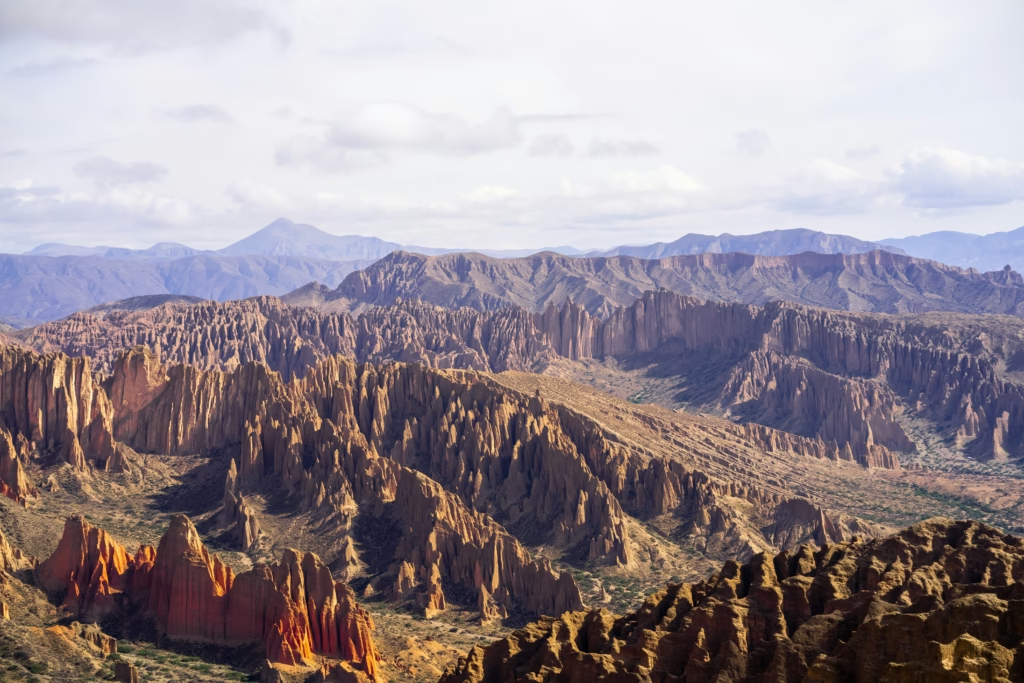
Upon waking up in Tupiza, you’ll feel the excitement building. Head to the central square where your driver and cook are waiting for you. The journey starts around 8 AM, with the first stop at Quebrada de Palala. The red canyons sculpted by the wind resemble a Western movie set. You’ll observe llamas crossing, indifferent to the minivan’s presence.
In the early afternoon, the landscapes become more austere. You’ll cross stone expanses and abandoned mining villages like San Antonio de Lípez. Arrival in Quetena Chico at the end of the day. The refuge, made of rammed earth, is simple but welcoming. A hearty meal prepared by the cook, then you look up: the starry sky is breathtaking. First night at 4,000 m altitude, listening to the wind whistle between the stones.
Day 2: Colorful lagoons and high-altitude deserts
Waking up is harsh, but the promise of a natural spectacle motivates you. Head to Laguna Morejón, where llamas and pink flamingos break the monotony of the landscape. Laguna Hedionda follows, with its green waters and sulfurous odors. You’ll learn that this sulfur comes from the surrounding volcanoes.
In the early afternoon, the Siloli Desert stretches out before you. Your guide stops you in front of the Árbol de Piedra, a 7-meter rock formation shaped by the wind. A souvenir photo is a must. Evening next to Laguna Colorada, this vivid red lake with pink reflections. Algae and sediments are responsible for this. Night falls, and you discover a basic refuge, but the view of the lagoon is well worth a few concessions.
Day 3: Geysers, hot springs, and Dali Desert
Waking up at 5:30 AM pays off: you’ll witness the sunrise over the Sol de Mañana geothermal site. Geysers rise up to 5 meters, accompanied by clouds of steam. The glacial air (around -10°C) stings your cheeks, but the spectacle is worth it. You almost touch the Martian atmosphere of this place at 5,000 m altitude.
Head to the Polques hot springs. The 38°C water warms you after the biting cold. You’ll enjoy this invigorating bath while admiring the surrounding mountains. In the afternoon, the Salvador Dalí Desert opens up its surreal landscapes to you. You’ll cross sterile expanses before admiring Laguna Verde, where the Licancabur volcano is reflected. The day ends in a salt hotel. Your bed, your table, the walls: everything is made of salt. An unusual experience, much more comfortable than the previous two nights.
Day 4: The grand finale at Salar de Uyuni
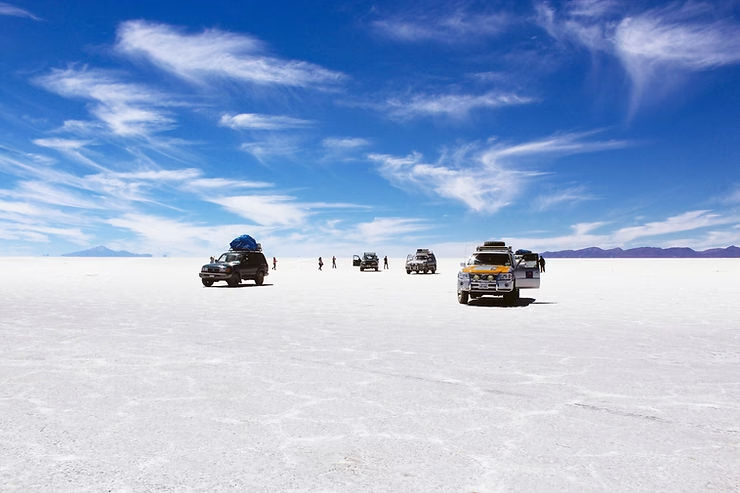
At dawn, you’ll walk barefoot on the Salar de Uyuni. The salt crunches under your feet, and the horizon merges with the sky. The guide takes you to a viewpoint to admire this white immensity. Then head to Isla Incahuasi, covered with giant cacti. You’ll climb to the summit for a 360° view of the salt desert.
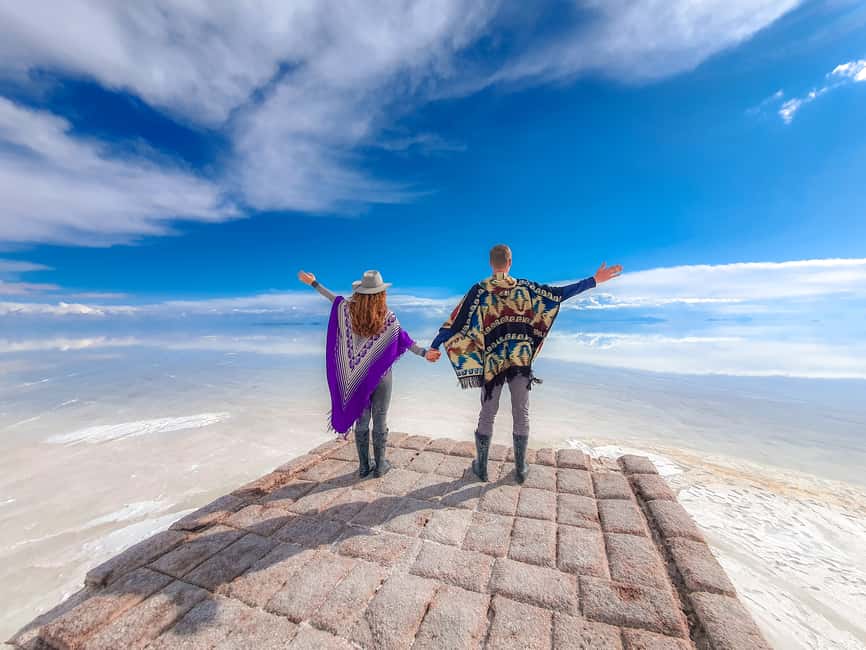
It’s time for fun photos: thanks to the play of perspective, you’ll become a giant or hold the sun in your hand. The guide helps you find the best angles. In the late morning, discover the train cemetery, a remnant of the mining golden age. The tour ends in Uyuni around 1 PM, already leaving you with **the desire to return and explore these breathtaking landscapes**…
Note: This 4-day tour from Tupiza costs between 1,200 Bs (155€) for 4 people. Meals and nights in a refuge or salt hotel are included. Choose a reputable agency like Tupiza Tours or La Torre Tours. Bring a sleeping bag liner for cold nights!
- Tip: Book your tour in advance, especially during high season (May to October). Early morning departures avoid crowds at the spots.
- Bonus tip: Bring warm clothes, sunscreen, and a camera. A good backpack, headlamp, and medication for soroche (altitude sickness) are essential.
- Key takeaway: Good altitude acclimatization is paramount. Arrive a few days early in Tupiza (2,850m) to adapt. The Salar de Uyuni (3,658m) and Sud Lipez (up to 5,000m) will hold no more secrets for you!
Preparing well for the adventure: altitude, cold, and essential equipment
Managing altitude: the key to a successful trip
Did you know that acclimatization can make or break your experience? Soroche (altitude sickness) awaits any visitor abruptly ascending to 5,000m altitude. Good news: with simple precautions, you can avoid discomfort. But beware, one traveler shared a traumatic experience after ascending from San Pedro de Atacama (2,400m) to Uyuni (3,600m) in one day. The result? Severe headache, extreme shortness of breath, diarrhea… A mistake not to be repeated.
Start by spending 2 to 3 days in Tupiza (2,950m) or Sucre (2,800m). These intermediate steps prepare your body for extreme altitudes. Remember, even experienced travelers have experienced severe symptoms when ascending too quickly. Drink 2 to 3 liters of water daily, chew coca leaves, or sip mate. Move slowly and, above all, never hide your symptoms from the guide. Headaches, nausea, or dizziness are signals to take seriously. A practical tip? Bring glucose tablets and avoid alcohol: your body needs to conserve all its energy to adapt.
What to pack? The checklist so you don’t forget anything
Packing your bag is like composing a musical score: every element counts for a successful concert. Here’s the perfect orchestra to face the extreme:
- Warm clothing: Fleeces, thick down jacket, beanie, gloves, scarf. A cold-weather sleeping bag (0°C) is crucial: glacial nights sometimes drop to -15°C! For your feet, layer thin and thick socks. And if you’re in doubt, know that travelers have combated the cold by zipping two sleeping bags together.
- Sun protection: Category 3/4 sunglasses, 50+ sunscreen, lip balm. The salt’s reflection
burns the skin like a giant mirror. Opt for UV-protective sunglasses with polarized lenses: they reduce visual fatigue in desert areas. - Practical equipment: Headlamp (nights without electricity are frequent), power bank (cold drains smartphone batteries). Bring alkaline batteries: they resist cold better than rechargeable ones. And a first-aid kit? Essential: painkillers, anti-diarrhea medication, and cough syrups.
- For comfort: Swimsuit for bathing in the Polques hot springs, microfiber towel. And to capture these landscapes, invest in good action camera accessories or compare the best video options. A tip: slip chemical hand warmers into your backpack to warm gloves and socks.
Organizing the rest of your trip from Uyuni
Your tour ends, the adventure continues!
And there you have it, the Salar is behind you, your head full of memories. Most tours end in Uyuni in the early afternoon, leaving time to catch a bus, a flight, or a transfer on the same day. Need to extend your adventure? Here are the options to continue your journey in Bolivia or cross into Chile.
Transport options from Uyuni
- By bus: The most common and economical option.
- To La Paz: Opt for an overnight bus (8-10 hours) with sleeper seats (“cama”) for more comfort.
- To Sucre or Potosí: Regular departures (3-8 hours). Check schedules.
- By plane: Fast but expensive. Daily flights to La Paz in 1 hour (BoA or Amaszonas). Ideal if you’re short on time.
- By train: Less frequent. The “Expreso del Sur” connects Uyuni to Oruro (then bus to La Paz). Limited departures, check in advance.
- To Chile (San Pedro de Atacama): Direct 4×4 transfer from Laguna Verde. To be specified when booking the tour.
Must-see stops along the way
- The Stone Tree (Árbol de Piedra): A 7-meter rock formation sculpted by the wind in the Siloli Desert.
- Laguna Colorada: A vivid red lake, inhabited by pink flamingos and white borax islands.
- Sol de Mañana: A geothermal site at an altitude of 4,570 meters, featuring geysers and bubbling mud.
- Laguna Blanca and Laguna Verde: Two lakes with contrasting colors at the foot of Licancabur volcano. Laguna Verde, turquoise, owes its color to minerals.
Tips for booking your transfer to Chile
- Andean Ways: Transfers for 1 to 4 people (from $1,250 USD). Spanish-speaking driver; English-speaking guide at an additional cost. Park entrance fees (380 Bolivianos) not included.
- Daytrip: From €82 per seat, includes complimentary water and child seats. Free cancellation up to 24 hours prior.
The transfer includes crossing the Hito Cajon border. A change of vehicle and driver takes place there. Early departure from Uyuni is recommended to avoid the immigration offices closing.
In Brief: Your Perfect Road Trip Summary
Key information to remember
- Recommended starting point: Tupiza, for a comprehensive itinerary and fewer tourists. Discover sites not found on classic tours, such as the colorful lagoons and the Stone Tree.
- Ideal Duration: 4 days and 3 nights, to explore geysers, the Siloli Desert, and the Uyuni Salt Flats. Progressive itinerary: Day 1 in lunar landscapes, Day 2 towards the lagoons and geysers, Day 3 on the Salt Flats, Day 4 return with a stop at breathtaking sites.
- Best time: April to October for clear skies, but freezing nights down to -15°C. For the mirror effect, January to March (muddy roads possible). It’s up to you to choose between spectacular landscapes and logistical comfort!
- Budget: Between $180 and $250 USD for the tour + 250 BOB for entrance fees. Included: meals, nights in a salt hotel, 4×4 transport. Additional options: English-speaking guide (+$200 USD/group) or comfort level (basic with dorms, deluxe with hotels like Palacio de Sal).
- Acclimatization: Essential before departure! Arrive 2-3 days in advance in La Paz or Potosí. Avoid alcohol and drink coca tea. Altitude sickness can cause headaches or shortness of breath, so it’s best to anticipate it.
Ready to book?
Book early to ensure a well-maintained vehicle and a competent guide. During high season, the best operators are fully booked. Good news: tours include meals, accommodation, and emergency oxygen. Tip: check traveler reviews to avoid unpleasant surprises (old vehicles, uncommunicative guides).
To plan your stay in Bolivia:
Book your activities in Bolivia here
Once your bookings are confirmed, pack warm clothes, sunscreen, sunglasses, and a sleeping bag for chilly nights. Then, all that’s left is to enjoy this unforgettable adventure!
Tupiza guarantees a unique journey, away from the crowds, with an itinerary that saves the best for last. Less touristy, more authentic, and breathtaking landscapes. Despite a slightly higher budget, the experience is truly worth it. Ready to treat yourself to this extraordinary adventure?

