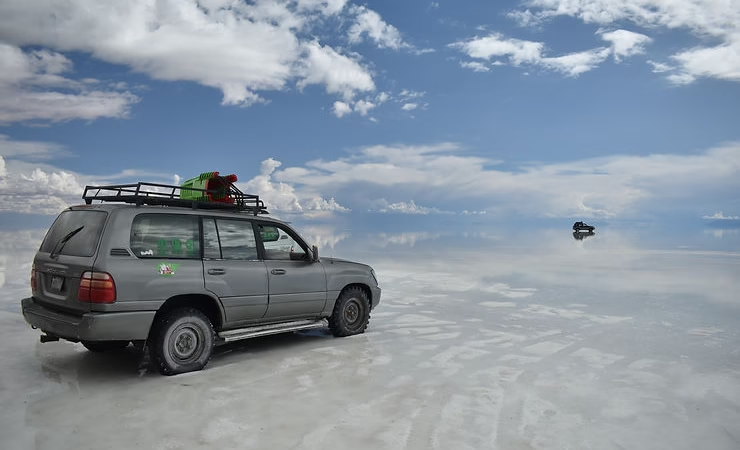
Visiting the Salar d’Uyuni is like walking on another planet. This gigantic salt desert, situated at an altitude of over 3,600 metres in the heart of Boliviaoffers one of the world’s most spectacular landscapes: an infinite mirror during the rainy season, a dazzling white desert under a blue sky in the dry season.
But to take full advantage of this natural wonder, it’s best to plan your visit carefully. When should you go? Which excursion to choose? What should you bring? This comprehensive guide, based on first-hand experience, will give you all the answers you need to make your visit a magical, trouble-free experience.
Ready for adventure? We’re off! 😍
🗓️ Best time to visit Salar d’Uyuni
Before planning your adventure to the Salar d’Uyuniyou need to know that the experience changes completely depending on the season. There are two main periods to choose from, each with its own advantages (and minor constraints 👀 ).
🌧️ Rainy season: January to March
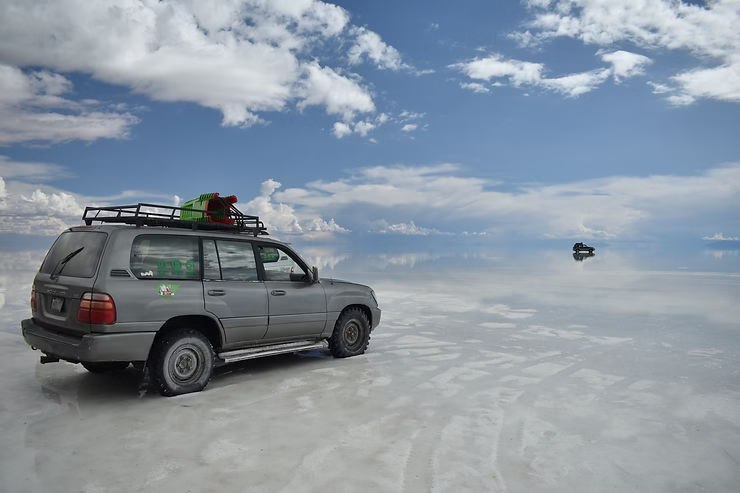
This is the time of the famous mirror effect. When a thin layer of water covers the salar, the sky is perfectly reflected on the ground: a breathtaking spectacle, perfect for surrealist photos.
👍 Advantages :
- Unique, ultra-photogenic landscapes
- Less dust, more freshness
👎 Disadvantages :
- More difficult access (some areas closed or impassable)
- Risk of roads being cut off or routes being altered
☀️ Dry season: May to October
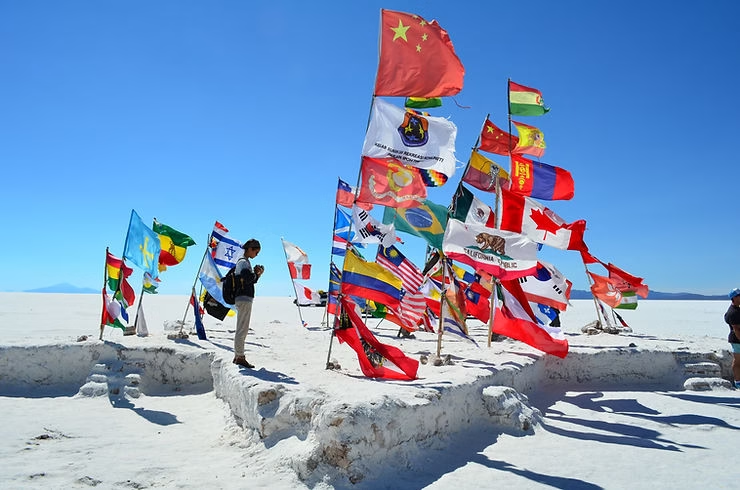
During this period, the salar floor is completely dry, forming a pattern of natural hexagonal tiles. It’s perfect for hikes, 4×4 excursions and photo opportunities.
👍 Advantages :
- Passable roads
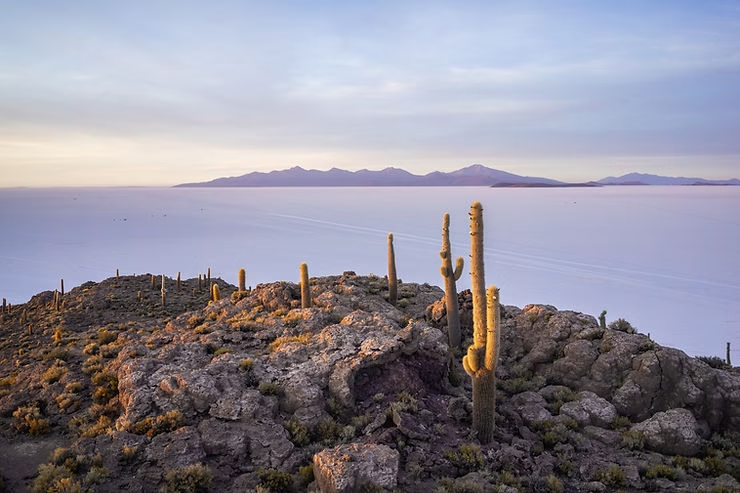
- Accessible Incahuasi Island (with its giant cacti)
- Clear skies = sharp photos
👎 Disadvantages :
- Freezing temperatures at night (down to -10°C!)
- No mirror effect
📅 Which period to choose?
- Want the mirror effect? → aim for February, but stay flexible
- Want a dry, walkable salar and more activities? → go between June and September
💡 A little tip: some travelers aim for March or April to have both worlds – the salar still wet in some places, but already more accessible.
🚙 How to visit the Salar d’Uyuni?
There are many ways to discover the Salar, depending on your budget, your time and your sense of adventure. Here are the main options, their advantages and disadvantages, and practical advice on how to choose your trip.
🛫 Starting point: where to begin the adventure?
- From Uyuni (most common): most tours depart from here. Transit town with numerous agencies, easy access from La Paz (flight or bus).
- From Tupiza: ideal for a wilder, less touristy tour, especially to South Lipez.
- From San Pedro de Atacama (Chile): possible in the opposite direction, but more expensive, often in 4 days / 3 nights. Handy if you’re doing a Chile-Bolivia combo.
🚐 Available tower types
🔹 1-day tour (from Uyuni)
- Price: ~€30-40
- You’ll discover: the train cemetery, the salar, Incahuasi Island, perspective games…
- For those who don’t have much time but want to see the essentials
🔸 3 days / 2 nights tour
- Price: ~90-150 €
- You discover: the salar + South Lipez (colorful deserts, lagoons, pink flamingos, geysers, hot springs…)
- This is the classic, the one I recommend 100%.
🔸 Private or personalized tour
- Price: from €200 / person
- More comfort, flexible program, superior accommodation
- Ideal for couples, families or content creators
🔗 Book your tour
You can reserve :
- On site, at one of Uyuni’s agencies (negotiable, but beware of quality)
- In advance online via a reliable platform such as GetYourGuide to avoid unpleasant surprises
💡 Tip: choose a reputable agency (experienced driver, well-maintained vehicle, English-speaking guide if necessary).
🎒 What do you need to take with you on your trip to Salar d’Uyuni?
An excursion to the Salar d’Uyuni, especially one lasting several days, requires a minimum of logistical preparation. Between the cold at night, the sun during the day, the altitude, the dust and the total absence of electricity… it’s best not to forget anything!
Here’s what you need to pack in your bag:
🧥 Essential clothing
- Windproof, warm jacket (nights are freezing)
- Fleece + thermal layers (leggings, long-sleeved t-shirt)
- Hat, gloves, scarf
- Good-quality sunglasses (very strong sun on salt)
- Breathable T-shirt + comfortable pants
- Bathing suit (hot springs)
- Warm socks for the night
🧼 Useful accessories
- Sunscreen (minimum SPF 50)
- Lip balm (wind and salt dry up quickly)
- Wipes or washcloth (there are no showers on some tours!)
- Toilet paper or tissues
- Minimalist toiletry bag
- Basic first-aid kit (altitude, headache, anti-diarrheal)
💧 Recommended equipment
- OKO filter flask Drinking water not always available on site
- Daypack (25-30L max)
- Headlamp
- Portable charger / external battery
- Night mask and earplugs (basic dormitories)
- Offline maps app(Maps.me, Organic Maps)
🎥 To immortalize the salar
- Camera or Insta360 camera perfect for mirror effects or immersive videos
- Mini tripod (for perspective shots)
- Phone + SD card or cloud space
- Drone (if authorized and fully charged)
💡 Bonus tip: no network for 3 days → install a Holafly eSIM before you leave to stay connected before/after the trip.
💡 Practical tips before your trip to Salar d’Uyuni
The Salar is magical… but you have to prepare for it! Here’s a list of field tips to make the most of your adventure, without any nasty surprises.
🧠 1. Take time to acclimatize
The salar lies at an altitude of over 3,600 m, and the 3-day tours can climb to over 4,500 m (laguna Verde, geysers).spend at least 2 days in Sucre, Potosí or La Paz beforehand to adapt and avoid altitude sickness (soroche).
💊 Don’t hesitate to take :
- Coca leaves or infusions (available everywhere)
- Ibuprofen or paracetamol
- Preventive treatment if necessary (on medical advice)
🗓️ 2. Book if you are in high season
The June → August period is very busy, as are the end-of-year vacations.➡️ Better book your tour in advance if you want to avoid unpleasant surprises: look here
💸 3. Take cash in bolivianos
Most agencies only accept cash, and there are no ATMs during the tour.
- Allow at least 200-300 BOB for extras: snacks, entrance to Incahuasi Island (~30 BOB), tips, water…
🌐 4. Take an eSIM or local SIM card
Once on the road, no mobile network. But before and after the tour, you can upload your stories or contact your accommodation.➡️ I recommend the Holafly eSIM for Bolivia for hassle-free connectivity on arrival.
⚠️ 5. Expect basic comfort
No hot showers on some tours, basic beds, rustic toilets… but that’s the price you pay for an extraordinary adventure. And believe me, the scenery will soon make you forget the rest.
🏨 Where to sleep in Uyuni before or after the tour?
Uyuni is a small tourist town, mainly used as a departure or arrival point for tours of the salar and South Lipez. Accommodation ranges from budget dormitories to unusual salt hotels.
💸 Economical options (backpackers)
- Piedra Blanca Backpackers HostelFriendly atmosphere, breakfast included, secure lockers. Ideal for meeting other travelers.
- Hotel AvenidaSimple, clean and inexpensive rooms. Good location.
😌 Comfortable options
- Hotel Jardines de UyuniHeated rooms, on-site restaurant, heated indoor pool (rare in Bolivia). Perfect for recuperating after an excursion.
- La Maison MartinetAmbianceis more intimate and elegant, ideal for a little peace and quiet.
❄️ Atypical option: the salt hotel
- Hotel Palacio de SalAunique establishment built entirely of salt, offering an unusual experience. Located just outside the city.
💡 Remember to book in advance, especially in high season (May to September), as places go fast.
🧳 Accommodation tips in Uyuni
- Arrive early to choose your accommodation if you haven’t booked yet
- Prefers establishments close to bus terminal
- Check the presence of heating and hot water, as nights can be very cold.
📸 Salar d’Uyuni’s most photogenic spots
The Salar d’Uyuni is a true paradise for photo enthusiasts. Whether you’re equipped with a smartphone, an SLR or an Insta360 camera (link here), get ready to immortalize some of the world’s most unique landscapes.
🌅 1. Sunrise and sunset on the salar
The colors change dramatically at these times, between pinks, oranges and deep blues. The salt reflects the light to magical effect, especially in the dry season.
🧱 2. The train cemetery
These rusty carcasses offer a striking contrast with the whiteness of the salar. Perfect for graphic, vintage photos.
🌵 3. Incahuasi Island
This volcanic island, covered in giant cacti, offers a surprising backdrop, with panoramic views over the salt desert.
💧 4. The mirror effect
In the rainy season (January-March), the salar is covered by a thin layer of water, creating a natural mirror. This makes for surreal photos, with sky and ground merging into one.
🤹♂️ 5. Perspective games
Take advantage of the flat terrain to have fun with optical illusions: play with size, distance and angles for fun, original shots.
📷 Photo tip
Remember to bring an external battery and extra memory cards. The light changes quickly, so be prepared not to miss a thing.
📊 Price of an excursion to Salar d’Uyuni
The cost of an excursion to the Salar d’Uyuni varies according to duration, type of tour and expected comfort. Here’s an overview of average prices to help you plan your budget.
| Tower type | Duration | Average price (€) | Included in price |
| One-day tour | 1 day | 30-40 € | Transportation, guide, entrance to Incahuasi Island |
| Classic Tour | 3 days/2 nights | 90-150 € | Transport, meals, accommodation, guide |
| Private tour | Made-to-measure | > 200 € | Customized, more comfort, flexibility |
💡 Tips for paying less
- Book in advance online via reliable platforms such as GetYourGuide
- Share a group tour to reduce the cost per person
- Avoid agencies that are too cheap, often synonymous with poor quality or poor conditions
❓ Special Uyuni FAQ
Can you visit the Salar d’Uyuni without a guide?
The salar is a protected area, difficult to access without a suitable vehicle and local knowledge. Most travelers choose an organized tour with a guide for reasons of safety and logistics.
Is the altitude dangerous?
The salar is located at an altitude of around 3,600 m. Most people acclimatize well, but you should allow time for adaptation and follow the advice given to avoid altitude sickness.
Do you need to speak Spanish to visit Uyuni?
It’s not compulsory, but it’s a plus. Guides often speak Spanish or English. A translation app can be useful.
Are there toilets on the tour?
Facilities are basic, sometimes remote. Take wipes, toilet paper, and prepare for rudimentary conditions.
Is it possible to do the tour solo?
No, the excursion is by 4×4 with a driver and guide. Groups are often small, which facilitates communication.
✅ Conclusion
The Salar d’Uyuni is undoubtedly one of the world’s most spectacular natural wonders, and a must-see for all travellers to Bolivia. Whether you choose the dry season for its lunar landscapes or the rainy season for the magical mirror effect, this experience will leave you with lasting memories.
To get the most out of your trip, don’t forget to prepare well, equip yourself properly and, above all, book in advance via reliable platforms such as GetYourGuide.
Finally, don’t forget your OKO water bottle to stay hydrated without waste, an Insta360 camera to capture every moment in 360°, and a Holafly eSIM to keep in touch without worry.
Ready to experience this unique adventure? Book your tour now and discover the largest and most fascinating salt desert on the planet!

