Dreaming of a trip off the beaten path? 🤔 Samaipata, nestled in Bolivia, hides a unique treasure: UNESCO World Heritage pre-Inca ruins, surrounded by jungle and an incomparable bohemian atmosphere. Discover with us this mysterious place where ancient history, exuberant nature, and local culture blend for a 100% authentic experience 🌿🏛️.
Contents
- 🏛️ El Fuerte: Samaipata’s archaeological treasure
- ✨ Discovering Samaipata: our bohemian journey
- 🔍 Exploring El Fuerte: at the heart of heritage
- 🌿 Around Samaipata: between nature and culture
🏛️ El Fuerte: Samaipata’s archaeological treasure
The fascinating history of the pre-Columbian site
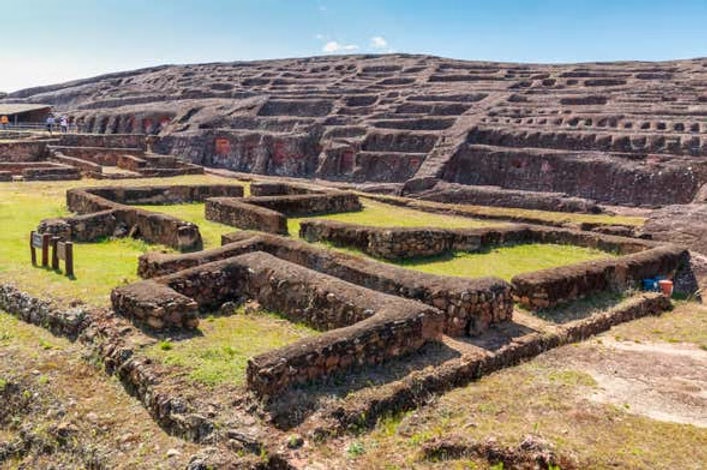
When one thinks of Bolivia, Samaipata immediately comes to mind thanks to El Fuerte, this unique World Heritage site. This archaeological site tells us centuries of history.
The department of Santa Cruz is home to this exceptional place, Samaipata, marked by the Incas, Chané, and Spanish. Traces of these different eras can be found there, each leaving an invaluable legacy.
UNESCO recognition: an exceptional site
El Fuerte was listed as a UNESCO World Heritage site in 1998 thanks to its universal value. This designation crowns a unique place in South America.
The site was recognized for its historical and cultural importance. The combination of pre-Inca, Inca, and Spanish influences makes it a rare masterpiece to discover.
The monumental rock: masterpiece of pre-Columbian sculpture
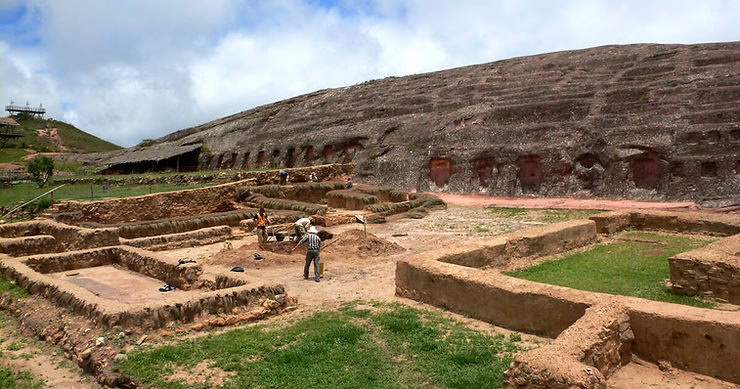
El Fuerte rock is impressive in its dimensions. It measures 220 meters long by 60 meters wide and features spectacular carvings.
| Technical and symbolic characteristics of El Fuerte rock | ||
| Characteristic | Detail | Meaning |
| Material | Massive red sandstone | Local stone chosen for its durability and symbolism |
| Dimensions | 220m x 16m | Largest carved stone on the American continent |
| Altitude | 1,950 meters | Strategic position between the Andes and the jungle |
| Main motifs | 2 felines in high relief + 1 feline head | Totemic figures associated with spirituality |
| Hydraulic system | 12 parallel channels and zigzag patterns | Used for purification rituals |
| Coro de los Sacerdotes | Circle with 18 triangular/rectangular niches | Central place for religious ceremonies |
| Lower niches | 21 carved rectangular niches | Ritual storage or priests’ residence |
| Phases of creation | Mojocoyas (300-900 AD) then Chané (900-1400 AD) | Proof of occupation for over a millennium |
| UNESCO Status | Listed in 1998 | Recognition of its outstanding universal value |
The motifs carved on the monumental rock have a spiritual dimension. The felines, zigzag channels, and niches tell the story of this centuries-old cult.
✨ Discovering Samaipata: our bohemian journey
How to get to this little Bolivian paradise
To reach Samaipata from Santa Cruz, we opted for the Trufi Expreso bus. The 120 km journey took 2h40 and cost $5. This Santa Cruz to Samaipata itinerary fits perfectly into a two-week trip to Bolivia.
From Santa Cruz, you can also rent a car ($6-9/h) or share a taxi ($130-160). Once there, to visit El Fuerte, we walked (8 km, 2h) or took a taxi (100 Bs, 2h waiting time).
Our experience in the bohemian town
Upon arriving in Samaipata, we were charmed by its calm and colorful houses. It’s a “Micromundo” where Bolivians and expatriates from over 25 nationalities mingle.
We loved this cosmopolitan atmosphere where Spanish descendants meet Argentinians, Germans, and Swiss. Swiss chalets stand alongside restaurants offering shawarmas or local wines.
Favorite accommodations and good spots
For accommodation in Samaipata, we tried several hotels ranging from $28 to $80 per night. Breakfasts were included, and the owners were always welcoming.
- Casa Charo ★4.9/54 reviews: Latin American tasting menu with vegetarian options, premium gastronomic experience
- La Cocina Samaipata ★4.8/256 reviews: Renowned homemade burgers, artisanal fries, and vegetarian alternatives (pitas, nachos)
- La Boheme ★4.7/217 reviews: Friendly atmosphere on a rooftop terrace, craft beers, kombucha, and happy hour
- Smart budget: La Cafette for breakfast, Mama Kylla for local dishes, Tía Maria for traditional soups and empanadas
The restaurants are definitely worth a visit in Samaipata. We fell in love with La Cocina’s burgers, local wines, and vegetarian dishes. The market is an opportunity to interact with locals.
🔍 Exploring El Fuerte: at the heart of heritage
Our guided tour of the archaeological site
We booked a guided tour as soon as we arrived in Samaipata. With a local guide, everything truly takes on a new meaning. We understood why this archaeological site alone is worth the trip.
The guide explained every hidden detail of the monumental rock to us. We even learned to recognize the marks from different eras. Without him, we would have missed half the story. Booking a hotel in Santa Cruz greatly helped us plan our trip.
The mysteries of the spiritual and political center
El Fuerte served as a spiritual and political center for the civilizations that succeeded one another there. Traces of sacred animal worship and rituals related to fertility or natural elements can be found there.
Several theories coexist regarding the exact use of the different areas. Some believe the channels were used for purification rituals. Others mention ancient astronomical practices that are still poorly understood.
The Inca and pre-Inca heritage: a cultural richness
The site blends pre-Inca and Inca styles. Inca walls are recognizable by their precision. The stone carvings are older, works of the Mojocoyas and Chané peoples.
These civilizations had strong beliefs linked to nature. Some believed that the sculpted animals represented deities. The Incas took over these sites to impose their own rituals and administrative structures.
Practical tips for a successful visit
The site is open from 8:30 AM to 4:30 PM, admission costs 50 Bolivianos. An online map will help you keep track of the hours.
Bring walking shoes, sunscreen, and water. The dry season (May-September) is ideal. Bring a light sweater for the shaded areas of the archaeological site.
🌿 Around Samaipata: between nature and culture
Amboro National Park: exceptional biodiversity
Southeast of Samaipata, Amboró National Park spans 4,425 km². It is a national park at the crossroads of the Andes, the Amazon, and the Chaco, housing unique flora and fauna.
We observed incredible species during our walks: the spectacled bear, the jaguar, monkeys, and even giant ferns. This park records 912 bird species, representing 60% of those in Bolivia.
Las Cuevas: waterfalls and natural swimming spots
Head to Cuevas waterfalls, a 45-minute drive from Samaipata. The winding roads are worth holding on for, but the sight is worth the detour. We passed through dense forests and typical villages.
The waterfalls at Las Cuevas offer natural pools perfect for cooling off. We opted for the caves and natural pools. The trail is 3 km long and requires a minimum level of stamina.
Want to extend the adventure? Amboro Park with its 3,000 plant species or hikes to the giant ferns will delight nature lovers. Why not combine pre-Inca ruins and ecotourism on your next trip to Bolivia?
Between the monumental rock carved with ancestral symbols, the pre-Inca remains of El Fuerte, and the bohemian atmosphere of the town perched in Santa Cruz, Samaipata embodies a World Heritage site where history and nature blend effortlessly. For an immersive adventure, opt for a guided tour and extend it with a visit to Amboro waterfalls 🌿. Samaipata is much more than an archaeological site: it’s an invitation to travel through time, between myths and breathtaking landscapes. So, ready to succumb to this forgotten treasure? 🏛️✨
FAQ
What is El Fuerte de Samaipata?
El Fuerte de Samaipata is a unique pre-Columbian archaeological site, nestled in Bolivia, near the bohemian town of Samaipata. It’s a true treasure, known for its monumental carved rock, the largest on the American continent, which tells centuries of history. Spectacular carvings can be found there, true testimonies of past civilizations.
This incredible place served as a major spiritual and political center, shaped by the Mojocoyas, Chané, Incas, and even the Spanish. The carved motifs, such as felines and channels, reveal ancient cults and fascinating rituals linked to nature and astronomy.
Why is El Fuerte a UNESCO World Heritage site?
El Fuerte was listed as a UNESCO World Heritage site in 1998, and that’s no coincidence! This site possesses outstanding universal value, making it truly unique in South America. It is recognized for its immense historical and cultural importance.
What makes it so special is its ability to show us the harmonious coexistence of several cultures: pre-Inca, Inca, and Spanish influences blend there, creating a rare masterpiece that transports us through eras and their beliefs.
How to get to Samaipata?
To reach Samaipata from Santa Cruz, the most common and economical option is the Trufi Expreso bus. The journey takes approximately 2h40 and costs only $5, making it part of the Bolivian adventure!
If you prefer more freedom, you can also rent a car (expect to pay between $6 and $9 per hour) or opt for a shared taxi, which is more expensive (around $130 to $160) but practical if you’re traveling in a group.
What to do in Samaipata and its surroundings besides El Fuerte?
Samaipata is much more than just El Fuerte! The town itself is a charming and cosmopolitan
Nearby, nature is incredible. Don’t miss Amboró National Park, a true haven of biodiversity where you can observe unique flora and fauna. And to cool off, the Las Cuevas waterfalls, a 45-minute drive away, are perfect for a natural swim after a short hike.
What are the practical tips for visiting El Fuerte?
To make the most of your visit to El Fuerte, plan to go between 8:30 AM and 4:30 PM, admission costs around 50 Bolivianos. We highly recommend taking a local guide; it makes all the difference, and you won’t miss any detail of this ancient history!
Remember to bring comfortable walking shoes, sunscreen, and water, as the sun can be strong. The dry season (May to September) is ideal for visiting, and a light sweater can be useful for the shaded areas of the archaeological site.
What is the climate like in Samaipata?
The climate in Samaipata is warm and temperate, with significant rainfall throughout the year. On average, the annual temperature hovers around 16.2 °C, generally fluctuating between 7.8 °C and 22.8 °C. The hot season runs from October to March, with January being the mildest month, while the cool season extends from May to early August.
Expect a rainy season from November to April, with January being the wettest month. The drier season, from April to November, sees August as the least rainy month. In short, summers are long, comfortable, and humid, while winters are shorter, cool, and often partly cloudy.

