
Today, staying connected during your trip to Boliviais no longer a luxury: it’s (almost) indispensable. Whether you’re using Maps, booking a hotel, sharing photos, contacting a guide or reacting to the unexpected, having the Internet on your phone makes life easier at every stage.
But should you choose a local SIM card, an international eSIM, or rely on wifi? And which networks really work, especially in remote areas like the Uyuni salar or the Amazon?
In this guide, you’ll discover all the options for Internet access in Bolivia: comparison of local operators (Entel, Tigo, Viva), package tests, tips for activating a Holafly eSIM before you leave, advice on optimizing your connection, and great ways to stay in touch without stress (or blowing your budget).
Ready to enjoy your Bolivian adventure, connected where you want, when you want? Follow the guide!
📱 Mobile operators in Bolivia: Entel, Tigo, Viva
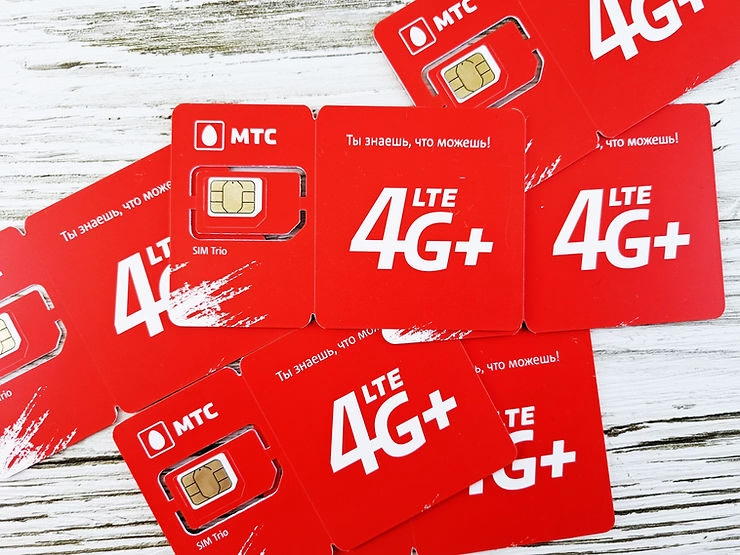
To stay connected in Boliviathe cheapest way is often to buy a local SIM card from one of the three main operators: Entel, Tigo or Viva. Here’s how it works:
🏪 Where can I buy a local SIM card?
- At airports, bus stations, or directly in operator stores (found in all major cities).
- Sometimes available in small stores (“tiendas”) or from street vendors.
- Bring your passport with you: it may be required for activation.
💸 Rates and packages
- SIM price: between €1 and €3 depending on the operator.
- Affordable data (mobile Internet) packages:
- 5 to €10 for 3 to 10 GB of data (valid for 1 to 4 weeks)
- Unlimited packages often limited in speed (fair use)
- Refillable anywhere (stores, supermarkets, via apps or scratch cards)
🌍 Network coverage
- Entel: best national coverage, works well in major cities and most remote areas.
- Tigo: good urban network, decent in the south of the country.
- Viva: practical in town, but less reliable in the country or at altitude.
💡 In very isolated areas (Uyuni, South Lipez, Amazonia), no network is guaranteed all the time: warn your loved ones and download your maps offline!


🌍 eSIM for Bolivia: benefits, rates, installation
If you want to avoid chasing after a local store or juggling paperwork and menus in Spanish, the eSIM is THE easiest way to stay connected as soon as you arrive in Bolivia.
Why choose an eSIM?
- Activation in 2 minutes, even before landing
- No physical SIM card to handle
- Keep your main number on your original SIM (handy for 2FA, WhatsApp, etc.).
- Nationwide coverage on partner networks (often Entel or Tigo)
- Perfect if your phone is compatible (iPhone XR and +, Pixel, recent Samsung…).
👉 Holaflythe eSIM for travellers
- Easy installation via QR code, 24/7 support in French
- Unlimited data packages* (reduced speed above a certain volume)
- Sample rates:
- 5 days: €19
- 10 days: €29
- 20 days: €47
- GOOD PLAN: use this Holafly link + the Holafly promo code DESTINATIONBOLIVIA to get an exclusive discount on your Bolivia eSIM.
👉 Airalothe flexible alternative
- eSIM Global Marketplace: packages for Bolivia, South America, or worldwide
- Attractive rates, à la carte data packages (e.g. 1 GB for a few euros, 3, 7, 30-day packages…).
- Simple application, quick activation, responsive customer service
💡 Holafly vs Airalo quick comparison
| Criterion | Holafly | Airalo |
| Easy | Ultra-simple installation (QR code) | Dedicated mobile app, quick activation |
| Packages | Unlimited data* (beyond that, reduced speed) | Data à la carte (1GB, 3GB, 5GB…) |
| Support | 24/7 in French | Efficient support (English/French) |
| Price | Rather premium, but offer with promo code | Very flexible, small budgets possible |
| Coverage | Local main network (Entel/Tigo) | The same, depending on the package |
Tip: choose Holafly for simplicity and big data needs, Airalo for short stays or if you want to limit your budget.
How do I install an eSIM?
- Order on the website (Holafly or Airalo)
- Receive a QR code by email/app
- Scan it in your smartphone settings (“Mobile data” > “Add eSIM”)
- Activate the Bolivia package on arrival: internet right away, no hassle!
💡 F or anyone who doesn’t feel like struggling at the airport or wasting time looking for a SIM, the eSIM remains THE best solution for connected travel in Bolivia.
🛜 Wifi quality in Bolivia: what to expect?
In Bolivia, the wifi connection is present… but not always top-notch! Here’s what to expect and how to get organized:
📶 Where to find wifi?
- Hotels and hostels: most offer free wifi, but speeds vary enormously. Very good in La Paz, Sucre and Santa Cruz, more random in small villages and Uyuni.
- Cafés and restaurants: the trendiest establishments in town (Sucre, La Paz, Santa Cruz) offer decent wifi for checking email or sending messages.
- Airports and shopping malls: wifi is available, but sometimes limited in duration or slow.
🚩 The limits of Bolivian wifi
- Highly variable speed depending on location (from a few Mb/s in the city to… nothing at all in rural or high-altitude areas)
- Power cuts are frequent, especially when it rains or during the holidays.
- Unreliable for video calls, large file uploads or streaming (patience or mobile data required!)
🔒 Safety tips
- Use a VPN if you connect to public networks, especially for your passwords or online purchases.
- Change your password when you return, especially for sensitive accounts.
💡 Good to know
- To work remotely or stay truly connected, opt for 4G via eSIM (Holafly or Airalo), which is far more reliable than local wifi, especially outside major cities.

🛠️ Practical tips for staying connected everywhere
Staying connected in Bolivia can be easy… with a little organization! Here are my top tips for avoiding network problems and enjoying your trip:
📲 Apps to install before you leave
- WhatsApp: easy communication with locals and travelers
- Maps.me or Organic Maps: offline maps essential in areas without a network
- Google Translate or DeepL: decipher menus and local information
- Booking, Hostelworld, GetYourGuide: easy ways to book accommodation and activities
- Airalo or Holafly: the one-click app to manage your eSIM and top-ups
🔋 Tech accessories to go
- External battery: indispensable for all-day use on long excursions or in areas without stable electricity.
- Universal power adapter: plugs are often A/C type (as in France, but be sure to bring a multi-plug adapter).
- Waterproof pouch: to protect your phone and SIM on the salar, in the Amazon or during rainy journeys.
💡 Tips for saving data
- Download all your apps, maps and important documents before you leave
- Disables automatic updates, cloud and data-intensive apps
- Prefer text or audio messages on WhatsApp to 4G video calls
🚨 Staying reachable even in white zones
- Warn your friends and family that you may be out of touch for several hours/days in the Amazon, South Lipez or Altiplano.
- Schedule appointments and check-ins before losing the connection
- Save a copy of your important information (passport, insurance…) on your phone AND in the cloud
💡 Remember to scan the QR code on your eSIM (Holafly or Airalo) and install it before leaving Franceyou’ll be connected as soon as you land!
❓ FAQ SIM card & internet Bolivia
Where to buy a SIM card in Bolivia
In official stores (Entel, Tigo, Viva) in town, sometimes at the airport or in bus stations. Take your passport to check-in.
How much does it cost?
SIM cards cost €1 to €3, while data packages start at €5 for a few GB valid for 1 to 4 weeks. The Holafly eSIM starts at €19 for 5 days, while Airalo offers à la carte packages starting at just a few euros.
Does eSIM work everywhere in Bolivia?
It works on the local partner network (Entel or Tigo). In very remote areas (Salar, Amazonia), no network is guaranteed: plan to be offline at certain times.
Can we survive without a connection?
Yes, but it’s less practical! Download your maps and useful information in advance, and let your friends and family know when you’ll be offline.
Which operator should I choose for my itinerary?
For the best coverage: Entel. For short stays and simplicity, Holafly (with your link here) or Airalo are ideal.

✅ Conclusion
Staying connected in Boliviais the guarantee of a more serene trip: access to maps, last-minute reservations, security, adventure sharing… The choice depends on your profile:
- For economy and coverage, the local Entel SIM card remains the most reliable for long stays.
- For simplicity, instant activation and to avoid language barriers, choose a Holafly eSIM (link here + promo code for -5%) or Airalo.
Remember to prepare everything before you leave: apps, documents, QR code eSIM, tech accessories… And don’t forget that, in some regions, the best connection is with nature: disconnect, enjoy, and share only when you can!
Bon voyage connected… or disconnected, it’s up to you! 😉

