Welcome to Bolivia’s craziest desert Bolivia
If you thought you’d seen it all after the Salar d’Uyuni… wait until you set eyes on Sud Lipez. This perched region in south-western Boliviaat the gateway to Chile and Argentina, looks like something out of a surreal dream.
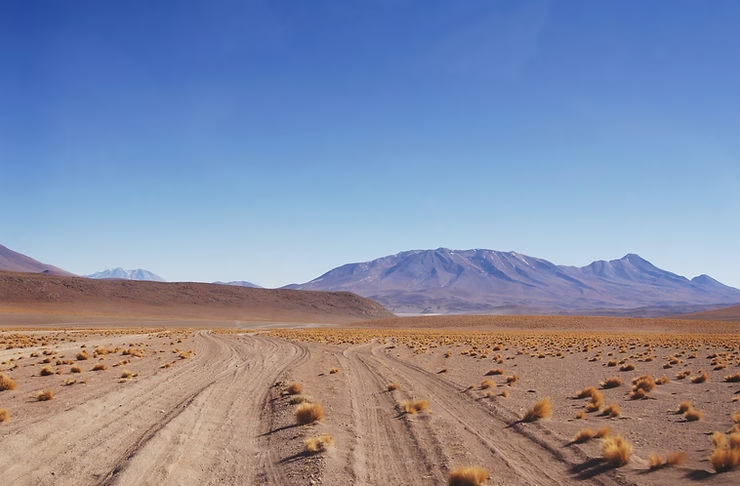
Here, nature is all about excess and color: blood-red lagoons populated by pink flamingos, immense volcanoes, boiling geysers, ochre deserts, rock formations sculpted by the wind, and clear skies of unreal blue. All at an altitude of over 4,000 metres.
Accessible only by 4×4 with a guide, South Lipez is a rugged but unforgettable experience, to be enjoyed at least once in your life. In this comprehensive guide, I’ll help you organize everything: what to see, who to go with, what to take, how much to budget… and how not to miss Bolivia’s most beautiful lagoons.
🌋 Why visit South Lipez?
South Lipez is the very essence of Bolivia wild, spectacular and radical. Located in the Altiplano, this region bordering Chile offers one of the most breathtaking scenery on the South American continent. Quite simply, at times you’d think you were on another planet.
Here’s why South Lipez is an absolute must:
- 🎨 S urreal landscapes: red, green and white lagoons, snow-capped volcanoes, steaming geysers, pink sand deserts…
- 🦩 Unique fauna: pink flamingos, vicuñas, viscachas, alpacas, sometimes even Andean foxes
- 🚗 Total isolation: no town, no network, just you, your group, your 4×4, and hundreds of miles of raw beauty
- 🌡️ Extreme conditions: bitter cold, wind, altitude… but a feeling of total freedom.
- 📸 A paradise for photographers and content creators(ta Insta360 will love it)
It’s not a “comfort” tour, but it’s probably one of the most memorable trips you’ll ever experience. You won’t visit South Lipez: you’ll remember it.
🧭 What to see in South Lipez? Must-sees
Get your memory card ready: in South Lipez, every turn is a postcard landscape. Here are the sites you shouldn’t miss on your 4×4 excursion:
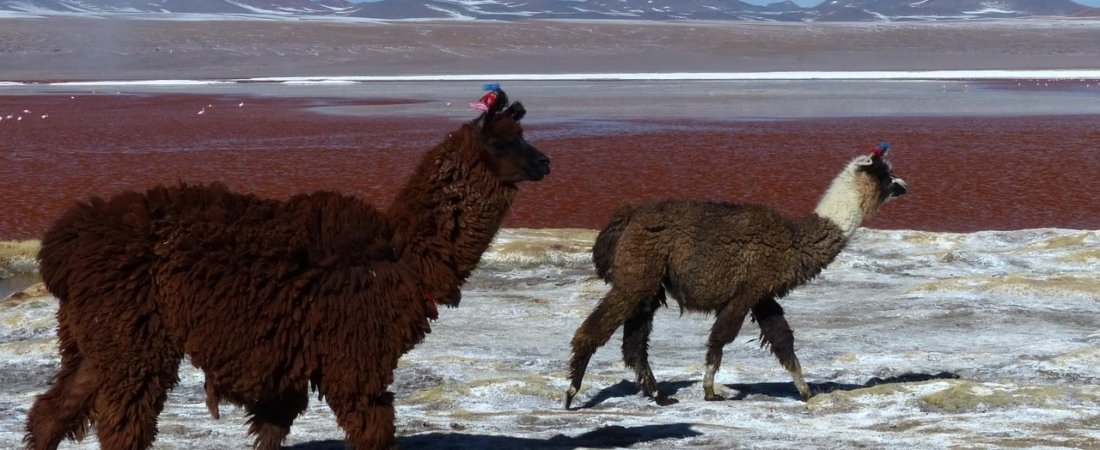
🦩 Laguna Colorada
- One of Bolivia’s most famous Bolivia
- Reddish color due to algae and minerals
- Populated by pink flamingos all year round (three different species!)
- Crazy contrast between the red of the water, the white of the salt and the blue of the sky💡 Go early in the morning or late in the afternoon for the most beautiful colors.
🟢 Laguna Verde and Laguna Blanca
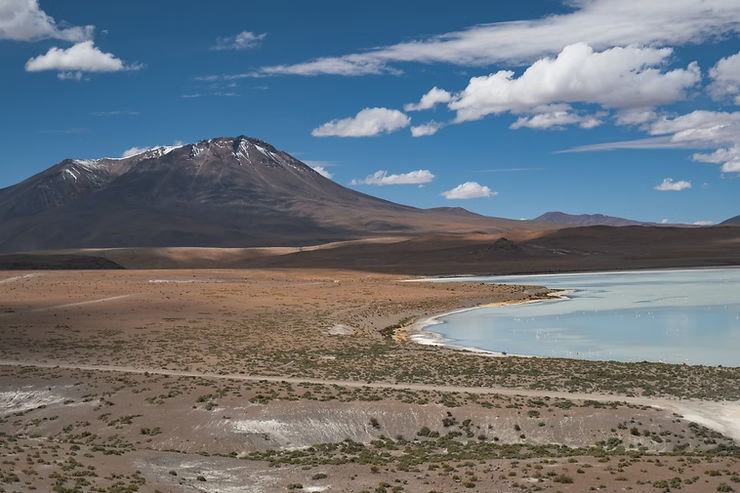
- Two lagoons at the foot of the Licancabur volcano (5,920 m)
- The Laguna Verde changes color according to the light (intense turquoise in the sun).
- Laguna Blanca is often smooth as a mirror💡 Perfect place for photo reflections with your Insta360
🌋 So l de Mañana geysers
- Bubbling geothermal zone at over 4,800 m altitude
- Smoking, boiling mud ponds, sulfur smell
- Lunar climate and post-apocalyptic atmosphere
🎨 Desert by Salvador Dalí
- Desert expanse punctuated by surreal rocks
- Named for its resemblance to a painting by the Spanish painter
- Little life, just wind and an atmosphere at the end of the world
🌳 Arbol de Piedra
- Rock sculpted by erosion into the shape of a solitary tree
- Located in the Siloli desert
- Visual emblem of South Lipez, often photographed
🌋 Volcanoes and viewpoints
- Licancabur, Uturuncu, Ollagüe… you drive through an ocean of volcanoes
- Some are still active
- Panoramic view of endless landscapes
🚙 How to visit South Lipez?
South Lipez is an extremely isolated region, with no paved roads, no regular public transport, and no cell phone network over vast areas. As a result, exploration is only possible by 4×4, and always with an experienced driver-guide.
🧭 Possible starting points
- Uyuni: the most common. 3 or 4-day tours often combined with the Salar
- Tupiza: a wilder option, with less touristy tours (longer: 4 to 5 days).
- San Pedro de Atacama (Chile): departure or arrival possible if you come/go to Chile
💡 You can do Uyuni → Sud Lipez → San Pedro, or vice versa. Very practical for combined itineraries between Bolivia and Chile.
📦 A typical 4×4 tour
- Group of 4 to 6 travelers in a 4×4 Toyota Land Cruiser
- Spanish-speaking guide/driver (sometimes English-speaking)
- Everything is included: accommodation, meals, fuel, travel, sometimes a sleeping bag.
- Nights in rudimentary hostels (no heating, showers sometimes charged)
👉 It’s impossible to do this roadtrip alone without a 4×4 vehicle, topographical map and ample fuel reserves. Autonomy = high risk.
🏨 Which agency to choose? Do I need to book in advance?
Given the extreme conditions of South Lipez, it’s essential to choose a good agency. They’ll be your sole link with safety, logistics, and… food for several days 🥶🍲.
🎯 Criteria for choosing your agency
- ✅ Group size: ideally 4 to 6 people max per 4×4
- ✅ Experienced, friendly guide (speaks Spanish, sometimes English)
- ✅ Minimum comfort guaranteed: vehicle in good condition, on-board fuel, first-aid kit
- ✅ Transparency on meals, accommodation, incidental expenses
- ✅ Respect for the environment and local communities
💡 Good guides take time at photo spots, make sure everyone hydrates and know the terrain inside out.
🛎️ Where to book?
- In Uyuni: you can book the day before for the day after, but be careful in high season (June → September).
- Online: more reassuring, especially if you want a combined tour with San Pedro or an English-speaking guide.
- In Tupiza or San Pedro de Atacama: perfect if you want to avoid classic tours
🔍 Some well-known agencies (to be adapted to your affiliate positioning)
- Red Planet Expedition (Uyuni)
- Quechua Connection (Uyuni)
- Tupiza Tours (Tupiza)
- World White Travel (San Pedro → Uyuni)
🎒 What should you pack for South Lipez?
South Lipez is magnificent… but also cold, dry, windy, dusty and at high altitude. So you need the right equipment to stay warm, stay hydrated, sleep well, and of course capture all this beauty 🌄.
🧣 Essential clothing
- ✅ Warm jacket or down jacket (sub-zero temperatures at night)
- ✅ Polar fleece + technical t-shirts for layering
- ✅ Hat, gloves, scarf / necklace
- ✅ Hiking pants + thermal leggings
- ✅ Thick socks + closed shoes (no need for big trekking boots, just sturdy ones)
🧴 Hygiene & comfort
- 🧻 Toilet paper (not provided in hostels)
- 🚿 Wet wipes (not always shower wipes)
- 🪥 Basic toiletries (no hot water everywhere)
- 😷 Lip balm + moisturizer (very dry air)
- 🦷 Toothbrush, microfiber towel
💧 Hydration
- 💦 OKO water bottle essential: tap water is not drinkable, even in hostels
- 💊 Oral rehydration tablets (ideal for altitude sickness)
🌞 Sun & cold
- 🧴 High protection sun cream (very intense light at altitude)
- 🕶️ Sunglasses with good UV protection
- 🎒 Warm sleeping bag (sometimes supplied, sometimes not → check with agency)
📸 Useful equipment
- 📷 Camera or Insta360 for shooting ultra-wide-angle panoramas
- 🔦 Headlamp (inns often unlit at night)
- 🔋 External battery (no sockets in some accommodations)
💰 Budget for a tour of South Lipez
Good news: despite the beauty of the landscapes and the extreme isolation, a tour of South Lipez is still very affordable, especially compared to other desert destinations around the world.
💸 Average price of a 4×4 tour (per person)
| Duration | Departure | Approximate price | Included |
| 3 days | Uyuni | 800 to 1,200 BOB (~110€) | Transport, guide, meals, accommodation |
| 4 days | Tupiza or Chile | 1,200 to 1,600 BOB (~€150) | Full Salar + South Lipez tour |
💡 Prices vary according to season, comfort (heating or not), group size, and whether you book online or on site.
🧾 Additional costs to be expected
- 🎫 Entrance to Eduardo Avaroa Park: 150 BOB
- 💦 Access to Polques thermal baths: 6 to 15 BOB
- 🚿 Hot showers (if available): 10 – 20 BOB
- 🎁 Tip for driver/guide: 50 – 100 BOB recommended
- 🛏️ Sleeping bag rental (if not included): 40 – 60 BOB
📱 Useful bonus
- An eSIM Holafly won’t work everywhere here (zero network in the desert), but very useful before/after the expedition
- Bring cash in bolivianos to pay for everything on site (no ATMs in the area!).
📆 When to go? Climate and seasons in South Lipez
In South Lipez, the climate is as extreme as the landscapes. At an altitude of over 4,000 m, you can go from 25°C during the day in the sun to -15°C at night… in the middle of summer. So it’s best to choose your period carefully, so you can enjoy the experience without (too) many hassles.
🌞 Dry season: May to October ✅ The best period
- Blue skies almost guaranteed, roads passable
- Perfect visibility for lagoons and volcanoes
- Less mud, more logistical comfort
- Very cold temperatures at night: pack a hat and down jacket
🌧️ Rainy season: November to March ⚠️
- Frequent rains, trails sometimes flooded or impassable
- Difficulty getting around, especially in the Dali desert
- The Salar d’Uyuni can be flooded (= mirror effect 😍), but South Lipez is more muddy than spectacular.
- Less visibility on the lagoons
💡 If you want to combine Salar effet miroir + Sud Lipez, aim for January/February, but be prepared for a few unforeseen circumstances (and lots of dust… or mud).
🧭 Conclusion
South Lipez is Boliviaextreme, sublime, silent, unforgettable. A land where every turn propels you into a natural tableau worthy of a science-fiction film. You face the cold, the dust, the altitude… but in return, you receive a concentrate of mineral beauty, majestic silence and powerful emotions.
Organizing this kind of adventure requires a minimum of preparation, but it’s well worth the effort. And if you set off well-equipped – with a OKO water bottlewater bottle, an Insta360 to capture every moment, and a good guide – you’ll return from South Lipez transformed and amazed.

