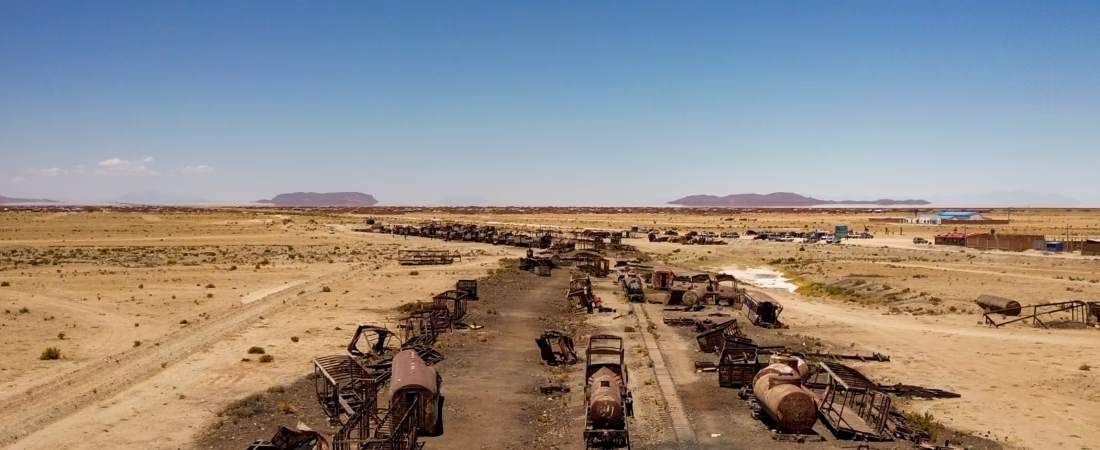
Just on the outskirts of Uyuni town, even before you catch sight of the famous salt flat, lies an astonishing, almost surreal place: a train cemetery. A desert of rust, where old locomotives rest, frozen in time. Between a forgotten industrial past and a cult photo spot, this ghostly place attracts thousands of curious visitors, dreamers, photographers, and travelers every year. And it’s definitely worth the detour.
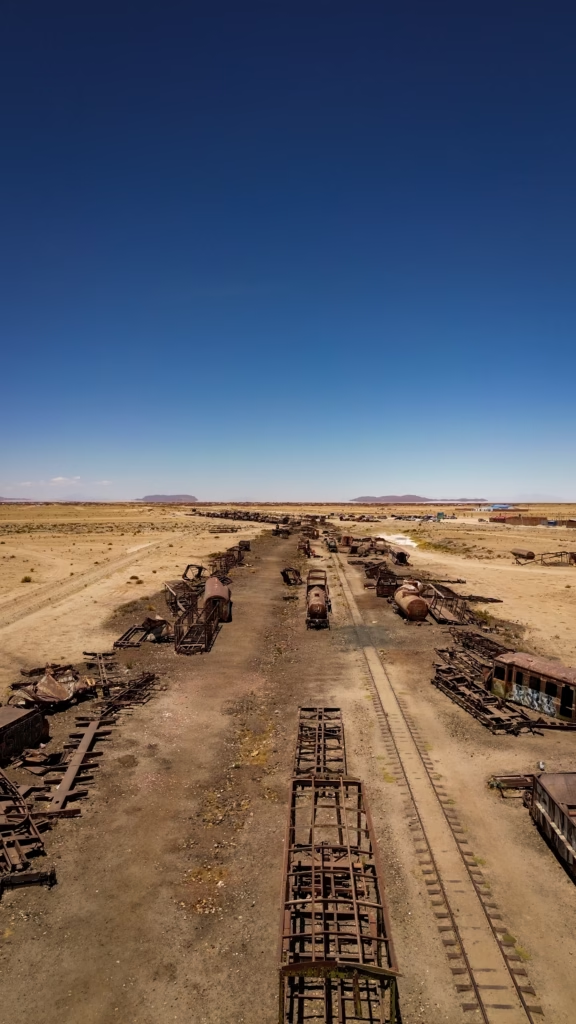
🚂 Why are these trains here?
At the end of the 19th century, Uyuni was a strategic railway hub. The railway lines were used to transport minerals (silver, tin, etc.) extracted from the surrounding mines to the Pacific ports. Industrial development was in full swing, and dozens of locomotives operated daily in the region.
But with the decline of the mining sector in the 20th century and the gradual closure of many lines, the trains became obsolete. Rather than dismantling them, they were left there, in the desert. The result: a vast open-air field where these metal carcasses remained, corroded by time and sand.
Today, this site has transformed into an unusual heritage site, a rusty relic of Bolivian history.
📍 Where is the train cemetery located?
The site is located approximately 3 kilometers from Uyuni city center. You can get there by:
- On foot (about 30 to 40 minutes)
- By taxi (just a few bolivianos)
- By 4×4 as part of your organized Salar de Uyuni tour
Access is free and open, at any time. No ticket booth, no barriers. It’s an open area.
🧭 Approximate coordinates: -20.4698° S, -66.8486° W
🎨 What to see on site?
🚋 The Giant Locomotives
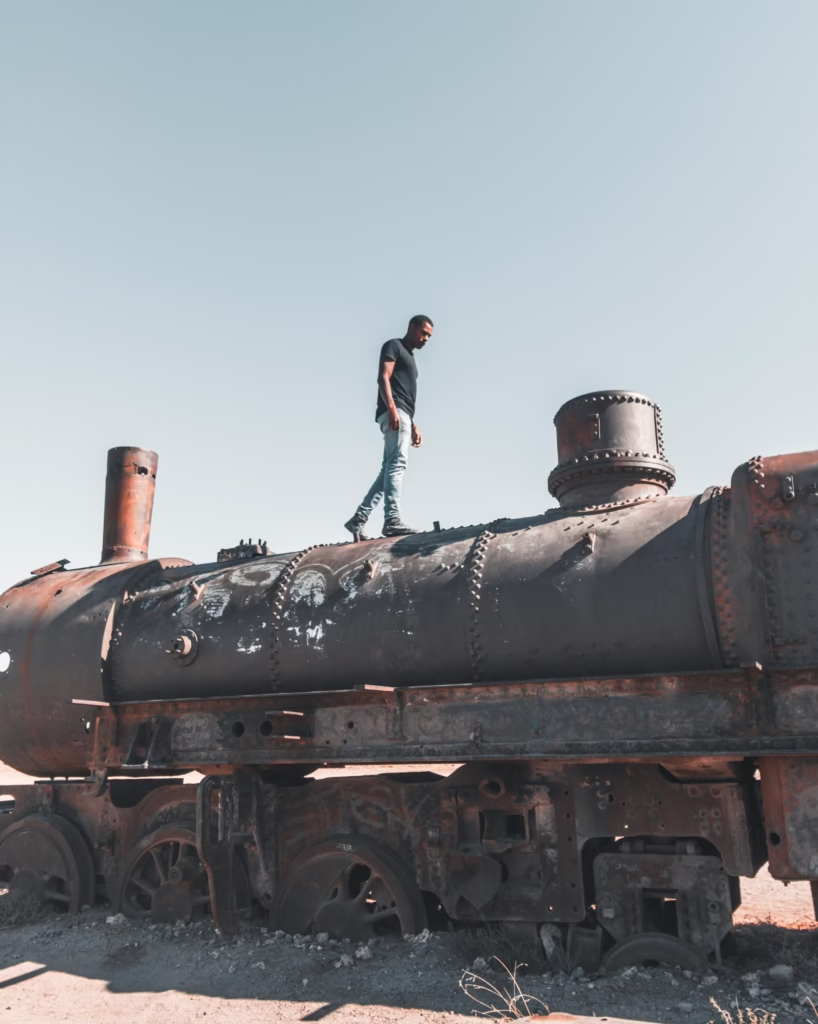
What strikes you upon arrival is the impressive number of trains. Steam locomotives, gutted carriages, twisted metal parts… All resting on the sand as if time had stood still.
Some machines are etched by travelers, others covered in graffiti. You can
🌍 A Unique Photo Spot
The contrast between the intense blue sky, the orange rust of the metals, and the desert floor is incredible. It’s a true playground for photographers. Whether for portraits, urban exploration, or surreal landscapes, you can try anything.
With an Insta360, the place becomes magical: Tiny Planet shots on the carriages, immersive video through the rusty carcasses, or a time-lapse of the sky slowly turning above the tracks.
⏰ Best time to go
- Early morning: soft light, long shadows, no crowds
- Sunset: golden ambiance, reflections on the rusty metal
- Midday: very harsh light, heat (avoid if possible)
Be aware, there is no shade on site, nor any facilities. Bring water and a hat!
📹 Capture the atmosphere with an Insta360
With its depth of field and wide angle, a camera like the Insta360 allows you to capture the scale of the place. Shot ideas:
- Drone-style shot with invisible selfie stick
- Walking on the tracks in POV
- 360° video inside a graffiti-covered carriage
- Tiny Planet framing with the locomotive as the center of the world
🧊 Tip: protect your camera from dust. And keep a spare battery warm if you go early in the morning.
🛋 What to bring for the visit?
- Closed-toe shoes (risk of sharp metal, rust)
- Cap, sunglasses, sunscreen
- OKO water bottle to stay hydrated
- Fully charged camera or smartphone
- Wind-appropriate clothing (it gets windy!)
No guide needed, but be careful:
- don’t climb on overly unstable carriages,
- don’t venture out alone in the evening,
- avoid staying too long in direct sunlight
💬 My experience
When I arrived, I didn’t expect to feel so many emotions. There’s a real silence, almost heavy. These rusty trains tell a story, even without words. You can imagine the workers, the sound of the engines, the hopes of mining development…
And now, everything is frozen. But that’s precisely what makes the place beautiful. Between melancholy and fascination.
✅ Practical tips
- Go in the morning to avoid the heat
- Bring a cap and water
- Respect the site: no littering, no damage
- If you’re a photographer or content creator, allow at least 1 hour
- Combine the visit with a Salar de Uyuni tour (it’s often included)
🛍 Conclusion
The Train Cemetery of Uyuni is more than just a tourist stop. It’s a symbolic place, a bridge between the past and the present, between the dreams of modernity of one era and today’s reality. It’s also an extraordinary photo spot, perfect for lovers of unusual places.
So, if you’re passing through Uyuni, don’t just stick to the salt flat. Take a detour to these iron carcasses, climb onto a carriage, look around you… and let yourself be captivated by the unique atmosphere of this metal cemetery in the middle of the desert.

