
Are you worried that the Yungas Road by mountain bike is still too perilous an adventure? Rest assured, the so-called “Death Road” is no longer what it once was: dedicated to mountain bikers since 2006, it nevertheless remains demanding. Safety depends on your equipment, your agency, and your mastery of the terrain. Discover here tips to outsmart the traps of this legendary trail, from choosing your gear to the reflexes to adopt when facing fog or turns without guardrails. Your adventure deserves to be experienced safely!
So, is the Yungas Road by mountain bike really dangerous?
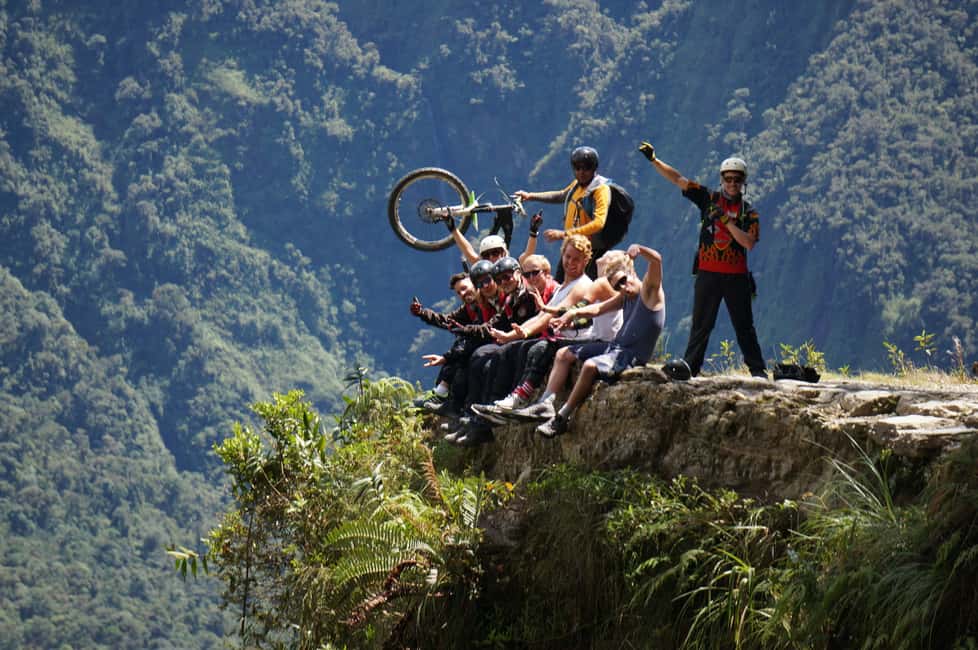
Do you dream of hurtling down the “Death Road” by mountain bike, but a question keeps nagging you: is it safe? Good news: things have changed since the 2000s. The new asphalted road, built in 2006, diverted motorized traffic. The result? No more trucks and buses crossing paths just 3 meters from the precipice. Today, the original road is reserved for mountain bikes, motorcycles, and hikers. But be careful: although improvements have been made, the road remains perilous due to its narrowness, the absence of safety barriers on long sections, unpredictable weather conditions, and requires great caution and adequate preparation from cyclists. Safety depends on three key factors: your equipment, your physical level, and your agency. We’ll tell you everything.
The “Death Road” is no longer what it once was
In 2006, the construction of a modern road changed everything. Heavy traffic was diverted, eliminating the risk of collision. The old road, nicknamed the “Death Road,” became an adventure route. More than 25,000 tourists use it every year, compared to a handful of cyclists before. While it remains spectacular, it’s nothing like the era when it killed 200 to 300 people annually. The main danger is now individual: a loss of control, an ill-judged brake, or capricious weather. But with the right precautions, this experience remains accessible.
The Real Risks Today: What Are We Talking About?
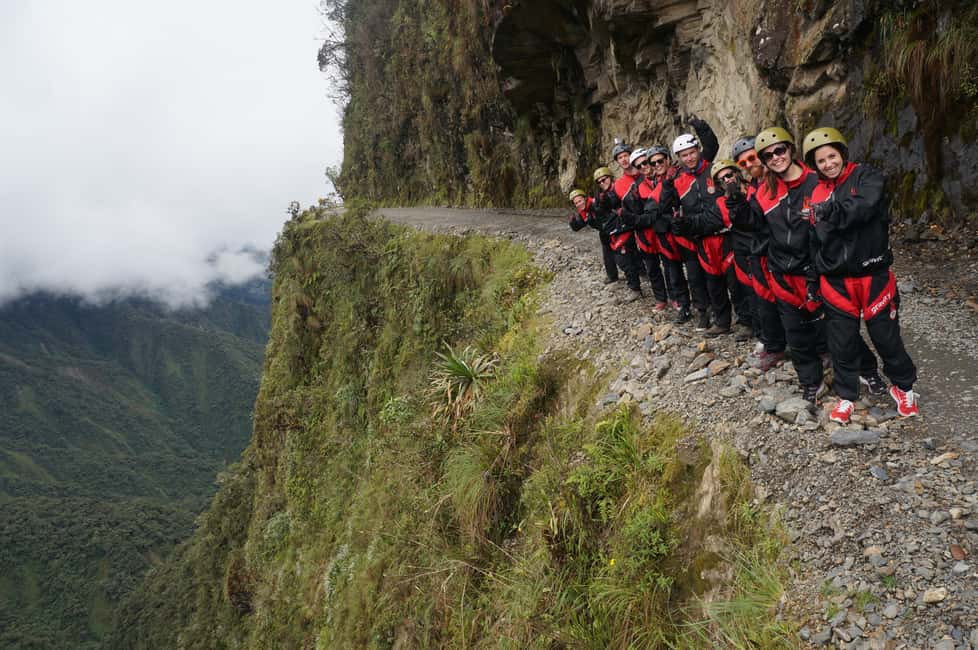
Over the 64 km descent, three risks dominate. First, the narrowness of the track (3 meters on average) and the absence of guardrails. One misstep, and it’s a fall into a 600-meter ravine. Next, the weather conditions: sudden fog, slippery rain, or stifling heat, especially between December and March. Finally, physical fatigue. The descent lasts 3 to 4 hours, with tight hairpin turns. Since 1998, 18 cyclists have lost their lives, but serious accidents remain rare. The key? Choose a reputable agency, check your equipment, and listen to the guides’ instructions. No need for superpowers, just common sense.
Specifically, what are the dangers on the trail?
Need to know if the Yungas Road is truly safe for mountain biking? Even though it’s now reserved for cyclists, the descent remains perilous. Although improvements have been made, the persistent natural challenges warrant rigorous preparation before setting off.
The Terrain: Your Main Adversary
The route begins on 22 km of asphalt, but the dirt track is riddled with potholes, slippery stones, and steep turns. In some places, the width is less than 3 meters, with no barriers to separate you from the precipice. Rain turns the ground into unstable mud, and fog reduces visibility to a few meters. It’s a terrain demanding constant control, especially on rough sections.
Yungas Weather: The Altitude Lottery
Between La Cumbre (4,800 m) and Yolosita (1,100 m), conditions vary drastically. You go from dry cold to humid heat in a few hours. Morning fog and unpredictable showers make the track slippery. Waterproof equipment is essential: without it, rain turns the descent into a challenge. Even with it, staying dry remains a rare luxury in this demanding environment.
You, Your Bike, and Fatigue: The Trio to Watch
The descent lasts 4 to 5 hours, taxing your arms, hands, and concentration. Here are the risks not to underestimate:
- Loss of concentration on tight turns after several hours of effort.
- Muscle fatigue reducing the effectiveness of emergency braking.
- Overconfidence on stable sections at inappropriate speed.
- Lack of mountain biking experience on rough terrain, increasing the risk of skidding.
Accidents often occur towards the end of the route, linked to these human factors. Good equipment (hydraulic brakes, dual suspension) helps, but vigilance remains crucial. Agencies advise riding in a group and checking the weather. Caution pays off on this demanding trail, for an unforgettable adventure provided you respect your limits.
Choosing Your Agency and Equipment Wisely: Your Insurance Policy
How to Recognize a Good Agency? Points to Check
Want to try the Yungas Road descent by mountain bike without becoming a statistic? Choosing a reputable agency is your first instinct. Here are the 5 essential criteria to avoid unpleasant surprises.
- The quality of the mountain bikes: Demand a Kona or a Giant, not a bike recycled 10 times. Hydraulic disc brakes and dual suspension save you from precipices.
- The safety equipment provided: A full-face helmet, thick gloves, knee pads, and elbow pads. No compromise: these items protect you in case of a fall.
- The professionalism of the guides: Demand bilingual guides trained in first aid. One guide in front, one behind, is non-negotiable to prevent mishaps.
- Logistics: A support vehicle must follow the group. In case of a mechanical issue or fatigue, you don’t want to be stranded on the road.
- Online reviews: Check the latest TripAdvisor reviews. A company with over 1,500 positive reviews is a sign of reliability. Be wary of reviews that are too recent or too perfect.
Rhetorical question: Why pay 78 USD for a rusty bike? A reliable agency invests in its equipment. Brakes that bite are the difference between a memorable descent and an averted disaster.
Your Mountain Bike and Equipment Under the Microscope
Once the agency is validated, a personal inspection of your equipment is key. Here are the 5 checks to make before putting a foot on the handlebars.
| Item | Check Point |
|---|---|
| Brakes | Check that the levers are firm and the brakes bite well. Test them several times: a brake that slips is a ticket to the void. |
| Tires | Make sure they are well inflated. Smooth tires on a muddy road are a guarantee of skidding towards the precipice. |
| Suspension | Ask for an adjustment suited to your weight. A poorly calibrated suspension turns a pothole into a deadly obstacle. |
| Helmet | Try it on: it should fit snugly on your head without play. An integrated visor protects against stones and sudden rain. |
| Gloves | They should fit snugly on your palms. Over 5 hours of descent, loose gloves can cause chafing or loss of control. |
Riding Techniques for a Serene Descent
Brake Like a Pro (Even If You’re a Beginner)
Do you think the Yungas Road is too dangerous for mountain biking? Think again! Thanks to adapted braking techniques, you can tame this legendary road. The golden rule? Never lock the front wheel! Why? It handles 70% of the braking power, especially on steep descents.
Prioritize the rear brake (30% of the power) to avoid skidding on slippery surfaces. Pump the brakes with short presses rather than squeezing them continuously: this prevents disc overheating. And most importantly, anticipate turns: brake before entering the curve, not during!
Good Bike Position to Absorb Shocks
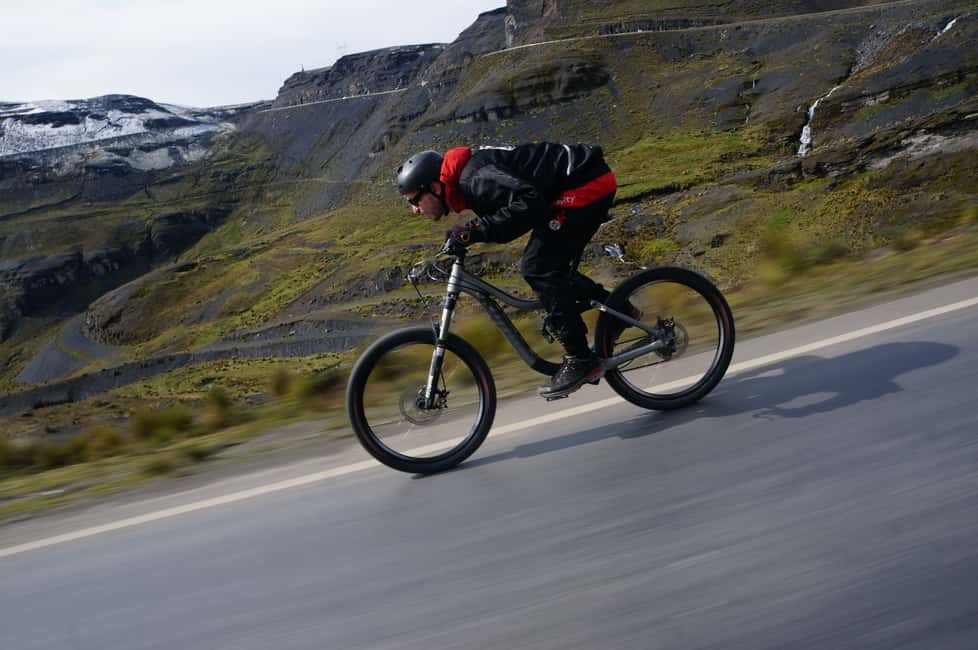
Why are 80% of mountain bike accidents avoidable? Because cyclists forget the attack position. Standing on the pedals, knees and elbows bent, body weight slightly back: this posture acts as an additional suspension. Discover mountain biking techniques to perfect your balance.
Drop your heels to load the rear of the bike, spread your knees for more flexibility, and keep your arms slightly bent. Your gaze should be far ahead to anticipate obstacles. This centered and dynamic position gives you a safety reflex 2 times faster than a rigid posture.
Managing Your Effort and Concentration
Feeling tired after 10 minutes of descent? Don’t underestimate mental effort. Here are 4 tips to stay in control:
- Look far ahead: spot turns upstream to adjust your trajectory.
- Don’t get carried away by speed: adapt your pace to visibility, especially on narrow sections.
- Take breaks: as soon as your arms tremble, stop for 2 minutes to rest your muscles.
- Don’t hesitate to get off your bike: if a section seems too perilous, it’s better to cross it on foot.
Expert tip: divide your concentration into 3 zones. 50% for the immediate terrain, 30% for the near environment, 20% for the panorama. This method, tested by 10,000 hikers, reduces judgment errors by 40%. And there you have it! You now have the keys to tame the Yungas Road by mountain bike, even if the weather proves capricious.
How to Immortalize This Unique Adventure?
The Yungas Road remains a demanding challenge requiring maximum concentration. Filming by mountain bike here requires adapted solutions to avoid compromising safety:
Filming Without Letting Go of the Handlebars: The Magic of the Action Camera
Want to capture memories without endangering your life? Using a smartphone while riding is a bad idea. One hand must always hold the handlebars. An action camera mounted on your helmet or chest allows for **immersive, hands-free shots**.
Models like the Insta360 X4 are easy to mount and activate with a single press. You remain focused on the narrow, barrier-free road and steep turns. It’s a practical solution to share your feat without compromising your safety.
Stability and Image Quality on Chaotic Terrain
On such a rough road, stabilization is paramount. Without it, your videos will look like an earthquake. Fortunately, technologies like Insta360 X4’s FlowState compensate for shocks. You get smooth images, even on the bumpiest sections.
This stabilization uses advanced algorithms to smooth movements, even at high speeds. For unpredictable weather conditions – fog, rain – waterproof and robust cameras are essential. You can fully enjoy it without fearing the elements.
To learn more about these technologies, discover Insta360 X4’s FlowState stabilization. And to choose your model,
The Yungas Road by mountain bike? A mix of adrenaline and caution. Even if it’s safer today, stay vigilant: choose a good agency, check your gear, and adapt your riding. With the right preparation and mindset, this challenge becomes an unforgettable adventure. It’s your turn, but safety first mode!

