Welcome to Uyuni, the gateway to one of the world’s craziest landscapes: the Salar d’Uyuni, the largest salt desert on the planet. If you’re planning a trip to Bolivia, there’s a good chance that this stage is right at the top of your list… and you’re right.
But beyond the famous mirror photos and the 4x4s speeding across the salt, you may be wondering what to do in Uyuni, how to organize your excursion, or what not to miss.
In this article, I’ll share with you the best things to do in and around Uyuni, practical advice on how to make the most of your visit, and everything you need to know to equip yourself, book and live the experience to the full.
👉 To save time, you can also consult this selection of excursions in Uyuni and South Lipez offered by reliable local guides.
We’re off to one of the most beautiful places in South America. Fasten your seat belt, it’s going to be salty.
📸 Discovering the Salar d’Uyuni: an absolute must
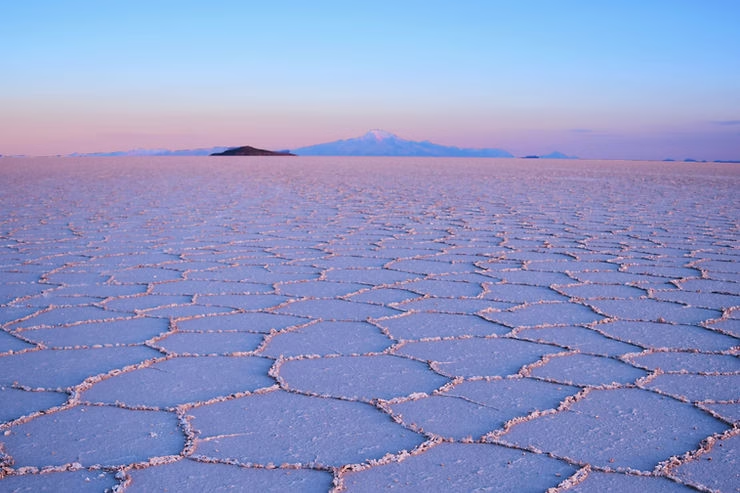
If there’s one thing to do in Uyuni, it’s to discover its immense salt desert. The Salar d’Uyuni stretches over 10,000 km², at an altitude of almost 3,700 metres, offering an almost unreal, infinite white landscape.
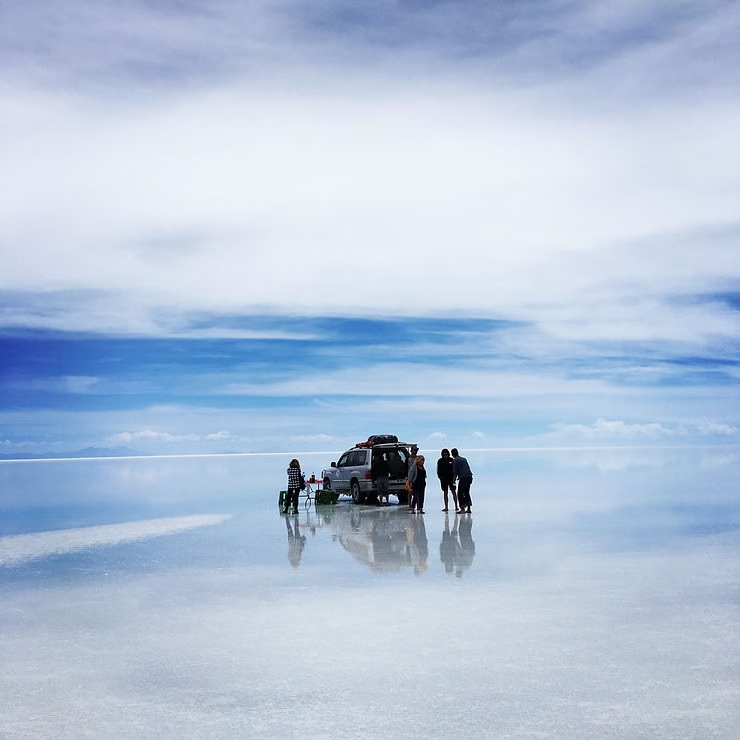
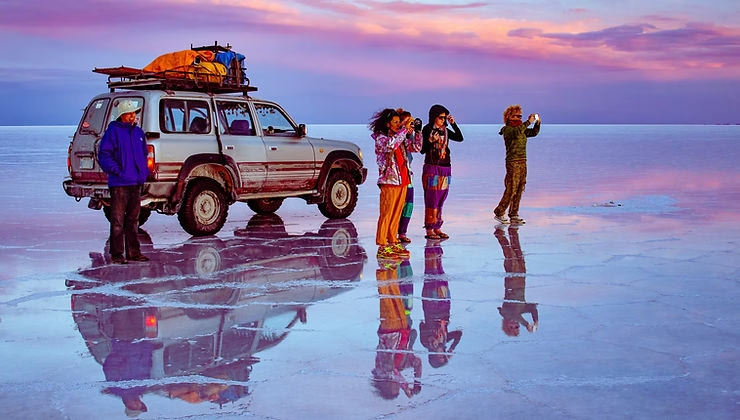
Walking on this cracked salt crust, taking photos in perspective, and contemplating the flat horizon under a brilliant blue sky… it’s an experience like no other in the world. And if you come during the rainy season (January to March), you may be lucky enough to witness the mirror effect, when the water covers the salar and perfectly reflects the sky.
🚙 Day trip or 3-day tour: which to choose?
There are two main tour formats:
- One-day tour (departure from Uyuni)
- Visit to the train cemetery, the salar and Incahuasi Island
- Return to Uyuni at the end of the day
- Ideal if you’re in a hurry or don’t have time for South Lipez
- 3-day / 2-night tour (most popular)
- Day 1: Salar d’Uyuni and overnight in a salt hotel
- Day 2: Laguna Colorada, geysers, Siloli desert
- Day 3: Green lagoon, volcanoes, return to Uyuni or Chilean border
- Truly the best option if you want to take in the sights.
🎟️ I strongly recommend that you book your tour in advance here: see available tours in Uyuni. This will help you avoid last-minute scams and guarantee you a serious guide.
📍 Don’t miss this tour:
- Train graveyard: rusting carcasses in the middle of the desert
- Incahuasi Island: giant cacti amid the salt
- Sunset on the salar: magical, especially in the dry season
- Perspective photos: have fun with optical illusions (lie flat on your stomach 😄)
- Hotel de sel: yes, the walls are literally made of salt
The Salar d’Uyuni isn’t just a beautiful backdrop: it’s a suspended moment in your journey. It’s also a great place to test your photography equipment or your Insta360 camera camera if you want to capture some spectacular 360° shots.
🏜️ Explore the Siloli desert and its colorful lagoons
If you choose the 3-day tour from Uyuni, you’ll soon realize that the salar is just the beginning. By day two, you’re entering surreal landscapes, often compared to the planet Mars, and crossing the so-called South Lipez region.
🌋 The Siloli desert: another world
At an altitude of over 4,500 metres, the Siloli Desert is an arid expanse of strange rock formations, the most famous of which is the Arbol de Piedra, a rock sculpted by the wind into the shape of a tree. The atmosphere is lunar, the silence total, and the colors breathtaking.
🦩 Colorful lagoons: red, green and white
The highlight of the show are the lagoons:
- 🟥 Laguna Colorada: a red lagoon populated by thousands of pink flamingos, unique in the world
- 🟩 Laguna Verde: at the foot of the Licancabur volcano, with a fascinating emerald hue
- ⚪ Laguna Blanca: often shrouded in mist, mysterious and calm
These landscapes are breathtaking, especially at sunrise or sunset. This is where you’ll take the best photos of your trip to Bolivia.
📸 Don’t forget to charge your battery and bring your Insta360 camera camera or a good wide-angle lens, this is where you’re going to blow your storage!
💡 Practical tips for this part of the tour:
- Very cold nights: -5 to -15°C → bring hat, down jacket, thermal socks
- Rudimentary accommodation: take a headlamp, wipes and your OKO water bottle to avoid buying plastic bottles.
- Simple but decent food: bring a few extra snacks if you need them
🎟️ To enjoy this experience with complete peace of mind, I invite you to book your full tour with trusted guides here: salar & South Lipez excursions
Exploring the Siloli desert and lagoons is an adventure like no other. Many travelers consider this part of their trip to be the most memorable of their stay in Bolivia – and I couldn’t agree more.
🛏️ Where to stay in Uyuni?
If you’re wondering where to sleep in Uyuni, the answer depends mainly on your schedule. Many travelers arrive the day before their excursion, and some also spend a night on the way back before hitting the road or catching a flight.
You’ll find a wide range of accommodation in Uyuni, from inexpensive hostels to unusual salt hotels. Here are my recommendations by type of traveller:
💸 S mall budget / Backpackers
- Piedra Blanca Backpackers HostelCool ambiance, breakfast included, secure lockers. Ideal for meeting people before a group tour.
- Hotel AvenidaClean, basic, very good value for money for one or two nights.
😴 Affordable comfort
- Hotel Jardines de UyuniAclassic: well-heated rooms, good restaurant, heated indoor pool (yes, you read that right). Perfect for recuperating after the salar.
- La Maison MartinetAlittle more chic, with a warm, family atmosphere, in a good location.
❄️ Unique experience: sleep in a salt hotel
- Hotel Palacio de SalOneof Bolivia’s best-known hotels, built entirely of salt. A little out of the way, but perfect if you want to experience something original and relaxing.
💡 Tip: book your accommodation in advance in high season (June-September) or if you’re arriving at night. And bring warm clothes, even indoors!
A good rest before (and after) the salar is essential. Altitude tires quickly, and it’s best not to start a 3-day excursion without a good night’s sleep.
👉 You can also find other options with this selection of accommodations in Uyuni
🍴 Where to eat in Uyuni (Spoiler: there are some good addresses!)
Uyuni isn’t the gastronomic capital of Bolivia, but you’ll be surprised: the food is pretty good, especially if you know where to go. Whether you’re here for a night or a few days, here are my top tips for eating well in Uyuni without blowing your budget.
🍕 Minuteman Pizza
Probably the best-known restaurant in town. Located in the Hotel Tonito, this restaurant offers excellent wood-fired pizzas, homemade pasta and even a few vegetarian options. Fast service and generous portions.
💡 Perfect for a comforting dinner after the cold of the salar.
🍽️ Lliphi
A small local restaurant offering great value for money. Simple, tasty Bolivian cuisine (sopa de mani, pique macho, etc.), family atmosphere, daily menus for 3-4€.
☕ Breakfast Nonis
Cosy place for a good breakfast or light lunch. Pancakes, fresh juices, sandwiches… and drinkable wifi. Ideal for waiting your turn or hanging out after a night bus.
🧃 The central market
For a 100% local experience, take a trip to the market: you’ll find freshly squeezed fruit juices, hearty almuerzos for under €2, and a taste of real Bolivian life.
🥡 Bonus tips :
- The 3-day tours include meals, but you can bring snacks, energy bars and dried fruit to supplement them (especially in the morning).
- Take something to drink too: your OKO filter flask will come in very handy during excursions, where drinking water is limited.
It’s possible to eat well in Uyuni, and it’s even pleasant when you know where to go. Take the opportunity to try out some local specialities and recharge your batteries before your adventure in South Lipez.
🎒 What you need to know to visit Uyuni
The climate in Uyuni is extreme: cold at night, intense sun during the day, dry air, no shade. And once you’ve set off on an excursion to the salar, it’s impossible to buy anything. So you’d better be well prepared.
Here’s the list of must-haves I recommend – tested in real-life conditions:
🧥 Clothing & accessories
- Light but warm down jacket (nights at -10°C possible in the desert)
- Hat, gloves, thermal socks
- Sunglasses (strong UV rays with salt)
- Sunscreen + moisturizing lip balm
💧 Hydration
- OKO filter flask Indispensable for avoiding plastic bottles. Filters out bacteria and viruses, so you can drink from any source (perfect for the altiplano!).
📷 Photo / video equipment
- External battery (no plug at the first accommodations on the tour)
- Spare SD card
- Insta360 camera: Ideal for capturing 360° shots in the middle of the salar or creating drone effects with the invisible boom. Compact and resistant to extreme conditions.
🍫 Snacks and essentials
- Cereal bars, nuts, dried fruit
- Toilet roll (always useful 😅)
- Wipes
- Headlamp for accommodation without light
A minimum of well-thought-out equipment makes your experience in Uyuni much more comfortable, and above all, much more enjoyable. Better to go light, but well equipped.
📅 Best time to visit Uyuni
You’re wondering when to go to Uyuni to fully enjoy the salar? It all depends on the experience you’re looking for: the dry, cracked desert or the unforgettable mirror effect? Here’s a clear overview by season.
☀️ Dry season (May to October)
Advantages:
- Blue skies guaranteed
- Dry, cracked floor → perfect for perspective shots
- Easier excursions (practicable roads)
Disadvantages:
- Intense cold, especially at night (down to -15°C)
- No mirror effect (no water on the salar)
💡 This is the ideal time to take a full 3-day tour with lagoons, deserts and clear skies.
🌧️ Rainy season (January to March)
Advantages:
- The mirror effect of the salar, unique in the world!
- Less dust, more contrast in photos
Disadvantages:
- Access to certain areas (Incahuasi island, Siloli desert) can be difficult.
- Risk of delay or cancellation of excursions
- Less comfortable accommodation (roads cut off, humidity)
💡 Perfect if you want to experience salar the “inverted sky” way, but you have to remain flexible.
🚫 Mid-season (April and November-December)
Months “in between”:
- More rain in April
- Storms begin in November
- Few people = calmer but unpredictable weather
📸 My personal advice
👉 If you want to see everything the Uyuni region has to offer, opt for June to September to maximize your 3-day excursion to the salar + colorful lagoons.
👉 If your dream is to walk in the sky and capture the mirror effect, aim for February (but stay flexible on your schedule).
✈️ Whatever the season, remember to book your activities in advance: see Uyuni excursions here
❓ Special Uyuni FAQ
Can you visit Uyuni without a guide?
You can visit the town of Uyuni on your own, but access to the salar and desert of South Lipez requires a 4×4 vehicle andan experienced guide. The vast majority of travellers opt for organized tours, which include transport, meals, accommodation and a local guide.
🔎 Book in advance for peace of mind: reliable excursions in Uyuni
Is it worth visiting Uyuni in the dry season?
Absolutely! Even without the mirror effect, the dry, cracked salar is impressive, and the colors of the lagoons in South Lipez are even more spectacular under a blue sky. This is also the best time to do the full 3-day tour.
Do I need to book my Uyuni tour in advance?
Yes, above all:
- High season (June-September)
- If you want a French or English-speaking guide
- If you arrive late at night and want to leave early the next day
Booking guarantees you a good agency, a good vehicle, and no surprises.
Is altitude sickness common in Uyuni?
Yes, because Uyuni is located at an altitude of over 3,600 meters, and some areas of South Lipez exceed 4,800 meters. Drinking plenty of water, avoiding sudden exertion and taking mate de coca are good practices.
💧 A OKO water bottle will help you stay regularly hydrated, even in remote areas.
Is it dangerous to travel to Uyuni alone?
Not at all. Uyuni is a very touristy town and tours are often in small groups. Even solo, you’ll easily meet other travellers. Basic caution is all you need (no walking alone at night in deserted areas, and be careful with your belongings).
✅ Conclusion
Uyuni isn’t just a stopover, it’s an experience in its own right on any trip to Bolivia. Whether you’re here for a day or a 3-day adventure, the landscapes you’ll discover will remain engraved in your memory for a long time to come.
Between the perspective games on the salar, the pink flamingos in the lagoons, the icy nights in salt hotels and the encounters in shared 4x4s, visiting Uyuni is also a taste of Bolivian authenticity.
Before you leave :
- 📅 Remember to book your tour here: excursions and tours in Uyuni
- 💧 Take a OKO water bottle to travel light and responsibly
- 📷 And don’t forget your Insta360 camera to capture every moment in 360°.
👉 Do you have any questions, or would you like to share your experience in Uyuni? Tell me in comments or write to me via the contact form.
👉 And to continue planning your trip to Bolivia, I invite you to read:🧭 2-week itinerary in Bolivia: the complete guide

