To get straight to the point: Bolivia reveals an incredible array of wildlife, from high-plateau llamas to Amazonian pink dolphins. Identifying these habitats ensures spectacular observations while respecting wildlife. An exploration that often culminates with the appearance of the condor, this giant of the skies boasting a record wingspan of 3.50 meters.
Are you afraid of returning empty-handed without encountering the mythical species hidden in the incredible diversity of South American ecosystems? To guide you, we’re sharing our experience with wildlife and what animals to see during a trip to Bolivia, so you don’t miss any of this incredible natural spectacle. Get your binoculars ready, because we’re revealing our best spots to find the elusive jaguar or the majestic condor through this travel diary full of anecdotes and practical tips 🦙.
- The Altiplano and the Andes: Lords of the Heights
- In the Heart of the Bolivian Amazon: Abundant Life
- Between Peaks and Jungle: The Wildlife of the Yungas and Valleys
- Chiquitania and Cerrado: Survivors of the Dry Savanna
- Observing Wildlife in Bolivia: Tips and Precautions
The Altiplano and the Andes: Lords of the Heights
We all have images of the Salar de Uyuni in mind, but Bolivia offers much more. It’s one of the countries with the greatest biodiversity, and we’ll start with the high plateaus. If you’re looking for wildlife and what animals to see during a trip to Bolivia, the answer starts here.
Camelids, an Andean Family Affair
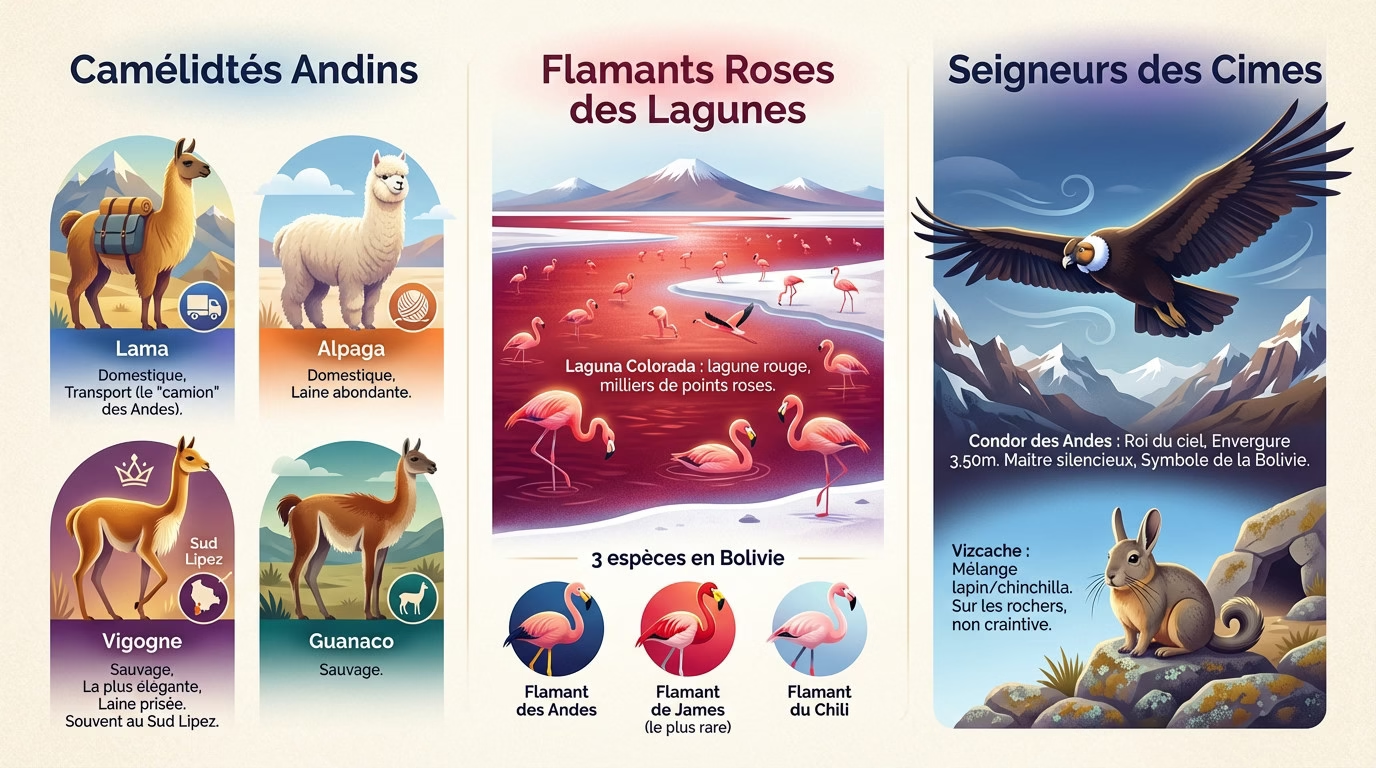
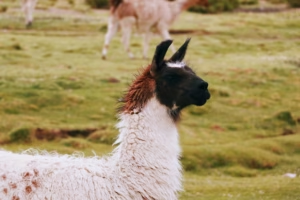
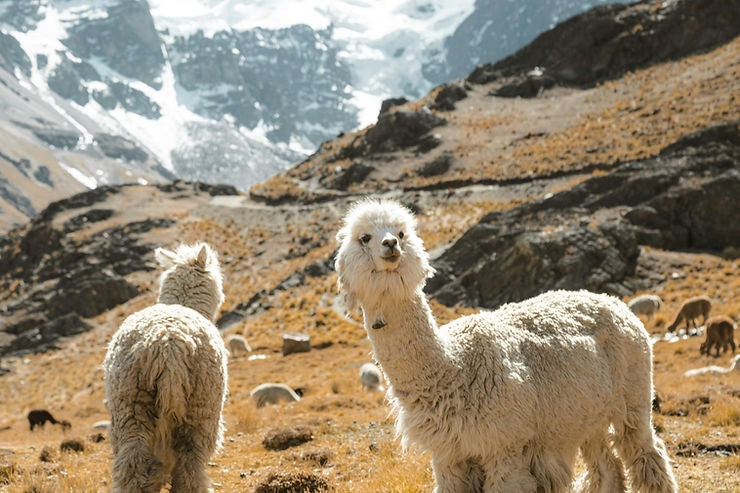
The Andes are camelid territory. We quickly distinguish the domestic members, the llama and the alpaca, from their wild cousins, the vicuñas and guanacos. You’ll find them everywhere.
The vicuña (Vicugna vicugna) is the most elegant with its prized wool. In Sud Lipez, near the Salar de Uyuni, you often see them in herds. It’s a truly memorable encounter.
Llamas are the “trucks” of the Andes for transport, while alpacas are raised for their abundant wool.
Pink Flamingos, Touches of Color on the Lagoons
Arriving at Laguna Colorada blew us away. Imagine a red lagoon populated by thousands of pink dots. It’s one of the highlights of the trip.
In Bolivia, you don’t just see one type of flamingo, but three. It’s the perfect opportunity to differentiate them:
- The Andean flamingo, with yellowish legs and a robust body.
- James’s flamingo, the rarest, with a bright yellow beak.
- The Chilean flamingo, with its distinctive red knees.
The Andean Condor and Other Mountain Dwellers
The Andean condor is the king of the sky, an immense glider. Seeing it cut through the air commands respect.
The Andean condor, with a wingspan of up to 3.50 meters, is not just a bird. It is the silent master of the Andean sky, a living symbol of Bolivia.
Further down, the vizcacha (Lagidium viscacia) looks like a mix between a rabbit and a giant chinchilla. It’s not shy and loves to bask in the sun on the rocks.
In the Heart of the Bolivian Amazon: Abundant Life
After the dry cold of the peaks, a radical change of scenery. We descend into the humid heat of the Amazon basin, another world where life explodes in every corner.
The Pink River Dolphin, Treasure of the Murky Waters
We start strong with the Bolivian pink dolphin, or “bufeo” for those in the know. It’s an endemic subspecies of the local Amazonian rivers, a true biological rarity. Its candy-pink color contrasts so much with the murky water that you’d think you were dreaming. A truly magical encounter 🐬.
When navigating rivers like the Yacuma, waiting is part of the game. Then, without warning, a pink back breaks the surface right next to the boat. It’s clearly the highlight of a pampas excursion, a memory that stays with you.
Encountering Endemic Primates
Of course, the jungle echoes with the cries of howler monkeys, and you often encounter agile spider monkeys. But if you’re looking for wildlife and what animals to see during a trip to Bolivia, aim higher. We’re talking about absolute rarities here.
Keep an eye out for lucachi monkeys, especially the reddish or ash-colored varieties. They are endemic to Bolivia, meaning they exist nowhere else on Earth. Stumbling upon them around a trail bend is an immense privilege for any traveler.
The Jaguar, the Elusive Shadow of the Jungle
Finally, the boss of the place: the jaguar. It’s the largest feline in the Americas, but don’t bet everything on seeing it. The chances of spotting it remain slim, making every observation truly exceptional.
Encountering a jaguar is a rare stroke of luck, a suspended moment. It’s the ghost of the forest, a powerful reminder of the wild nature that still endures.
Even invisible, its presence is felt. Guides often point out its fresh paw prints on the muddy banks. We know it’s there.
Between Peaks and Jungle: The Wildlife of the Yungas and Valleys
Bolivia is a country of striking contrasts. Between the Andes and the Amazon, there’s an incredible transition zone, the Yungas, where unique species have found refuge. If you’re wondering what wildlife to see during a trip to Bolivia, it’s often here that the magic happens.
The Spectacled Bear, South America’s Only Bear
We start with a local legend: the spectacled bear (Tremarctos ornatus). It’s the only bear on the entire South American continent, no less! Its name comes from the strange light markings around its eyes. However, it’s super shy.
It mainly hides in the humid cloud forests of the Yungas. Cotapata National Park is the best spot to try and catch a glimpse of it, even if it remains a significant challenge. Fun fact: this animal inspired Paddington Bear 🐻.
The Red-fronted Macaw, a Jewel in Danger
Next, let’s talk about the brilliantly colored red-fronted macaw. This bird is endemic to Bolivia; you don’t see it anywhere else on Earth. Unfortunately, it is now critically endangered.
It lives exclusively in the dry inter-Andean valleys. Encountering a group of these macaws has become the Holy Grail for many observers, as their survival hangs by a thread. It was a truly moving encounter for us 🦜.
The Hummingbird Ballet, like the Pamela Hummingbird
In the Yungas, the soundscape is marked by the constant buzzing of hummingbirds. They dart around at incredible speed, their metallic feathers changing color with the daylight. It’s a permanent spectacle that never truly stops.
We fell in love with the Pamela hummingbird, another endemic species of Bolivia. You can find it mainly in the La Paz region. It’s a perfect small example of the specific richness of these valleys ✨.
Chiquitania and Cerrado: Survivors of the Dry Savanna
We leave the mountains for lesser-known landscapes: the dry forests of Chiquitania and the Cerrado savanna. If you’re looking for wildlife and what animals to see during a trip to Bolivia, this area is surprising. Here, animals are adapted to a harsher climate.
The Maned Wolf, a Canid Like No Other
We encountered a strange creature: the borochi, or maned wolf. With its endless legs, it looks like a fox on stilts. Yet, it’s neither a wolf nor a fox, but rather a unique species.
It’s the largest canid in South America, roaming the Cerrado savannas. Mostly nocturnal, it doesn’t show itself easily. But coming face to face with it remains a truly memorable encounter that you won’t forget.
The World of Armadillos: From Quirquincho to Andean Armadillo
With their armored shells, armadillos look like prehistoric creatures. Bolivia is home to several species, each adapted to survive in its own environment.
The quirquincho, or Andean armadillo, stands out: it’s the only one to live on the high plateaus. An emblem of Andean folklore, it is unfortunately threatened. Its shell was once used to make charangos, a truly sad tradition.
The Puma, the Elusive Mountain Predator
Let’s talk about the puma, the other great feline of the region. More adaptable than the jaguar, this all-terrain predator lives in many habitats, even climbing up into the Andean mountains.
Its discretion is absolute. Seeing it is even rarer than encountering a jaguar. Its presence proves that the ecosystem is holding strong. It’s a ghost that silently watches over its territory.
Observing Wildlife in Bolivia: Tips and Precautions
Once there, it’s easy to mix everything up. Llama, alpaca, vicuña… they look terribly alike. So, we decided to prepare a small memo to clarify things.
The idea is to help travelers quickly identify what they see. It’s always nicer to know who you’re observing. This practical little guide will help you identify the creature, without having to pull out an encyclopedia at every turn.
Andean Camelids: A Guide to Telling Them Apart
- Llama: large, curved ears, often used for carrying loads.
- Alpaca: smaller, fluffy, “cute” face, raised for wool.
- Vicuña: slender and graceful, cinnamon color, wild and timid.
- Guanaco: larger than the vicuña, dark face, wild.
Animals to Approach with Caution
Let’s talk about potentially dangerous animals, without scaring you. In the Amazon, there are caimans, snakes like the anaconda, and spiders. Common sense is the best protection against these predators, who generally avoid us.
The main advice is simple: always be with a local guide. They are the ones who know the terrain, spot dangers, and know how to react. Never venture off trails alone; it’s a rule of survival.
For Respectful and Successful Observation
Responsible tourism is essential here. We are guests in the territory of these animals. Our presence must have the least possible impact on their natural and wild habitat.
Here are some rules so that the wildlife you want to see during a trip to Bolivia remains visible. The goal is to enjoy the spectacle without disturbing the wildlife, so that others can enjoy it after us 🌿.
- Keep your distance and use binoculars.
- Never feed wild animals.
- Remain silent so as not to scare them.
- Choose environmentally respectful agencies and guides.
We loved discovering this incredible wildlife. From the llamas of the Altiplano to the pink dolphins of the Amazon, Bolivia completely blew us away with its biodiversity. A true wild paradise awaits you! We hope this guide helps you have beautiful, respectful encounters. And most importantly, don’t forget your binoculars! 🇧🇴 📸

