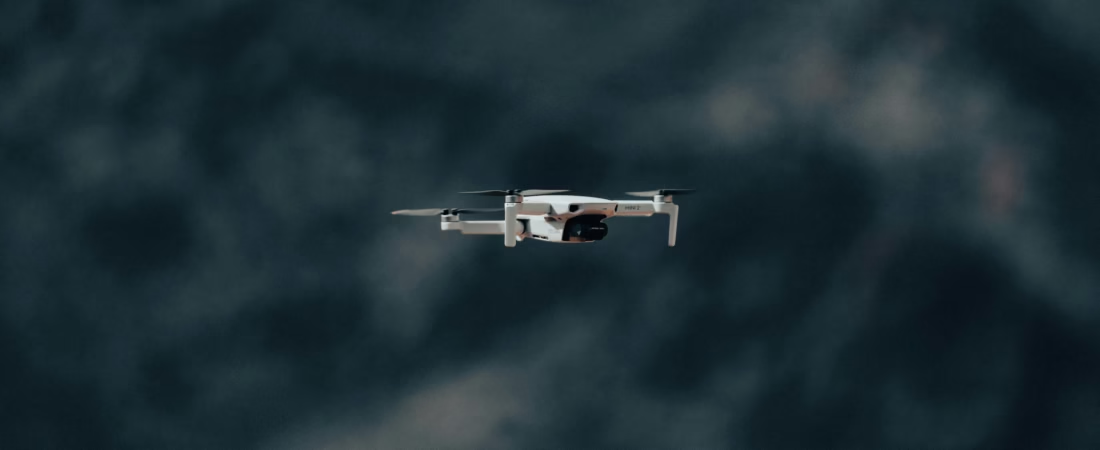
La Boliviaa visual paradise to capture from every angle
Looking for a country where every landscape looks like it’s stepped out of another world? Look no further than Bolivia is an exceptional playground for photographers, videographers, content creators and drone pilots.
From the infinite reflections of the Salar d’Uyuni to the red lagoons populated by pink flamingos, from the icy peaks of the Cordillera Real to the rainforests of Amazonia, Bolivia offers a wild diversity of scenery and atmospheres.
But beware: filming in Bolivia can’t be improvised. There are strict rules for drones, areas to avoid, and practical advice to know so you don’t damage your equipment (or miss THE perfect sunset because of a flat battery…).
In this article, we take you on a tour of Bolivia’s most beautiful photo and drone spots, while sharing our top tips for capturing these magical landscapes in complete safety, whether you’re equipped with an SLR, a drone or a camera. Insta360GoPro or drone.
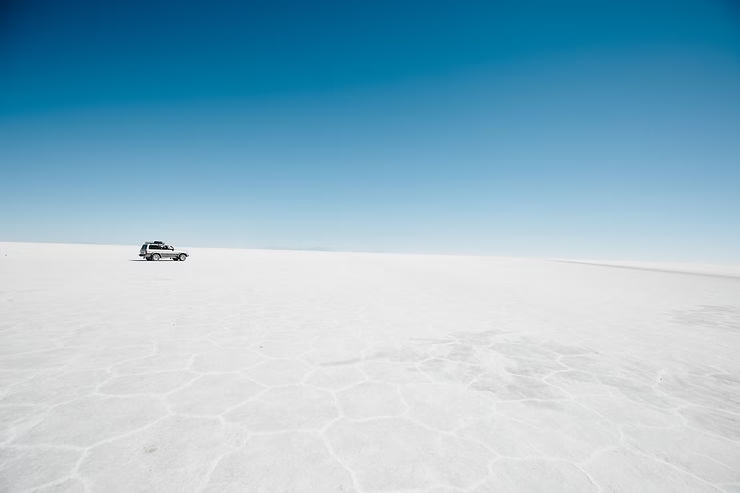
Do I need a permit to fly a drone in Bolivia? Bolivia ?
The short answer: yes, in some cases, especially if you’re using a drone. Bolivia does not prohibit the use of drones by travellers, but there are specific rules to be aware of to avoid any problems with the local authorities.
📋 Drone regulations in Bolivia (DGAC)
- Bolivia’s legislation is governed by the Dirección General de Aeronáutica Civil (DGAC).
- Drones weighing more than 250g must be declared, especially if you fly :
- In urban areas
- Close to an airport
- Over official buildings or gatherings
- Recreational drones can be tolerated if they fly at a height of less than 120 m and outside sensitive areas.
🚫 Prohibited or restricted areas
- Military sites and international borders → strictly forbidden
- National parks such as Eduardo Avaroa, Madidi, Sajama → no flying without special permission
- South Lipez & Salar d’Uyuni → possible with discretion and away from other tourists (request sometimes tolerated on site)
- Cities like La Paz or Sucre → beware of drones in city centers: very risky (and potentially illegal)
🧾 Do I have to declare my drone to customs?
- Not usually, unless your drone is a large, professional one.
- We recommend that you travel with your invoice or proof of purchase, in case customs checks your equipment on arrival.
✅ Tips for carefree flying
- Avoid flying over people, markets or sacred areas
- Prefers open, secluded areas with maximum visibility
- Remain discreet and respectful: if in doubt, ask for authorization
💡 Good to know: with an Insta360 or GoPro mounted on a boom or chest strap, you can capture spectacular images without breaking any aerial rules.
The 10 most beautiful photo spots in Bolivia (by region)
Impossible to visit Bolivia without falling in love with its photogenic landscapes. Whether you’re equipped with a smartphone, a drone, an Insta360 or a pro SLR, you’re sure to get some unforgettable shots.
🏜️ 1. Salar d’Uyuni
- Mirror effect in the rainy season (January-February)
- Ultra-hard light in the dry season: ideal for 360°.
- Photo tip: invisible pole + Insta360 = magical “floating camera” effect
🦩 2. Laguna Colorada & Laguna Verde (South Lipez)
- Unreal color contrasts: bright red, turquoise, mountains
- Photo spots: pink flamingos, morning reflections, desert landscapes
🏔️ 3. Cordillera Real & Sorata
- Glaciers, 6,000 m peaks, green valleys
- Perfect spot for timelapses or aerial shots if drone performs well at altitude
🌋 4. Dali Desert & Arbol de Piedra (South Lipez)
- Mars atmosphere
- Ideal for wide-angle or 360° shots with Insta360
- No one on the horizon = spectacular effects
🏛️ 5. Sucre (historic center)
- White balconies, red roofs, arcades
- Sunset photo spots from the Recoleta or San Felipe Neri viewpoints
⛏️ 6. Potosí & Cerro Rico
- Rough industrial mining landscape
- Black and white photo or unobtrusive drone at sunrise = very strong visual impact
🌳 7. Rurrenabaque & Amazonia
- Morning mist, dense jungle, winding rivers
- Drone possible from lodges outside protected area (caution → wildlife + humidity)
🌆 8. La Paz and the cable car
- Ride the red cable car into the sunset
- Overlooking the city with the Illimani in the background
- Attach your Insta360 to the glass or use a rotating time-lapse device
🏜️ 9. Valley of the Moon & Chacaltaya
- Surreal rock formations
- Ideal for playing with light/shadow and underwater videos
🌊 10. Lake Titicaca: Copacabana & Isla del Sol
- Golden hour from the island’s peaks
- Possibility of taking in the village + the lake + the mountains in the same setting
- Drone possible away from the crowds
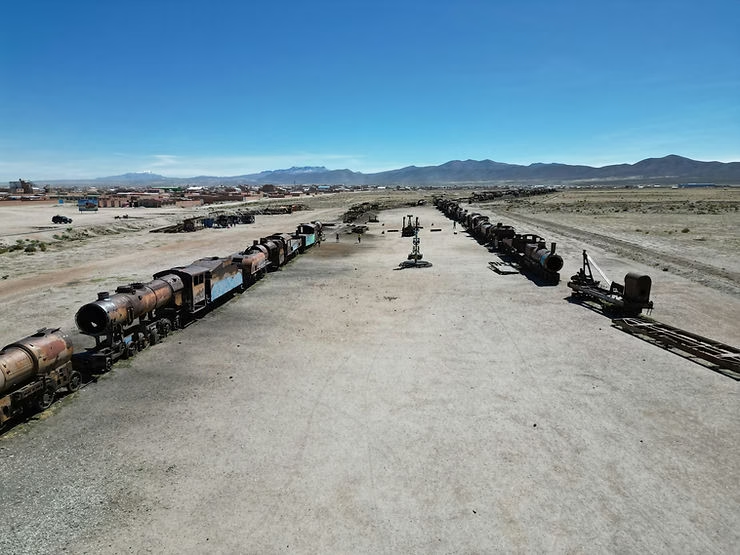
Our tips for filming and photographing in Bolivia
La Bolivia is one of the most visual countries in Latin America… but it’s also a technical terrain: altitude, harsh light, dust, isolation. Here’s how to adapt to get the most out of your shots:
🕰️ 1. Choose the right moment
- Golden hour = perfect soft light (in the morning or at the end of the day)
- Avoid midday light, which is too harsh at altitude
- In the Amazon, take advantage of the morning mist for cinematic effects
🔋 2. Manage your autonomy
- Take 2-3 batteries for your GoPro, Insta360 or drone
- An external battery is essential (especially for bivouacs and treks).
- Foldable solar panels are useful in South Lipez or on Isla del Sol
🧼 3. Protect your gear
- Dust is everywhere in South Lipez and Uyuni → protective cover
- Pack a waterproof camera bag for the Amazon
- Clean lenses often: sand + wind = danger for optics
🧭 4. orient yourself to find the right frame
- Use Maps.me or Google Earth to locate high points
- The horizon lock mode of the Insta360 is perfect for hiking or 4×4 videos
📹 5. Play with effects to vary shots
- Insta360: bullet time, drone view without drone, dynamic cropping
- GoPro: hyperlapse while driving or hiking
- Drone: orbit shot, 4×4 tracking, bird’s-eye view of the salar
💡 A little extra: when trekking, attach your Insta360 to your bag or a pole and film in 360°. You can crop at will afterwards without worrying about framing in the moment.
Is it possible to film people and markets in Bolivia ?
La Bolivia is rich in people, traditions and scenes of life. But beware: not everything can be filmed freely, especially in rural areas or during spiritual events.
🙋♀️ Always ask before filming
- In Quechua or Aymara villages, the locals can be camera-shy.
- A simple request in Spanish or with a smile is often enough:“¿Puedo grabar un video?” or “¿Puedo tomar una foto?”.
- Absolutely avoid filming without consent in markets or during religious ceremonies.
🎭 Respect for local cultures
- Some objects or outfits have strong spiritual significance (e.g. shamans, ritual dances).
- Filming these moments requires discretion and respect. If you can, ask a local guide if it’s appropriate.
🎒 Discreet and practical equipment
- A Insta360 on a pole or chest strap is less intrusive than a large SLR.
- Activate the 360° shot without aiming: you can then crop as appropriate, without disturbing the scene.
💡 Pro tip: if you’re allowed to film, show the result to the person on your screen. This creates an authentic moment of sharing.
✅ Conclusion
Capturing Bolivia in photo, video or 360°, is much more than a simple travel activity: it’s a way of recounting the intensity of a country as raw as it is sublime. From the reflections of the Salar to the peaks of the Cordillera, from the Andean markets to the Amazon jungle, every visual nook and cranny deserves to be brought to light.
But don’t forget: beyond the images, it’s the people you meet and the respect you show for the moment that make your memories truly powerful. With the right equipment, a little preparation and a lot of respect, you’ll leave with incredible images… and stories to tell.

