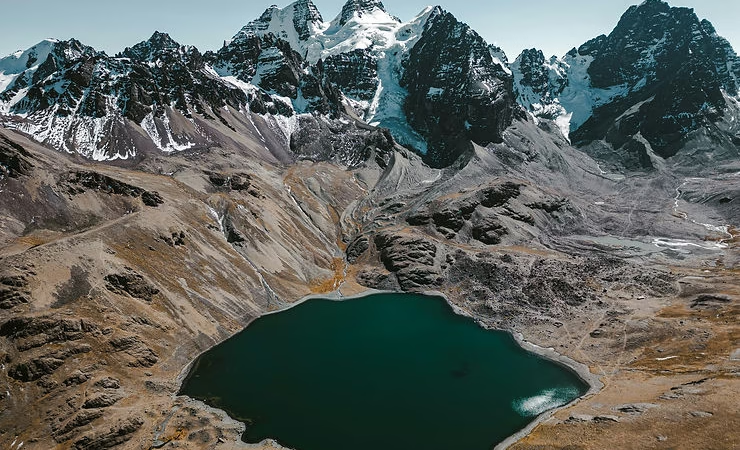
Tired of overcrowded mountain destinations and looking for a wild spot for your next adventure? 🏔️ Head to the Condoriri Massif, nicknamed “Bolivia’s Matterhorn” for its impressive peaks and turquoise lagoons! We’re taking you to discover this mountain paradise in Bolivia: we’ll share our tips for the best treks and ascents, not to mention tricks for conquering the altitude and the breathtaking landscapes!
Contents
- Discovering the Condoriri Massif in Bolivia 🏔️
- Trekking and Hiking in the Condoriri Massif
- Mountaineering in the Heart of the Cordillera Real 🧗♀️
- Practical Tips for a Successful Trip 🎒
Discovering the Condoriri Massif in Bolivia 🏔️
A Jewel of the Cordillera Real
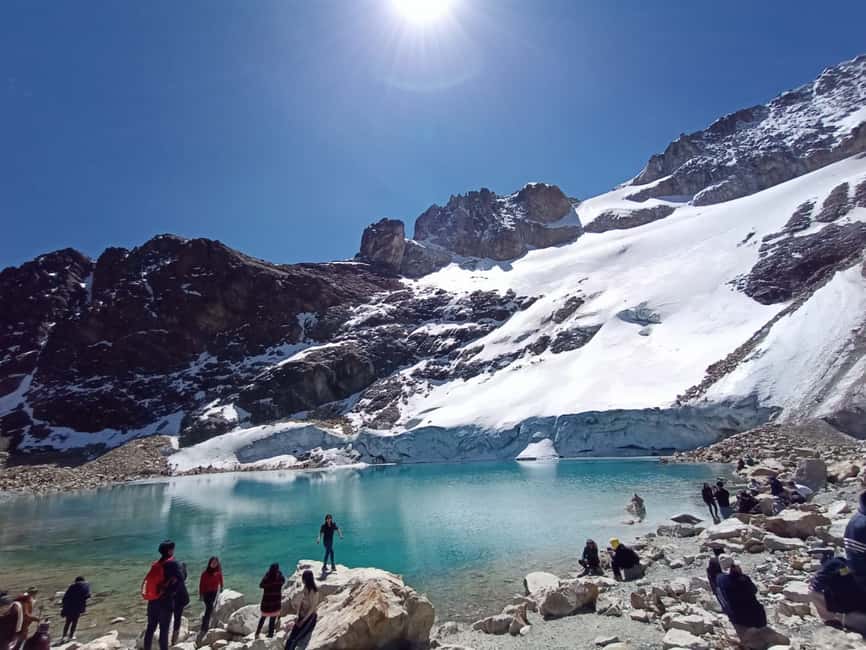
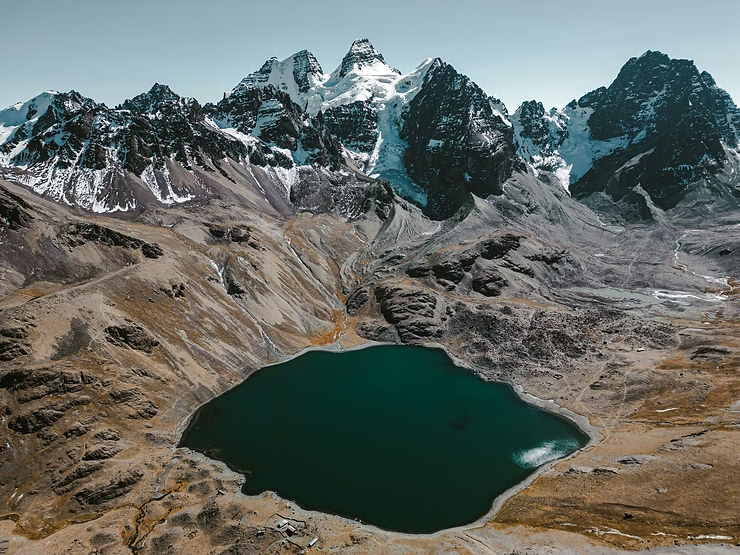
The Condoriri Massif stands proudly in the Bolivian Cordillera Real, a few hours from La Paz. Nicknamed “Bolivia’s Matterhorn,” this Andean giant is part of the Tuni-Condoriri National Park.
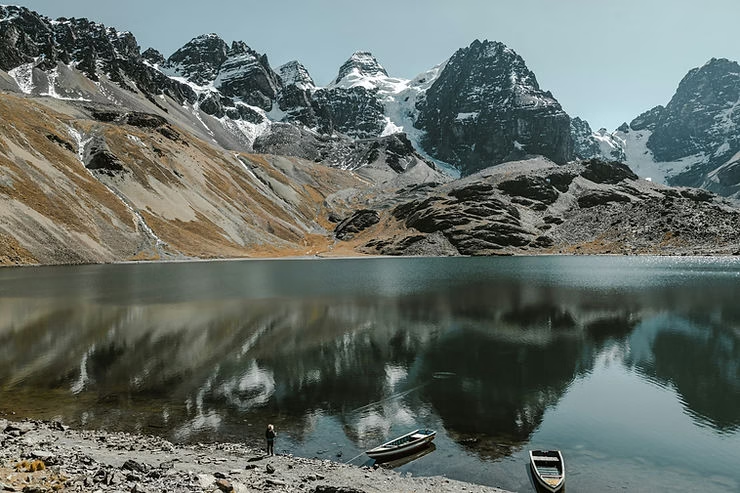
When you discover it from Laguna Chiarkhota, the Condoriri absolutely takes your breath away. Its three main peaks form
The Main Peaks to Conquer
Cabeza del Condor (5648m) and Pequeño Alpamayo (5370m) are the jewels of this massif. The first, technical and demanding, attracts experienced mountaineers. The second, more accessible, remains an exhilarating challenge for high-mountain enthusiasts.
Comparison of the Main Peaks in the Condoriri Massif
| Peak | Altitude (meters) | Technical Difficulty | Ascent Duration |
| Cabeza del Condor | 5648 (5532-5700m) | D/III | 10 to 12 hours |
| Pequeño Alpamayo | 5370 (5430m) | II/AD | 8 to 10 hours |
| Pico Austria | 5300 (5350m) | Difficult | Approx. 3h24 |
| Left Wing | 5560 | Very Technical | Variable |
| Right Wing | 5480 | Medium | Variable |
| Pic Wyoming | 5420 | Moderate | Variable |
| Pico Tarija | 5300 | Easy to Moderate | 4 to 6 hours |
| Pico Ilusion | 5350 | Moderate | 5 to 7 hours |
How to Access the Massif from La Paz
From La Paz, you can reach the start of the trek in about 2h30 by car. The village of Tuni, before the dam, marks the starting point of the adventure. We highly recommend renting a vehicle with a driver for ease. For a complete 3-week itinerary in Bolivia, consult our detailed guide.
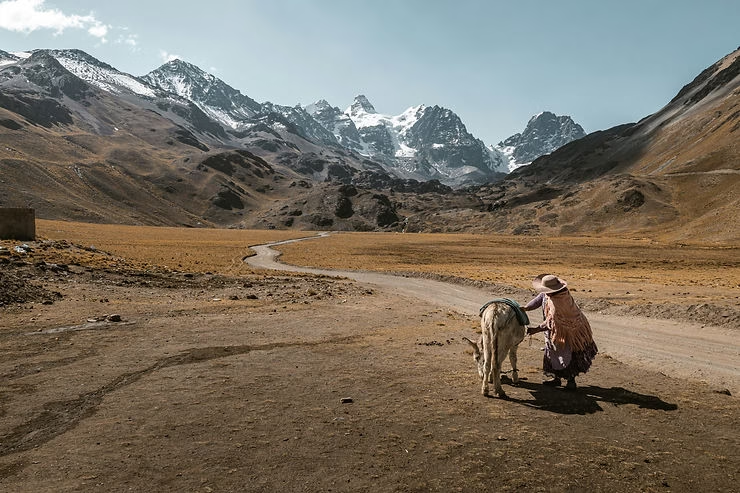
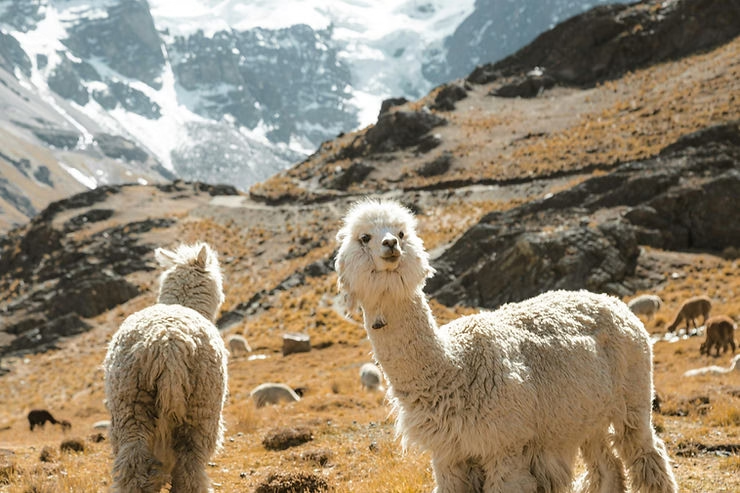
The approach trail led us from Tuni to Laguna Chiarkhota, our base camp. The route offered us initial breathtaking views of the massif’s peaks. We crossed varied landscapes, from turquoise lakes to the Andean pampa, with a few curious llamas along the way.
The Best Time to Visit this Andean Paradise
The dry season from May to September remains our preferred choice for visiting the massif. Conditions are optimal for hiking and climbing, with clear skies and little precipitation. We particularly liked July and August for the snow quality.
Expect cool nights, sometimes below zero even in summer. The sun beats down strongly at this altitude, so we always have sunscreen in our bag. We avoid November to April due to high temperatures and frequent afternoon rains.
Trekking and Hiking in the Condoriri Massif
Must-Do Trekking Routes
The Condoriri Massif offers hiking trails for all levels. The 3-day Tuni-Condoriri trek remains our favorite. We’ll show you the lagoons that turn every step into a wonder.
- Laguna Tuni: A logistical and visual starting point, accessible in 2h30 from La Paz, an essential step to begin the adventure.
- Laguna Jurikhota (4700m): Breathtaking view of Cabeza del Condor, ideal for a contemplative rest.
- Laguna Congelada (4900m): Glaciers plunging directly into the waters, a stunning natural spectacle at the foot of El Condoriri.
- Laguna Chiarkhota (4670m): Main base camp, a key point for preparing your ascents.
- Laguna Liviñosa (4270m): Clear view of the imposing Huayna Potosí after crossing two demanding passes (Jallayko and Jistaña).
These lagoons of the Condoriri Massif transform every hike into a photographic and spiritual adventure, with unparalleled panoramic views 📸✨
Our Experience on the Lagoon Circuit
Our trek in the Condoriri Massif was a true immersion in the turquoise lagoons. The landscapes left us speechless, we didn’t notice time passing!
Over 6 days of hiking, we alternated between demanding passes, sparkling lagoons, and nights under the stars. The daily elevation gain (up to 550m) tested us, but the views of the 13 snow-capped peaks, including Cabeza del Condor (5648m), were worth every effort. Pico Austria (5350m) offered us a 360° view of the Cordillera Real, with Illimani and Huayna Potosí as a bonus. We even encountered llamas and condors, for a total immersion in the Andean wildlife.
Want to prepare for your trip? Book your accommodation in Bolivia today via this link or plan your activities with our local partners!
Mountaineering in the Heart of the Cordillera Real 🧗♀️
The Altitude Challenges to Overcome
The Condoriri, with its 5648m altitude, demands solid preparation. You climb on ice, unstable rock, and ice canyons. The lack of oxygen is felt with the slightest effort, especially on routes like Pico Austria (5300m) or Cabeza del Condor (5700m). Crampons and ice axes quickly become indispensable allies.
Tips for Acclimatization and Physical Preparation
We always took 2-3 days to acclimatize at 3000-4000m before tackling the peaks. Running 1h/day or climbing/descending stairs strengthens the legs. At altitude, drink 3-4L of water per day and ascend no more than 500m/day above 2500m. Nothing replaces a guide to avoid acute mountain sickness.
Our Ascent of Pequeño Alpamayo
Our 1 AM wake-up for Pequeño Alpamayo (5370m) will remain etched in our memory. The climb on fresh snow, the 60° slopes, and the ice ridge tested our concentration.
Essential Equipment for the Peaks
We always took helmets, harnesses, and crampons provided by the agency. For extreme conditions, we added gaiters, mountain boots, and a -10°C sleeping bag. On-site, we rented ice axes (60-70cm) and carabiners. Don’t forget sunscreen and a headlamp for night departures.
- Helmet: Essential for climbing, can be rented on-site or brought.
- Harness: Basic technical equipment, available for rent.
- Crampons: Mandatory on icy surfaces, check depending on the season.
- Ice axe (60-70 cm): Essential for balance on ice.
- Technical clothing: Warm, waterproof layers and UV protection.
- Headlamp: Essential for night departures towards the peaks.
- Photocopy of passport: Crucial administrative document to keep on you.
With or Without a Guide: Which Option to Choose?
We tested both options. Independently, you save money but take more risks. With a certified IFMGA guide, you benefit from their experience. For Cabeza del Condor, it’s better to have a pro: a 1 guide/2 clients ratio is recommended, with a budget of 442 USD for 5 days including porters and a cook.
Local guides, like Cristobal (4.9/5 on TripAdvisor), master the technical routes. Rates are around 144 USD/day for day treks. Their knowledge of weather conditions and hidden passages is truly worth the price paid, especially on peaks at 5700m where the slightest mistake can be costly.
Want to conquer these peaks? Book your equipment via this link or find a qualified guide here for a safe adventure!
Practical Tips for a Successful Trip 🎒
Accommodation and Food Around the Massif
In La Paz, we opted for Hotel Rosario. For base camp, we slept in tents near Laguna Chiarkhota. Nothing too luxurious, but it did the trick.
| Option | Meals | Supplies |
| Hotel Rosario La Paz | Breakfast included | Supermarket nearby |
| Tent at base camp | Communal kitchen provided | Porters for resupply |
| Hacienda Paraiso de La Paz | On-site restaurant | Grocery store 500m away |
Budget and Practical Expedition Organization
Our 5-day expedition cost 442 USD per person. Transport, certified guide, full meals, porters – everything was included. We saved money by going in a group of 8, without sacrificing safety.
For practical organization, we booked through a local agency. We prepared our documents and checked the equipment. We budgeted for food and transport in La Paz. Everything worked out well.
Want to experience this adventure? Book your Condoriri Massif experience or find ideal accommodation in La Paz to start your journey right!
The Condoriri Massif is clearly the Bolivian escape for mountain enthusiasts. With its mythical peaks like Cabeza del Condor and its dazzling lagoons, every step offers breathtaking landscapes. If you dream of a mix of challenge and raw nature, take the plunge: plan your adventure now and let yourself be enchanted by this Andean paradise. 🏔️✨
Condoriri Massif FAQ
Do I need specific travel insurance?
Yes, specific travel insurance is essential for adventuring in the Condoriri Massif, especially if you plan to do mountaineering or high-altitude trekking. Standard insurance policies are usually not enough, as the risks associated with mountain expeditions are high, and accidents can occur, as shown by statistics on traumatic injuries in the wilderness. This insurance must absolutely cover unforeseen medical expenses, emergency evacuations (including by helicopter), and search and rescue operations, which can be very expensive in remote areas. Many agencies also require proof of this specific coverage before letting you depart, so remember to choose an “Active” or “Extreme” option suited to your activities.
Where can I find medical assistance?
According to our research, there is no precise information on medical assistance points directly within the Condoriri Massif. The source content mentions a surgical instrument company, which is not relevant, and a travel agency that specifies rescue or medical costs are not included in their packages. This means you must be self-sufficient in first aid and, above all, have specific travel insurance that covers potential rescue costs and medical expenses. Always pack a well-stocked first-aid kit, because in an emergency, you will be far from any medical infrastructure.
What technical clothing should I bring?
To face the high-mountain conditions in the Condoriri Massif, you absolutely need appropriate technical clothing. Think of durable mountain boots and a layering system: breathable shirts, windproof and waterproof jackets, as well as warm and waterproof pants. Don’t forget a
Where can I find drinking water?
The Condoriri Massif is a crucial water source for La Paz and El Alto, thanks to melting snow and glaciers. This water is captured and stored in reservoirs like those of Tuni and Condoriri, before being transported to a water treatment plant in El Alto. However, the content does not mention any place where water would be directly potable in the massif without prior treatment. It is therefore essential to plan your own water reserves or to systematically treat it if you draw it on-site, as glacier water is raw and intended to be purified before consumption.

