Key facts: Coroico is a subtropical haven of peace nestled at an altitude of 1,500 metres, offering a complete contrast to La Paz. Here, we’ve found the perfect balance between the adrenalin of the Death Road and the gentle local way of life. Between the rhythms of the Saya and the rare honey of the Melipona bees, it’s a unique sensory immersion. 🌿
Are you looking for an Immersion in Coroico, a hidden paradise in the Yungas, to forget the constant chaos of La Paz and the icy air that cruelly stings your face? We’ll take you away from the asphalt, where the hectic pace of the city fades into the subtropical gentleness of the lush jungle. Between two secret waterfalls and a vibrant encounter with the Afro-Bolivian community, we give you all our exclusive tips for savoring an exceptional high-altitude coffee or tasting the rare medicinal honey of stingless bees. ☕🌿
- Immersion in Coroico, the hidden paradise of the Yungas: how to get there? 🚐
- Venture into the wilderness between waterfalls and peaks 🌿
- Meet the locals between Saya rhythms and coca leaves 🥁
- Savor the products of the land, from coffee to rare honey ☕
Immersion in Coroico, the hidden paradise of the Yungas: how to get there? 🚐
Leaving the hustle and bustle of La Paz behind, the journey to the Yungas begins with a spectacular descent that offers a radical change of scenery.
Choosing between the adrenalin of the Death Road and asphalt
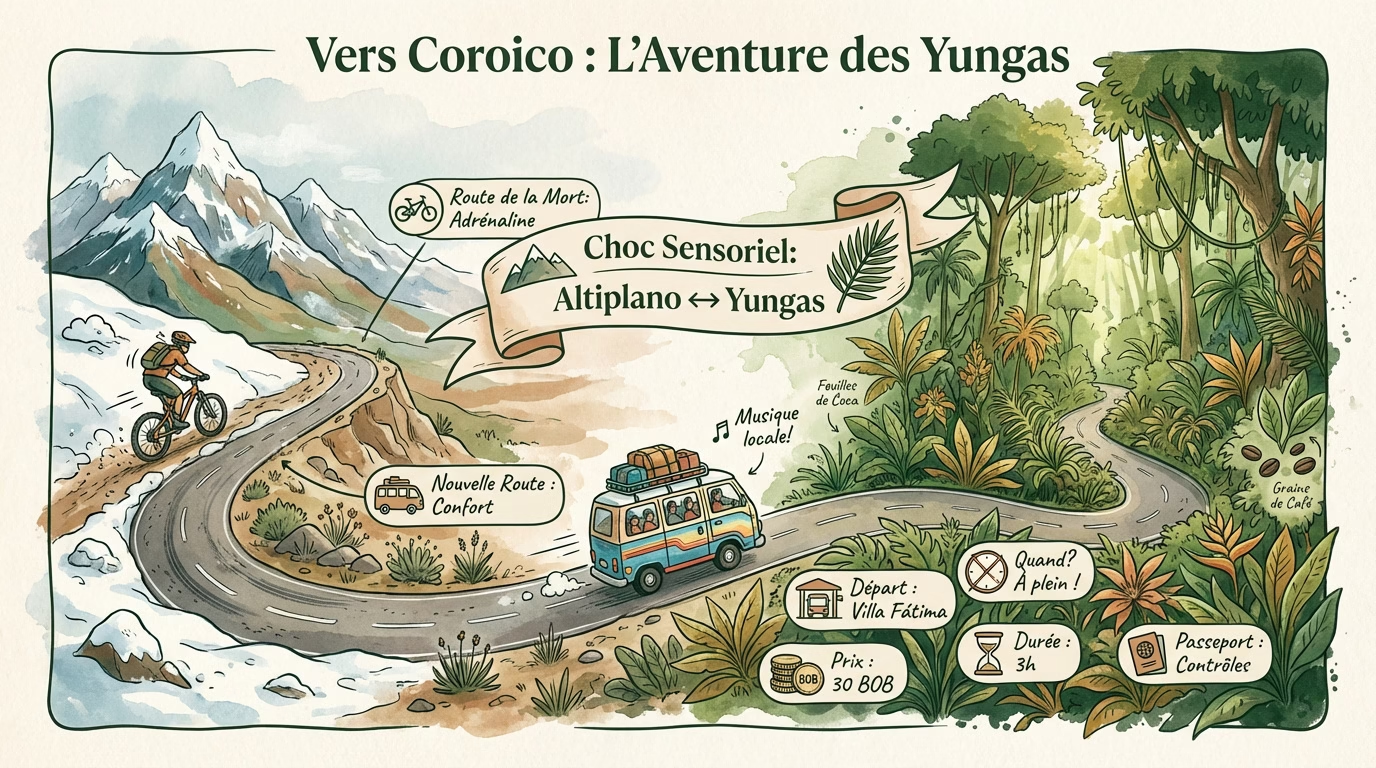
Mountain bikers prefer the old perilous track. But the new track now makes the route safer. We chose between the thrills and the tranquillity of new tarmac.
The thermal shock surprised us. We leave the icy peaks for tropical humidity. Glaciers give way to dense forest. It’s a radical shift to a green world.
Incredible vision.
The transition from snow-capped peaks to thick jungle is a sensory shock that few places in the world offer with such intensity.
Managing the logistics of the minibus journey from La Paz
Go to the Villa Fátima district to find transport. Departures are organized without a watch. The driver waits patiently until his vehicle is completely full before finally setting off.
Surviving the trufi ride requires stamina. The radio spits out Bolivian hits as the road twists and turns. We hang on to the seat as the scenery flies by.
We detail the key points to avoid surprises. Here’s some practical information. Don’t overlook anything.
- Average fare: 30 BOB.
- Estimated time: 3h.
- Keep your passport handy.
Venture into the wilderness between waterfalls and peaks 🌿
Once settled in the village, the call of the forest and surrounding peaks becomes irresistible to any lover of the great outdoors during an Immersion in Coroico, a hidden paradise in the Yungas.
Climb to the top of Cerro Uchumachi for panoramic views
We climbed through this thick cloud forest. The trail climbs really dry under the trees. Our efforts paid off once we reached the top. We were overlooking all the green valleys of the region.
Up there, the atmosphere becomes almost mystical. We came across apachetas, small piles of stones. Locals often leave coca in them for the Pachamama, as a sign of offering.
Find the three secret waterfalls to take a dip
We found Jalancha Falls quite easily. A small path leads directly to these super-cool natural swimming pools.
A word of advice: go during the week. At weekends, people from La Paz flock here in droves. It’s much quieter to enjoy the water.
Be careful, as wet rocks are extremely slippery. We strongly advise you to keep good walking shoes on your feet.
Watch for Tunki and support the Senda Verde animal sanctuary
Bird fans will love the area. The Tunki, the famous rock cockerel, remains the star here. We had to get up at dawn to catch a glimpse. Its dazzling colors are well worth an early-morning look.
We also visited Senda Verde. This shelter rescues animals that have fallen victim to illegal trafficking. It’s a touching and, above all, highly ethical stopover during your stay here.
Meet the locals between Saya rhythms and coca leaves 🥁
Beyond the landscapes, it’s Coroico’s human soul, forged by centuries of interbreeding, that gives the journey its depth.
Saya music in the village of Tocaña
These families come from Africa, deported for Potosí’s money. Our Immersion in Coroico, a hidden paradise in the Yungas, leads us to them. Here, they have found fertile soil.
Saya music remains their mainstay. The drums tell of their resistance and immense joy. It’s a unique blend found nowhere else on the continent.
We were blown away by the energy. It’s true sharing.
The Saya is not just a dance, it’s the heartbeat of a people who have managed to preserve their African roots on Andean soil.
Explore traditional cocals in an ethical and respectful way
Forget Western clichés about this plant. For the locals, the coca leaf is sacred. It provides a livelihood for thousands of families in the region. It has been the economic and spiritual lifeblood of these mountains for centuries.
We’ve learned to harvest the leaves carefully. The shrub must remain intact for future use. Finally, traditional sun-drying transforms the harvest into green gold for the whole community.
Here’s what you need to know about this ancestral plant. It’s more than just a cash crop, it ‘s an identity.
- Benefits against altitude sickness
- Ritual use for the Pachamama
- The difference between coca and cocaine
Savor the products of the land, from coffee to rare honey ☕
To round off this Immersion in Coroico, a hidden paradise in the Yungas, there’s nothing like exploring the local flavors that are the pride of the farmers.
Taste high-altitude coffee directly at the finca where it is produced
The coffee cycle blew us away. We observe the hand-picked red cherry, then the slow drying on the patios. This is true craftsmanship, far removed from the industrial circuit.
Finally, it’s time for the tasting. This coffee from the Yungas is renowned for its balanced acidity and fruity notes. It’s a raw, unadorned pleasure that awakens the taste buds with a rare authenticity.
Buying directly from the finca guarantees a fair price. It’s a concrete gesture for small producers.
Learn about honeyponics and stingless bee honey
We’ve discovered these surprising native bees. They don’t sting and produce a highly sought-after liquid honey. It’s an ancestral tradition that the locals protect with passion.
Its medicinal virtues are impressive. It is used to treat eyes and infections. Its taste is surprisingly tangy, a far cry from the usual sugar, with a crazy aromatic depth.
- Bee species (Melipona)
- Extreme rarity of the product
- Vital role in forest pollination
We loved the contrast between icy peaks and jungle, from the local coffee to the rhythms of the Saya. Prepare your bag quickly for this immersion in Coroico, this hidden paradise, before the weekend crowds. Your tropical interlude is just waiting for you! 🌿☕
FAQ
How do I get to Coroico from La Paz by public transport?
For us, the easiest way was to head for the Villa Fátima terminal in La Paz. Minibuses and “trufis” (shared cabs) leave as soon as they are full, with no fixed timetable. Expect to pay around 30 BOB for a 2-3 hour trufi journey, or between 10 and 20 BOB for a slightly slower minibus. 🚐
It’s an experience in itself! We advise you to brace your stomach for the bends and keep your passport handy, as police checks may be carried out along the way.
Do we have to take the Road of Death to get to the village?
Don’t panic, we’ve got it covered! If you’re looking for adrenalin, you can go down the old road (the famous Death Road) by mountain bike with a serious agency. But for added comfort, the minibuses now take a new, safe asphalt route that offers equally breathtaking panoramas. 🏔️
What impressed us most was the thermal shock. In just a few turns, you leave the icy peaks of the Altiplano to plunge into the subtropical humidity of the Yungas. Don’t forget to bring your clothes when you arrive!
What are the best nature activities to do in Coroico?
We 100% recommend climbing to the summit of Cerro Uchumachi. The trail climbs dryly through the cloud forest, but the panoramic view over the valleys is an incredible reward. Don’t forget to leave a small offering of coca leaves to the Pachamama at the summit, as the locals do. 🌿
If you prefer water, head for the three Jalancha waterfalls for a dip in the natural pools. We advise you to go during the week to avoid the crowds of La Paz city-dwellers who arrive on weekends.
Where can you discover Afro-Bolivian culture and Saya music?
The village of Tocaña, just outside Coroico, is where it all happens. Here we meet the Afro-Bolivian community that has managed to preserve its roots through the Saya, a music set to the rhythm of powerful drums. It’s much more than a dance, it’s the story of their history and resistance in the Andes. 🥁
What is Melipona honey, found in the Yungas?
It’s a little local nugget that we loved discovering! It’s a honey produced by native stingless bees. Unlike conventional honey, it’s very liquid, with a super-complex tangy taste. The locals use it a lot for its medicinal virtues, notably to treat infections or eyes. 🐝
Can we visit coffee and coca plantations ethically?
Absolutely, and it’s fascinating! You can visit coffee fincas to see the whole cycle, from the red cherry to drying in the sun. As for coca, the approach is very respectful: you learn that it’s a sacred plant used for rituals and to combat altitude sickness, a far cry from the clichés. Buying directly from local producers remains the best way to support them. ☕

