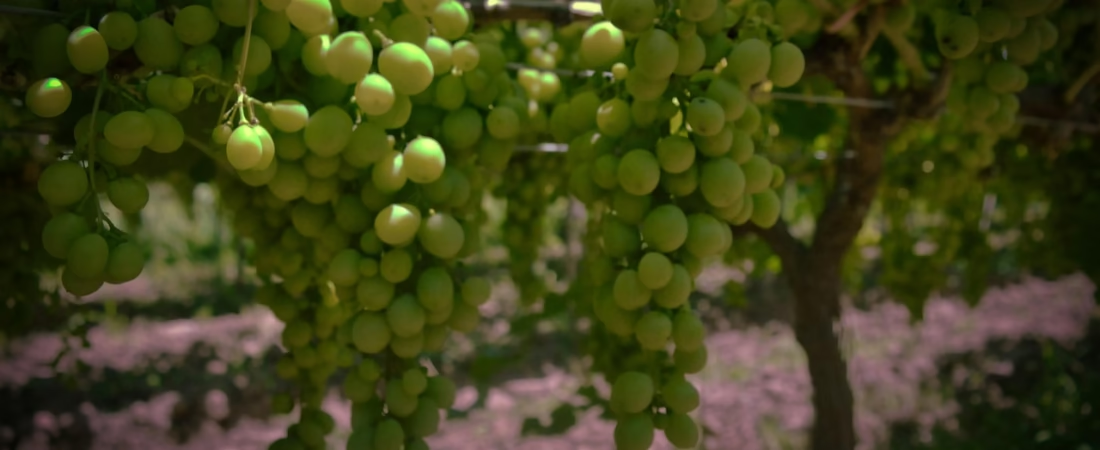
The main thing to remember: in Tarija we discovered an enchanted interlude at an altitude of 1870 metres. With its Andalusian ambience and exceptional vineyards, it’s the ideal place to enjoy a Singani or a Tannat wine that’s unique in the world. This terroir produces up to 93% of Bolivia’s grapes, nestled in the heart of spectacular canyons. 🍷✨
Are you fed up with the cold and looking for an immersion in Tarija in the heart of Bolivia’s wine-growing region to finally forget your altitude sickness? We’ve unearthed this little Andalusian paradise where the air becomes mild and spring-like at an altitude of 1,870 meters, far from the exhausting rigors of the Andean peaks we’ve traversed. We’ll take you to taste Tannat born under intense UV light and unlock the secret of artisanal Singani in ancestral bodegas, between climbing vines and the truly sincere and generous hospitality of the Chapacos. 🍷
- We tell you all about Tarija’s charm and Andalusian flair
- Our architectural nuggets between Casa Dorada and San Roque
- Immersion in Tarija in the heart of Bolivia’s wine region
- Singani and Saice: our best gourmet discoveries
- Condors and canyons: nature adventure off the beaten track
We tell you all about Tarija’s charm and Andalusian flair
After the icy peaks of the Andes, the descent to Tarija is like an enchanted interlude where the air suddenly becomes sweeter. This immersion in Tarija, in the heart of Bolivia’s wine-growing region, did us a world of good.
A gentle transition to forget altitude sickness
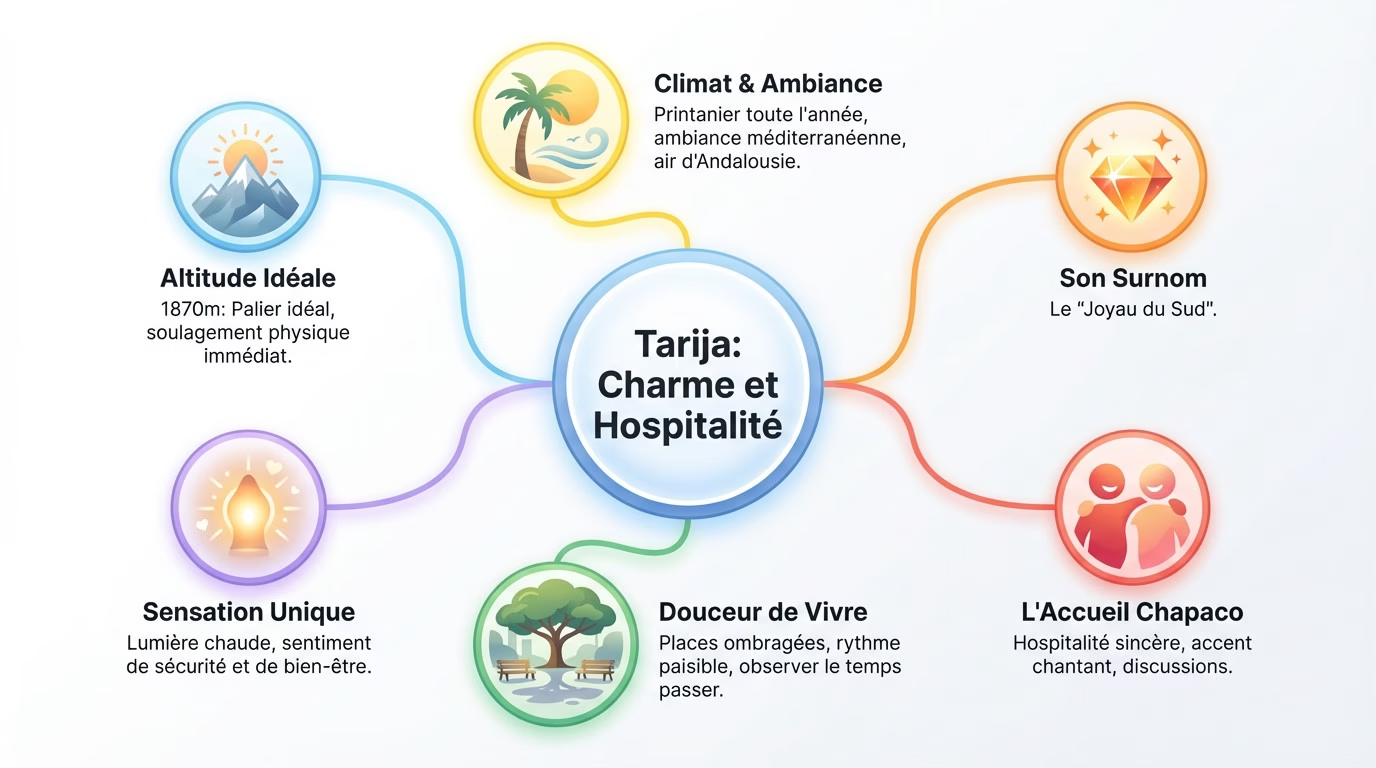
Finally, land at 1870 metres. This is the ideal landing for your body to recover painlessly. You can breathe normally after the Altiplano. It’s an immediate physical relief for peak-weary travellers. As an added bonus, your energy levels are restored.
The atmosphere is suddenly Mediterranean. The palm trees and terraces are reminiscent of southern Spain. You quickly forget the rigors of the Bolivian mountains with this year-round spring climate. It’ s truly relaxing.
It’s easy to see why it’s called the Jewel of the South. It’s a nickname that suits it perfectly.
The light here is different, much warmer. You just want to put your bag down and enjoy.
Chapaco hospitality, a daily delight
We loved the Chapacos, the inhabitants of the valley. Their accents are lilting and their welcome is sincere. They always take the time to chat with passing strangers. It’s refreshing.
The local joie de vivre is obvious. Shady squares are the heart of social life. You can sit back and watch time go by. There’s no hurry here.
Hospitality in Tarija is not an empty word, it’s an art of living that envelops you from the moment you arrive in the main square.
It’s a palpable reality. We really felt it.
There’s a real sense of security and friendliness. You quickly feel at home in these streets. There are smiles everywhere, and it’s a lasting cure for the soul.
Our architectural nuggets between Casa Dorada and San Roque
But Tarija’s appeal lies not only in its climate, but also in its built heritage, which tells a story of richness and deep-rooted traditions.
The radiance of Casa Dorada and the mystery of Castillo Azul
The Art Nouveau façade of Casa Dorada shines brightly. It was the jewel of wealthy merchants. The interior is packed with mirrors and statues. This immersion in Tarija, in the heart of Bolivia’s wine-growing region, took us back in time.
We then went on to discover the Castillo Azul, which was a perfect opportunity. This unusual residence stands out with its deep blue walls. It looks like something out of a fairy tale. Its architecture is unique.
These buildings bear witness to thecity’s commercial golden age. At the time, Tarija was a veritable hub.
Here are just a few of the highlights. You’ll find elements that have come from far and wide:
- Casa Dorada: marble statues and Italian paintings
- Castillo Azul: eclectic style and secret gardens
The San Roque district, the city’s popular soul
Zoom in on the San Roque church. It dominates the whole district from its hilltop location. It’s the focal point of local religious celebrations. The locals are very attached to it.
We’ll tell you all about the atmosphere in the surrounding streets. You’ll find plenty of small, traditional shops. The facades are full of color and flowers. This is the authentic face of Tarija.
The Chunchos parades are spectacular in September. The costumes and dances are magnificent to watch.
San Roque is not just a monument, it’s a beating heart. You can feel all the chapaca fervor. In short, we had absolutely no regrets about our detour to this lively neighborhood. 🎭
Immersion in Tarija in the heart of Bolivia’s wine region
If stones have souls, the land of Tarija possesses a liquid treasure that is the pride of an entire country: its high-altitude wine.
The secret of high-altitude vineyards and UV rays
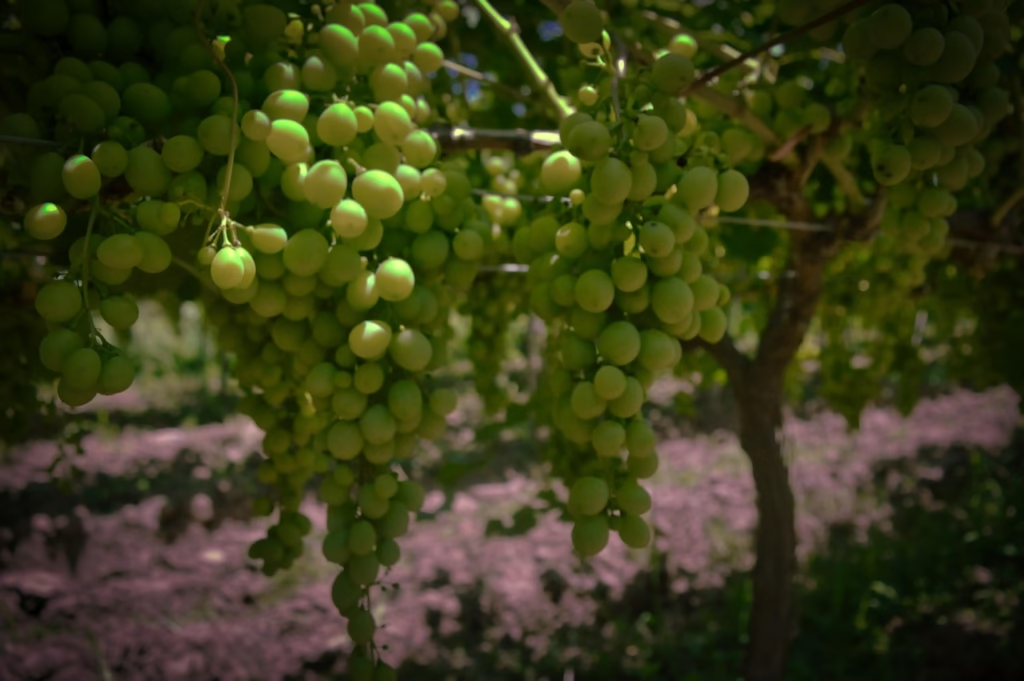
The sun beats down hard here. At this altitude, UV rays become downright intense. The grape produces a thick skin to protect itself, concentrating all its aromas ☀️.
Bolivian Tannat is a worldwide revelation. It is much more supple and fruity than elsewhere. Malbec also expresses unique floral notes. We had absolutely no regrets about this sensory discovery.
In fact, altitude changes absolutely everything about the winemaking process. As a result, the wines gain a rare elegance.
From Santa Ana to Concepción: a tour of the best bodegas
Large bodegas like Kohlberg impress with their modernity. Conversely, small, family-run wineries offer a rare intimacy. The choice is truly vast for lovers of fine wines.
We detail our stops. The Santa Ana Valley is perfect for wine tasting. You can visit renowned wineries and wine cellars. It was now or never. Concepción offers vineyard views 🍷.
Our two favourites:
- Bodega Campos de Solana for its award-winning reds
- El Potro for its authentic atmosphere
The unusual Vallée de los Cintis and its tree-top vineyards
The vines climb directly on trees called Molle. It’s an ancestral method that’s unique in the world. The visual spectacle is a complete change of scenery for us, that’s for sure 🍇.
It was the monks who introduced these techniques in the 16th century. The know-how has been handed down from generation to generation. It’s an absolutely incredible living heritage.
In short, they have a wild, rustic character on the palate. It really is the raw taste of the whole Bolivian story today.
Singani and Saice: our best gourmet discoveries
After strolling through the vineyards, it’s time to sit down and discover the strong flavors that make up Tarija’s culinary identity.
Singani, the brandy that surprised us
During our immersion in Tarija, in the heart of Bolivia’s wine-growing region, we were blown away by Singani. Distilled from Muscat of Alexandria, its floral fragrance is powerful. It’s an absolute local pride. 🥂
For the Chuflay, we mix this spirit with ginger ale and lemon. It’s the ultimate refreshing drink here. It’s an absolute must at all local parties, it’s sacred.
In Yesera, we found an excellent artisanal Singani. The distillation methods used there are still very traditional, with no tricks or gimmicks. The end result is surprisingly fine for a brandy of this caliber, and we loved it.
Central Market Saice, the comfort food
We tried Saice tarijeño, a spicy beef stew with potatoes. Often served with rice or pasta, it’s the quintessential local comfort dish. 🍲
The most authentic versions can be found at the central market. The cooks get busy on the pots at dawn. The atmosphere is bubbling, a real spectacle.
Eating a Saice among the market stalls is the best way to get a feel for the local gastronomy.
The goat’s cheeses and homemade jams are delicious. You’ll rarely leave empty-handed after such a tasting experience.
Condors and canyons: nature adventure off the beaten track
There’s no better way to digest all that food and drink during our immersion in Tarija, in the heart of Bolivia’s wine-growing region, than to take in the grandiose scenery surrounding the Andalusian city. You’d be mad to miss it. 🏔️
Condor watching in the Cordillera de Sama
We headed off to explore the Sama reserve, a veritable sanctuary for Andean biodiversity. Here you’ll find high-altitude lagoons and lunar landscapes. It’s the ideal playground for walkers. Nature is untouched.
We were on the lookout for condors. The Valley of the Condors gives you the chance to see these giant birds up close. They soar majestically over the cliffs, offering a moment of pure emotion. 🦅
The trails blew us away. Some paths follow ancient Inca roads, where you can really walk between heaven and earth.
We noted:
- Average altitude 3500m.
- Pink flamingos in the lagoons.
Pilaya Canyon and traces of the geological past
We discovered the Pilaya Canyon, one of the deepest in the world. The views are breathtaking and wild. Few tourists venture this far, believe us.
The geological riches surprised us. The region abounds in prehistoric fossils and ancient petroglyphs on the rocks. It’s an open history book.
The atmosphere of solitude is total. You feel tiny in front of these immense walls, where the silence is broken only by the wind. This is adventure with a capital A. 🥾
The untamed beauty has left its mark on us. These changing colors are a photographer’s paradise.
With its Andalusian climate, high-altitude wines and wild landscapes, this Bolivian getaway has won us over. Don’t wait any longer to immerse yourself in the vineyards of Tarija, Bolivia’s real pearl: between Singani and raw nature, this little paradise is already waiting for you for absolute disconnection. 🍷✨

