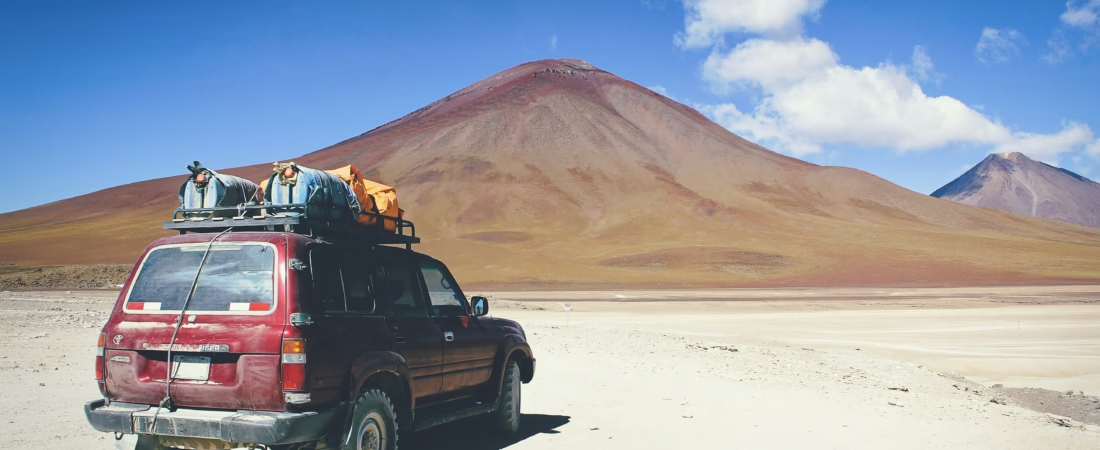
La Bolivia roadtrip, a taste of pure adventure
Do you dream of wide open spaces, roads lost in the mountains, red deserts, flamingo-filled lagoons and unlikely encounters in timeless villages? Then a roadtrip to Bolivia is for you.
Few destinations offer such a diversity of landscapes in a single territory: the Altiplano, the Amazon jungle, active volcanoes, high-altitude lakes, the infinite salar, canyons, primary forests… All within easy driving distance, or almost. But here, nothing is simple: you need to be well organized, well equipped, and know how to improvise.
In this guide, I share with you everything you need to know to organize a roadtrip in Bolivia: vehicle rental (and 4×4!), must-do itineraries, driving tips, equipment to bring, and budget to anticipate.
Ready to roll into the unknown? Then fasten your seatbelt and let’s take off.
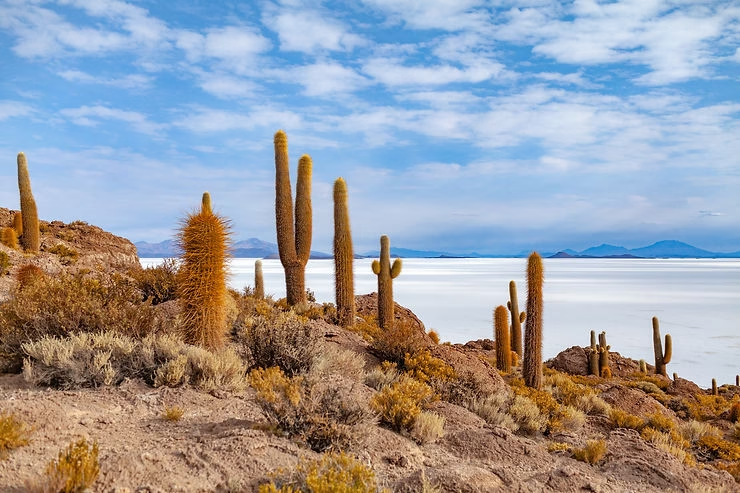
🌍 Why take a roadtrip to Bolivia ?
Because in Boliviaevery turn changes the scenery. From one day to the next, you go from a dazzling white salar to a glowing canyon, from an Aymara village frozen in time to a sandy track in the heart of the jungle. This is one of the few countries where the car becomes a passport to the unexpected.
Here’s why you’ll love a roadtrip here:
- 🗺️ Absolute freedom: you choose your pace, your stops, your detours off the beaten track.
- 🏕️ Sleep where you like: bivouac, small local hotel or even lakeside lodge.
- 🚗 Access to areas virtually inaccessible without a vehicle: Sajama, Sud Lipez, Amboró, forgotten parks…
- 📸 Incredible photo/vlog spots every step of the way, especially with a Insta360 to capture every angle.
- 🧘♂️ A human and introspective adventure: few tourists, lots of surprises, lots of truth.
💡 Whether you’re with your partner, mates, family or even solo, a roadtrip is one of the best ways to discover Bolivia from the inside.
🚙 Renting a car or 4×4 in Bolivia: what you need to know
At Boliviarenting a vehicle depends very much on your itinerary. Some roads are paved and easy to drive on, while others are rough tracks at high altitude or deserts with no signs. So choose your vehicle carefully from the outset.
🚗 Is a 4×4 absolutely necessary?
- Yes, if you want to explore the Salar d’Uyuni, South Lipez, or areas like Sajama Park or the Cordillera Real.
- No, if you stay on a more classic route between Sucre – Potosí – La Paz – Cochabamba – Santa Cruz, although some sections can be damaged.
💡 Golden rule: as soon as you’re planning trails or the altiplano, opt for a 4×4.
📍 Where can I rent a car?
- La Paz, Santa Cruz and Sucre are the cities where you’ll find the most agencies.
- Choose an agency that offers :
- Recent, well-maintained vehicles
- Breakdown assistance
- Unlimited kilometers
- A rendering option in another city (very practical!)
💰 Average rental price
| Type of vehicle | Price/day (average) | News |
| City car | 40 – 60 € | For short journeys in urban areas |
| Single SUV | 70 – 90 € | Comfortable, but not for the desert |
| 4×4 off-road | 90 – 130 € | Ideal for South Lipez, Sajama, trails |
👉 Don’t forget to check the deductible, and take out comprehensive insurance, especially at altitude.
🗺️ The most beautiful roadtrip itineraries through Bolivia
Here is a selection of emblematic tours, tested and approved by adventure-seeking travelers. Each itinerary can be done independently or with a combination of rental + guided excursions (especially in South Lipez).
🏜️ 1. Altiplano & South Lipez – The mythical roadtrip
| Departure | Uyuni or Tupiza |
| Duration | 3 to 5 days |
| Vehicle | 4×4 essential |
| Highlights | Salar d’Uyuni, colorful lagoons, geysers, volcanoes, Dali desert |
| Level | Medium to difficult (altitude, isolation) |
💡 This is THE tour to do with a 4×4 or via an agency. It is essential to have your OKO water bottleas there are no drinking water points on the road.
🏞️ 2. Cordillera Real – La Paz → Sajama
| Departure | La Paz |
| Duration | 4 to 6 days |
| Vehicle | SUV or 4×4 |
| Highlights | Sorata, Sajama, volcanoes, high altitude lakes, remote villages |
| Level | Medium (track + asphalt) |
💡 Perfect for lovers of hiking, photography and tranquillity. Sajama National Park is magical at sunrise, ideal for filming with your Insta360.
🌿 3. Rurrenabaque and the Amazon
| Departure | La Paz (or flight to Rurre) |
| Duration | 3 to 5 days |
| Vehicle | SUV (winding and sometimes muddy roads) |
| Highlights | Jungle, pampas, wildlife, eco-friendly lodges |
| Level | Medium, depending on weather |
💡 The most adventurous option + heat + mosquitoes 😅. Prefer a lodge with transfers included if you don’t want to drive through the jungle.
🧭 4. 2 to 3 week tour of Bolivia
| Departure | Santa Cruz or La Paz |
| Duration | 15 to 21 days |
| Vehicle | SUV or 4×4 depending on region |
| Highlights | Samaipata, Sucre, Potosí, Salar, Sud Lipez, Sajama |
| Level | Varies according to section |
💡 Ideal for combining nature, colonial towns, desert and national parks. A complete summary of Bolivia.
🛣️ Practical tips for driving in Bolivia
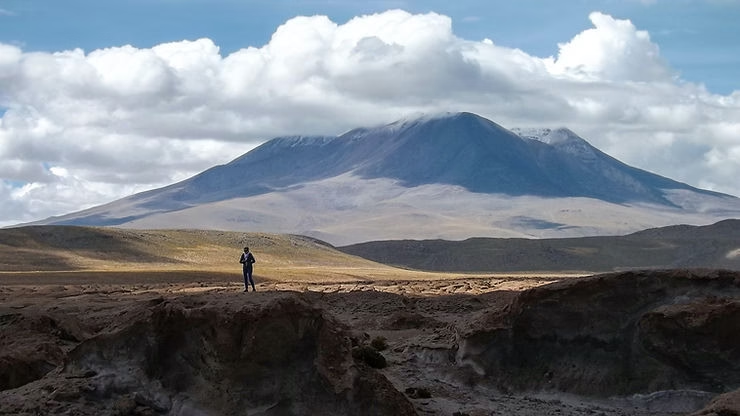
Driving in Boliviais not like driving in Europe. The distances are long, the altitude omnipresent, and some roads will give you more thrills than an Alpine pass. Here’s everything you need to know before taking the plunge.
📄 Do I need an international driver’s license?
- Yes, strongly recommended. Some agencies ask for it when picking up the vehicle.
- In practice, your national license may suffice, but it’s better to have both.
⛽ Gas: how does it work?
- Stations frequent in towns, rare or non-existent in remote areas.
- Fill your tank as soon as possible.
- Some stations charge a higher foreign rate. If you have a Bolivian driver on board, the local rate may apply.
💡 Take a jerry can if you’re going on a remote route.
🛤️ Road conditions
- Main roads (Sucre – Potosí – La Paz – Santa Cruz): good tarmac
- Access South Lipez, Sajama, Amboró: tracks, sand, gravel, sometimes mud
- Winding mountain roads with unprotected ravines: maximum caution
🌙 Driving at night: strongly discouraged
- Very poor signage
- No lights outside built-up areas
- Presence of animals or vehicles without headlights (!)
🗺️ Beaconing and orientation
- Few signs off main roads
- Use Maps.me or Organic Maps in offline mode
- A paper map can still save your trip 😅
💡 Little bonus tip: remember to fix your Insta360 on the dashboard or outside to capture unique road shots, especially in the lunar landscapes of South Lipez or on the edge of the salar!
🎒 Essential equipment for a roadtrip in Bolivia
A roadtrip to Boliviais adventure with a capital A. And equipment can make all the difference between hardship and total freedom. Here’s what you absolutely must bring:
🚗 Vehicle equipment
- Petrol jerrycan (especially for South Lipez and Sajama)
- Spare tire + jack + crank handle
- Starter cables
- Headlamp (battery failure = no headlamps 🕯️)
- Folding shovel for sandy areas
🗺️ Orientation & autonomy
- Paper road map (Reise Know-How type)
- Offline GPS: Maps.me or Organic Maps
- Cigarette-lighter charger + external battery
- Foldable solar panels (very useful for recharging while bivouacking)
💧 Hydration and food
- OKO water bottle for self-sufficient water filtration
- Snacks, dried fruit, energy bars
- Small stoves or gas cookers for bivouacs
- Soft cooler if you’re doing your own shopping on the road
📷 Captation & souvenirs
- Insta360 to film the road in 360°, landscapes and bivouacs
- Suction cup or car clip mount
- Lightweight tripod for desert sunsets
💡 Bonus: a small first-aid kit with aspirin, anti-diarrhea medication, bandages and treatment for altitude sickness is highly recommended.
⚠️ Safety and unforeseen events: what you need to anticipate
A roadtrip to Bolivia will sometimes put you to the test. Isolated roads, altitude, fickle weather, flat tires… It’s better to be safe than sorry in the middle of the desert!
📞 Insurance and useful contacts
- Take out insurance with 24-hour assistance, towing and medical expenses.
- Note emergency numbers:
- Ambulance: 118
- Police: 110
- Assistance from your rental company (ask for a WhatsApp number if possible)
🧰 What to do in the event of a breakdown?
- Stay with the vehicle if you’re in a remote area.
- Get out your headlamp and external battery.
- If you’re on a busy itinerary (Salar, South Lipez), another 4×4 will often come along.
- Notify your agency or a local contact as soon as possible.
🌍 Areas to avoid or use extra caution
- Route de la Mort (La Paz – Coroico): only to be done with caution or with a mountain bike guide.
- Amazon in rainy season: muddy, flooded roads.
- Driving at night in rural areas: animals, holes, total absence of lighting.
🌧️ Beware of the rainy season (December to March)
- Flooded roads, access to South Lipez sometimes impossible.
- Ask the locals for information at every stage.
- Take cash: some villages have no bank or network.
💡 Pro tip: ta OKO water bottle and your Insta360 will be your best allies for staying independent and documenting the adventure, even when things don’t go as planned 😅
💰 Budget for a roadtrip in Bolivia
Good news: travelling in Boliviaeven in roadtrip mode, is still very affordable compared to other South American countries. Here’s a realistic estimate to help you organize your budget:
📅 Main expenses (per day / 2 people)
| Category | Estimated cost (€/day) | Detail |
| Vehicle rental | 70 – 130 € | 4×4 recommended for some routes |
| Gasoline | 15 – 25 € | 0.50 – 1 €/L depending on region |
| Hosting | 20 – 40 € | Inn, simple hotel or bivouac |
| Food | 10 – 20 € | Meals in local markets or restaurants |
| Extras (park entrance, tolls, etc.) | 5 – 10 € | Sajama, South Lipez, parking |
💡 Average all-inclusive daily budget: €130 to €200 for two people
📦 Savings tips :
- Share the 4×4 with other travelers if possible.
- Cook for yourself (bring a small stove).
- Use an OKO water bottle to avoid buying water.
- Prefer accommodation bookings in advance via this hotel link to get the best deals.
- Keep cash on you: some villages don’t accept credit cards or bank transfers.
🧭 Conclusion
Roadtrip in Boliviais much more than a simple road trip: it’s a plunge into the unknown, into the heart of a raw, intense and majestic country. It’s driving alone in the middle of a salar, crossing forgotten villages, stargazing at 4,000 m altitude and feeling fully alive.
With a suitable 4×4, a good dose of preparation, your Insta360 to immortalize the adventure, and an OKO water bottleto keep you on your toes, you can enjoy an unforgettable experience, out of time and away from the crowds.
It’s not a country that’s easy to surrender to, but it offers powerful, authentic memories to those who dare to roam freely. So… ready to hit the road?

