Key facts: Samaipata is a peaceful refuge at an altitude of 1,650 metres, ideal for acclimatizing between the Andes and Amazonia. Here you can discover El Fuerte, the world’s largest sculpted rock, a UNESCO World Heritage site, and the giant ferns of Amboró Park. This unique crossroads offers total disconnection with its waterfalls and tasty high-altitude wines.
Do you dream of leaving the hustle and bustle of urban life for a peaceful refuge where nature dictates its own laws? We take you to explore Samaipata, where the Andes meet the Amazon, a little Bolivian paradise that immediately won us over with its gentle way of life. In this article, we share our best tips for climbing the world’s largest carved rock and venturing into giant fern forests worthy of a movie set.
- Getting to Samaipata where the Andes meet the Amazon 🚌
- El Fuerte, the sculpted rock that stuck with us 🗿
- Venture into Amboró National Park and its ferns 🌿
- Gentle village life between two hikes ☕
Getting to Samaipata where the Andes meet the Amazon 🚌
Samaipata is Bolivia’s secret garden, a peaceful enclave that bridges the gap between the peaks of the Andes and the heat of the Amazon. We loved the contrast with the chaos of Santa Cruz.
Choosing your transport from Santa Cruz
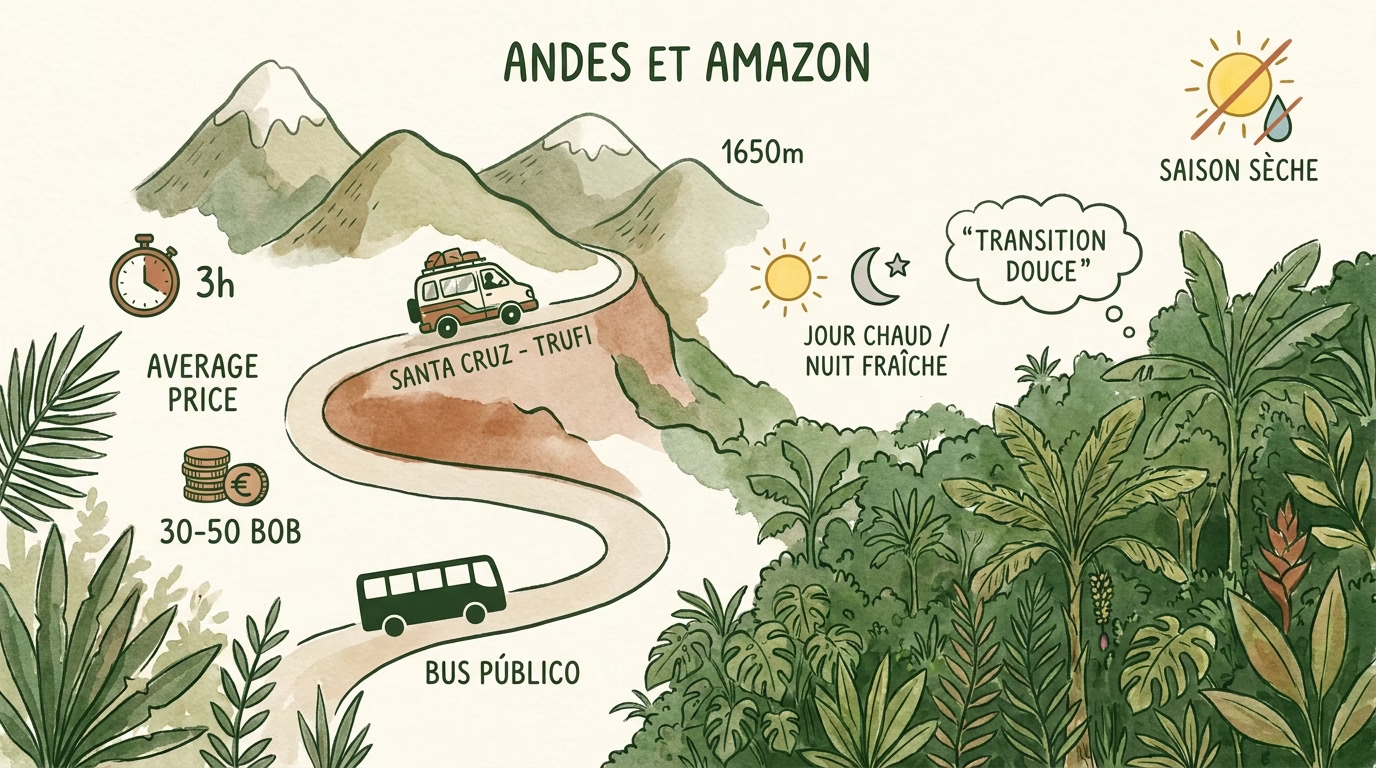
To leave Santa Cruz, we headed for Grigotá Avenue. This is where the trufis – shared cabs – wait for passengers. It really is the fastest option.
We’ve also seen public buses. They cost less, that’s for sure. But they’re much slower on these winding mountain roads.
Expect to pay around 30-40 bolivianos for a 3-hour drive. We recommend setting off in the morning. That way, you can avoid the heavy thunderstorms that often break out at the end of the day.
- Group cabs (trufis)
- Public buses
- Journey time 3h
- Average price 30-50 BOB
Managing altitude and local climate
The village lies at an altitude of 1,650 meters. It’s the perfect place to acclimatize gently. We didn’t suffer from altitude sickness at all, and the air is super pure.
The climate is temperate subtropical. The days are warm and sunny. However, nights are still cool, so pack a little wool in your bag.
For the weather, aim for the period from October to April. Avoid the rainy season between November and March. We didn’t want to spend our stay with our feet in the water.
At 1,650 metres, Samaipata offers a gentle transition from the oppressive Altiplano peaks.
El Fuerte, the sculpted rock that stuck with us 🗿
After settling into the village, it’s on to the region’s major archaeological site, a mystery of stone that dominates the surrounding valleys.
Between Inca rites and pre-Hispanic mysteries
This ceremonial center is truly unique in the world. We were impressed by the giant engravings on the red sandstone monolith. It’s a fascinating testimony to pre-Hispanic cultures, and a UNESCO World Heritage site.
The Mojocoyas people began the work before the arrival of the Incas. The site served as a military stronghold and religious center. Even the Spaniards later left their mark.
At 220 metres in length, the rock’s dimensions are absolutely insane. It’s the largest carved rock in the world, a true masterpiece of spiritual engineering.
Tips for a crowd-free visit
We really advise you to come during the week. At weekends, tourists from Santa Cruz invade the paths. The silence suits the atmosphere much better.
Taking on a local guide seemed essential. It’s the perfect opportunity to understand the glyphs and the complex history. Rates are still very affordable for small groups.
It’s best to visit in the early hours of the morning. The low-angled light of the morning sublimates the reliefs sculpted in red stone.
Here are some practical tips for your getaway:
- Entry price 50 BOB
- Recommended guide
- Open from 9 a.m. to 5 p.m.
- Bring water
Venture into Amboró National Park and its ferns 🌿
If you’re weary of old stones, the raw nature of Amboró National Park awaits you with its air of a lost world.
Hiking among giant ferns
We loved this immersion in the cloud forest. The giant ferns climb up to 13 metres high. You’d think you were back in the days of the dinosaurs. This is the Yunga’s typical lush, humid ecosystem.
A certified guide is required to accompany us. The park is protected and the trails quickly become treacherous. It’s also a matter of survival to preserve the local wildlife.
Keep an eye out for discreet wildlife. If you’re lucky, you’ll come across condors or the spectacled bear, symbols of the biodiversity biodiversity of Bolivia’s lowlands..
Discover the waterfalls of Las Cuevas and La Pajcha
Las Cuevas is the little corner of paradise next to the village. There are three waterfalls bordered by sandy beaches. The water is super-cool, perfect for invigorating yourself after a long walk.
Then it was on to La Pajcha. This is a much wilder waterfall, isolated in the middle of the forest. The setting is spectacular, ideal for a quiet picnic away from it all.
To get there, we recommend hiring a cab for a few hours. It’s the easiest way to get around. The more athletic can also try their hand at cycling, but it’s a tough climb.
Gentle village life between two hikes ☕
After an effort in the jungle or on the summits, the village of Samaipata offers a warm refuge and an irresistible bohemian atmosphere.
Our best places to sleep and eat
We advise you to try out youth hostels to capture the traveler atmosphere. There are also charming hotels with mountain views. The choice is truly vast.
In terms of cuisine, the restaurants use fresh produce from the valleys. And don’t forget to try the local high-altitude wines. The atmosphere in the main square is magical– we loved it.
A little gourmet tip for the road. The village cafés serveexcellent home-made pastries. It’s a meeting place for expatriates and locals alike.
Relax and soak up the arts and crafts
Yoga and massages are very popular here. It’s the perfect place to slow down. We really took the time to breathe a little.
Stores abound with textiles and pottery. Local artists often exhibit their creations near the square. It’s the perfect opportunity to bring back a souvenir.
For history buffs, Vallegrande and La Higuera are just a few hours away. This is the famous Che Route.
Samaipata isn’t just a stopover, it’ s a state of mind where time finally seems to stand still.
Between the sculpted rock of El Fuerte, the giant ferns of Amboró and the gentleness of the village, our stay was a real “coup de coeur”. Pack your bags now to discover Samaipata, where the Andes meet the Amazon, and enjoy this unique haven of peace. You’ll never forget this Bolivian stopover!

