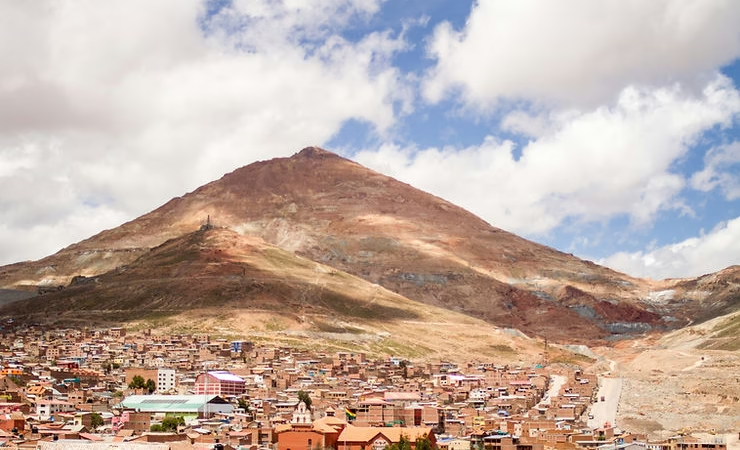
La Bolivia is one of those countries that surprises you at every turn. Between endless Andean peaks, salt deserts, colonial cities, wild jungles and timeless villages, it’s a destination where every region tells a different story.
Planning your trip and wondering where to go in Bolivia? Good news: whether you’re a fan of grandiose landscapes, vibrant culture, trekking or adventure, this country always has a treasure to reveal. All you need to know is where to put your backpack!
In this guide, you’ll discover the most beautiful regions to explore in Bolivia, from must-sees like the Salar d’Uyuni and Lake Titicaca to lesser-known but equally magical corners. You’ll also find practical advice on how to build your itinerary and choose the stages that suit you best.
Ready to explore authentic, diverse and spectacular Bolivia? Follow the guide, we’ll take you to the real heart of the country.
🏙️ La Paz and the Valley of the Moon: perched capital and Andean modernity
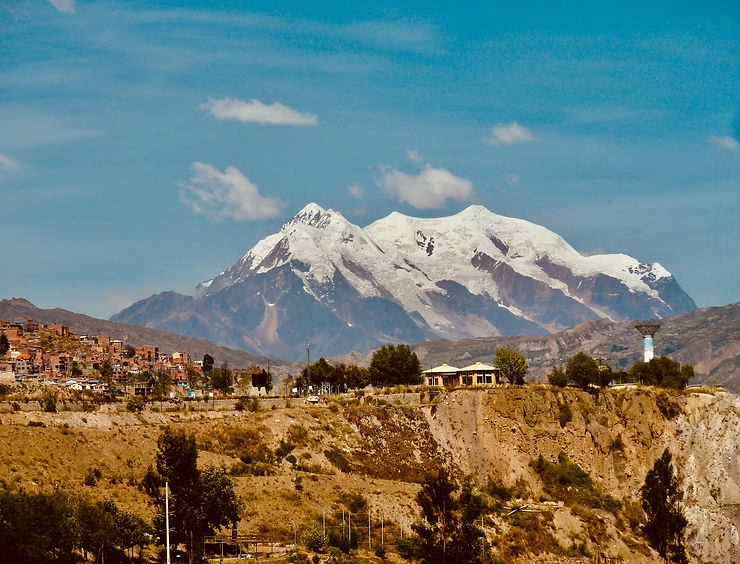
Impossible to talk about Bolivia without mentioning La Paz, the world’s highest capital, perched at an altitude of over 3,600 metres. It’s a veritable visual and cultural shock: here, colorful houses sprawl across the mountainside, markets teem with life, and the city’s cable car offers breathtaking views of the city and snow-capped peaks.
Don’t miss La Paz:
- The witches’ market: for magic herbs, amulets and a mystical atmosphere.
- Jaén Street: colonial houses, museums, bohemian atmosphere.
- Mi Teleférico: the highest cable car network in the world, perfect for admiring the city and the Illimani.
- Plaza Murillo: Bolivia’s political heart, surrounded by historic buildings.
A lunar detour:
A few kilometers away, discover the Valley of the Moon: a setting of canyons and eroded rock formations, as if on another planet. Perfect for a relaxing stroll away from the hustle and bustle of the city.
💡 Tip: Take the time to acclimatize to the altitude before heading out to explore the rest of the country!
🏞️ Salar d’Uyuni and South Lipez: natural wonders and unreal landscapes
A true icon of Boliviathe Salar d’Uyuni is the world’s largest salt desert: a white ocean as far as the eye can see, where the sky merges with the earth. Depending on the season, you can admire either the famous mirror effect (January-March), or the geometric patterns of cracked salt in the dry season.
But the show doesn’t stop there: excursions from Uyuni take you to the farthest reaches of the South Lipez, a region of colorful lagoons, surreal deserts, bubbling geysers and volcanoes.
Not to be missed in the region:
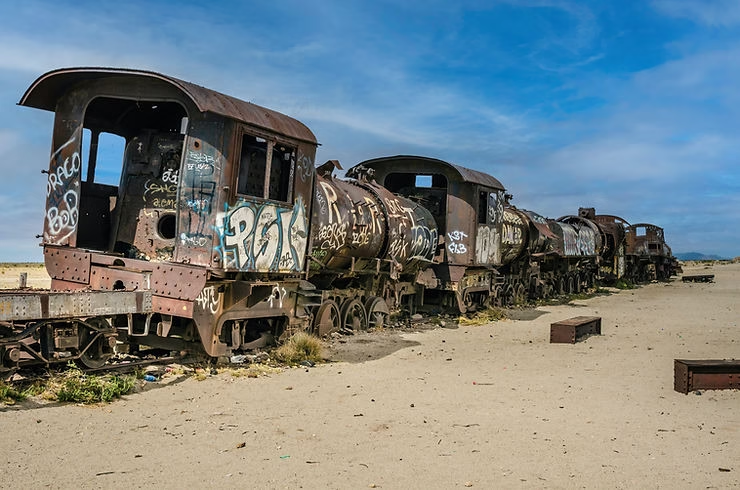
- The Uyuni train cemetery: a photogenic and unusual setting.
- Incahuasi Island: giant cacti and 360° views of the salar.
- Laguna Colorada: intense red, populated by pink flamingos.
- Siloli desert: natural sculptures, “stone tree”.
- Hot springs at sunrise, in the heart of nature.
- Perspective games on the salar: get your camera ready Insta360 camera camera for some crazy photos!
💡 Tip: pack a OKO water bottle for long excursions and book your tour in advance, especially in high season!
🏰 Sucre and Potosí: colonial towns and living history
To immerse yourself in Bolivia’s history and gentle way of life, head for Sucre and Potosí. These two UNESCO World Heritage cities offer a radically different atmosphere from the wild highlands.
Sucre: the white city
Sucre is the country’s constitutional capital, with its white houses, flower-filled patios and relaxed atmosphere. We come here for :
- Stroll around 25 de Mayo square
- Climb to the Recoleta viewpoint for a panoramic view
- Discover the Casa de la Libertad, cradle of Bolivian independence
- Enjoy lively markets and a mild climate
It’s also the perfect place to take Spanish lessons or to spend a few days recovering from the altitude.
Potosí: the ancient city of silver
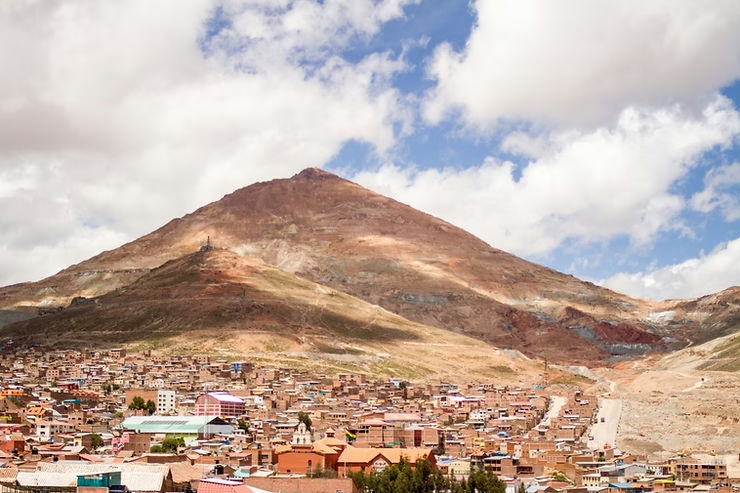
Potosí has long been the richest city on the continent, thanks to its Cerro Rico, the silver mountain. Today, it offers :
- Charming historic center, Baroque churches and convents
- An impressive tour of the Cerro Rico mines (to be undertaken with respect and caution)
- The Casa de la Moneda museum, for a better understanding of colonial history and the suffering of miners
💡 Tip: These cities are perfect for alternating cultural visits, good restaurants, and local life – a nice urban break between two nature adventures!
🌊 Lake Titicaca and Isla del Sol: Inca spirituality and sublime panoramas
Impossible to travel to Bolivia without a stopover at Lake Titicaca, at an altitude of over 3,800 metres, between sacred mountains and crystal-clear waters. Here, Andean culture takes on its full meaning, between Inca legends, peaceful villages and mysterious islands.
Not to be missed in the region:
- Copacabana: relaxed atmosphere, basilica, markets and boat departures for the islands.
- Isla del Sol: mythical cradle of the Inca people, hiking trails with breathtaking views, ancient ruins and magical sunsets.
- Isla de la Luna: smaller and wilder, with beautiful ruins and a warm welcome from the locals.
- Boat trip: explore the riverbanks and enjoy a timeless moment on the water.
- Markets and villages: local crafts, daily catch, authentic moments to share.
💡 Take time to sleep on Isla del Sol to enjoy the silence, the stars and the changing lights on the lake.
🌳 Rurrenabaque and Madidi Park: adventure in the Bolivian Amazon
Looking for jungle, wildlife and adventure? Rurrenabaque, gateway to the Bolivian Amazon, opens the doors to the fabulous Madidi National Park, one of the richest in biodiversity in South America.
Not to be missed in the region:
- Dugout expeditions on the rivers of Madidi Park or in the pampas, to meet monkeys, caimans, pink dolphins and exotic birds.
- Forest walks with local guides to learn all about medicinal plants, survival in the Amazon and the life of indigenous communities.
- Lodge stays: spend the night in the jungle, wake up to birdsong and observe unspoilt nature.
- Excursions in the pampas: wildlife safari in search of anacondas, capybaras, turtles and other local curiosities.
- Discover local culture: visit villages, take part in craft or culinary workshops.
💡 Think about Holafly eSIM or a good external battery: connection is limited, but disconnection is also part of the charm!
🌋 Sajama Park and Andean peaks: volcanoes, lagoons and Aymara villages
For those who dream of wide open spaces, altitude and authentic encounters, Sajama National Park is a must. Dominated by the Sajama volcano (6,542 m), this is Bolivia of silence, steaming geysers, hot springs and starry nights.
Not to be missed in the region:
- Climbing the Sajama volcano: for sports enthusiasts, a mythical and little-visited summit.
- Hikes to geysers and hot springs: guaranteed relaxation after a day’s walking.
- Aymara villages: immersion in the local culture, a warm welcome and the discovery of a different way of life.
- Observation of Andean fauna: vicuñas, llamas, birds and high-altitude flora.
- Sunrise and sunset photos: magical landscapes in every light.
💡 Don’t forget your OKO water bottle and a warm fleece: the nights are freezing!
🌵 Other treasures to explore: Torotoro, Samaipata, Buena Vista, Santa Cruz…
La Bolivia is not limited to its great icons. For the curious and adventurous, there are many lesser-known regions that are well worth a visit!
🦖 Torotoro: the kingdom of the dinosaurs
A national park unique for its spectacular canyons, caves and, above all… fossilized dinosaur footprints! Ideal for families and geology enthusiasts.
🏝️ Samaipata
A cool village with a mild climate, perfect for relaxing, exploring the UNESCO-listed pre-Incan ruins of El Fuerte, or hiking in Amboró Park, home to giant ferns.
🌴 Buena Vista & Santa Cruz
Bolivia’s green lung, with its coffee plantations, tropical forests and relaxed atmosphere. Santa Cruz is the big city of the southeast: modern, festive and often the gateway for those arriving by plane.
🏞️ Amboró and other national parks
For nature lovers: jungle, waterfalls, birdwatching and extraordinary hikes.
💡 Don’t hesitate to add an “off the beaten track” stage to your itinerary to discover a different and often quieter Bolivia!
🛠️ Tips for planning your itinerary in Bolivia
It’s hard to see it all in one go! Here are a few tips to help you tailor your itinerary to your desires, your time and your priorities.
🕒 Recommended durations by region
- One week: focus on one large region (e.g. Salar d’Uyuni & Sud Lipez OR Lake Titicaca & La Paz)
- Two weeks: combines two or three regions (e.g. La Paz, Titicaca, Uyuni, Sucre/Potosí)
- Three weeks or more: you can add the Amazon, Sajama Park or “off the beaten track” stages.
🔍 Depending on your mood :
- Trek & adventure: Salar, South Lipez, Sajama, Torotoro
- Culture & cities: Sucre, Potosí, La Paz, Samaipata
- Wilderness: Amazonia, Amboró, high-altitude lagoons
- Roadtrip: a combination of stages by bus, 4×4 or rental car
🧭 Logistics consulting
- Take distances into account (sometimes long: Uyuni ↔ La Paz ≈ 10h bus).
- Find out about the seasons (rain, cold, accessibility)
- Always plan a few “buffer” days for altitude acclimatization
🔗 Useful links
💡 Don’t hesitate to mix must-sees and secret corners for a balanced trip that’s just right for you!
❓ FAQ “Where to go in Bolivia?”
When is the best time to travel to Bolivia?
The dry season (May to September) is ideal for hiking, the Salar d’Uyuni and the high plateaus. The rainy season (October to April) allows you to see the mirror effect on the salar, but can complicate travel.
Is it possible to do the whole country in 2 weeks?
No, unless you want to do it all without a break! In two weeks, focus on 2 or 3 regions (e.g. Uyuni, Titicaca, Sucre/Potosí). For the Amazon, it’s better to have 3 weeks or more.
Can you travel without speaking Spanish?
Yes, but a few words of Spanish will go a long way, especially in rural areas. Tourist agencies in La Paz, Uyuni and Sucre often speak English.
Is it a family-friendly destination?
Yes, with a minimum of organization (health, altitude, suitable accommodation). Lake Titicaca, Sucre and the colonial towns are ideal for families.
Do I need to book excursions in advance?
For Uyuni, the Amazon or Lake Titicaca in high season, yes. Otherwise, you can often improvise on the spot.
✅ Conclusion
La Bolivia is a country that can be experienced as an adventure, from snow-capped peaks to deep jungles, from colonial villages to unreal deserts. Wherever you choose to go, you’ll discover spectacular landscapes, a rich culture and friendly people.
The secret to a successful trip to Bolivia? Whether you’re looking for extreme nature, history, trekking or encounters, there’s always a Bolivian region to suit you.
Need inspiration or advice? Browse through our other guides, discover our excursion tips (activities in Bolivia), and get ready for an unforgettable roadtrip.
Bon voyage… and long live Bolivia! 🇧🇴

